Music Therapy: The Art of Psychological Treatment

by Sanjana Sankaran, December 20, 2021

Nearly 800,000 people die from suicide every year (Suicide Data). Approximately seventy percent of the American youth that struggle with depression requires treatment (The State). People with depression have a daily battle with themselves to prevent those feelings of despair and loneliness from taking over. Those living with mental health disorders may develop effective coping mechanisms to deal with their issues. Music therapy, a method of therapy and a de-stress technique for which the positive effects are not yet highly known, involves “the professional use of music and its elements as an intervention in medical, educational, and everyday environments with individuals” (Wang and Agius 595). Music therapy not only involves listening to music but also consists of thinking, analyzing, and playing it. Many people view music as a means of amusement and frivolity for those involved. Both mental health issues and the fine arts are often stigmatized in our society. In regards to mental health, several people feel the need to downplay their problems since many illnesses do not manifest with obvious physical symptoms. Hence, society issues out old cliches, suggesting that people need to learn how to ‘deal with their problems.’ In actuality, mental health can affect not only one’s mind but also one’s body and, if left untreated, can severely affect one’s quality of life. Over recent years, many have come to view the fine arts as an impractical endeavor since several jobs in this field may not lead to a stable job or income. Historically, humans have always turned to the arts to express their feelings, through music, visual arts, or the written word. Music can have a profound effect on the biochemical as well as the physiological aspects of the brain. More and more researchers today find that psychotherapeutic drugs are not as effective in treating mental health patients as they used to be, partly due to  drug tolerance. As a society, we must alter  our mindset away from  treating psychological problems exclusively through psychotherapy and drugs and must instead leverage the nontraditional method of music therapy for those  who experience daily stressors and mental health disorders.

The standard practices of mental health treatment today involve two significant methods –  psychotherapeutic drugs and psychotherapy –  both of which, given the statistics of how the rate of mental health diagnosis is accelerating, are not enough. People with mental health disorders nowadays have a lot more options as to how to treat themselves: psychotherapy, medication, case management, hospitalization, therapy groups, alternative medicine, electroconvulsive therapy, and peer support (Mental Health Treatments). In the early- to mid-1900s, methods of curing mental health ailments involved lobotomies and shock therapy. Even with all of the progress made today, a recent study shows that approximately 10 million adults in America have suicidal thoughts,  have not been able to seek treatment or have experienced both. In the past six years alone, the population of youth (ages 12-17) with depression has gone up by 4.35%, and two million kids now have major depressive episodes and need to seek treatment (The State). A team of neuroscientists from Naples, Italy found that antidepressant drug treatments are mostly ineffective for major depressive disorders. (Fornaro e. al. 494). Inefficacy can be attributed to tolerance, an anomaly that occurs when depressive symptoms reappear after previous treatment with antidepressants” with the return of depressive symptoms of MDD occurring in 9–33% of patients across published trials” (Fornaro et al. 494). Drug tolerance can build over time as the body requires higher doses of the drug  in order to have the same effect as the initial dose once did, ultimately resulting in other biological side effects. Many antidepressant drug trials tend to last shorter than 52 weeks, contributing to the  lack of understanding as to how effective these drugs will be long-term. The National Institute of Mental Health stated that 25% of 103 patients had depressive episodes. Further these patients were found to have 43 out of 171 following depressive episodes and experienced drug tolerance after a 20 year follow up (Fornaro et al. 496).   

In the book, Music Therapy in Mental Health for Illness Management and Recovery, written by Michael J. Silverman, the director of the music therapy program at the University of Minnesota, he states that “ even when medications are effective in alleviating the symptoms of mental illness, they do not necessarily facilitate psychiatric recovery as pharmacological treatments do not contribute to the development of knowledge and skills necessary for a successful transition back to the community” (Silverman 55). The state of mental health is worsening – therapies previously used for decades are now proving to be not enough in curbing  the rampant increase in prevalence of depression and other  mental health disorders. Psychiatric treatment needs to implement  a new type of therapy, like music therapy, that includes psychological interventions to analyze how people’s behavioral and thought processes have improved over  time. By seeking new methods of treatments, specifically music therapy, society will move closer towards respecting rather than ostracizing mental health patients. 

Music therapy was developed post World War I and II as a way to ease the minds of many soldiers with PTSD (Craig). Since then, this field has led to a wide range of studies, all seeking to answer the questions of how music therapy works and its purpose. If we have many different types of psychotherapy, why are neuroscientists and psychologists seeking more holistic treatments for their patients that are not guaranteed to work? Let us start with what precisely music therapy is and the basis behind it. Music therapy includes two main facets: psychoacoustics and the appreciation and hearing of music. Psychoacoustics refers to how someone perceives and comprehends music. In contrast, the brain’s mechanisms of appreciation and hearing of music is something that is developed across an entire lifespan and is influenced by many environmental factors (Craig, para. 19-20). 

There are two main methods of music therapy: listening and active playing. When  listening to music, therapists will put on music for the patient, recommended by medical experts who know about the patient’s specific case (Craig, para. 41-42). Some therapists will go down the more analytical route of listening to music. Therapists may ask questions that evoke personal thought analysis and insight. Some may also follow the Bonny method of guided imagery and music. Bonny methods consist of a patient listening to a song and seeing an image. This leads to the therapist asking specific guided questions that lead to the patient talking about their thoughts and emotions (Craig, para. 43-44). Music therapy can change a person’s attention, emotion, memory processing, behavior, and communication. A combination of all of these changes can result in  changes in neural processing that can  effectively change the biochemical state of depressed minds and improve their lives 

  Many studies prove that music therapy has been effective in treating people with mental disorders. In a  study done by Sergio Castillo-Pérez MD and his team, he states that “depression remains a major health problem and, despite using pharmaceutical agents, patients continue to report high levels of unrelieved depression” (Castillo-Perez et al. 390). This group of researchers decided to study a group of low to medium depressed people receiving  psychotherapy treatment compared to music therapy. A group of 79 patients between the ages of 25 to 60 years old were split into the two groups of therapy. The subjects chosen have never taken any psychotherapeutic drugs or have any other neurophysiological problems.  All subjects were asked to self-report their level of depression with a well-known survey known as  the Zung depression scale (Castillo-Perez et al. 387). The subjects self-reported how they were feeling age week for eight weeks. The music therapy itself involved a 50-minute self-administered music session, and once a week the participants would have a group session with doctors and other patients to provide a comfortable environment. The study controlled for stressful environmental variables that may occur such as sudden noises, changes in temperature, any environmental change or trigger (Castillo-Perez et al. 389). 

The psychotherapy administered in this study was standard conductive-behavioral therapy (CBT). At the end of the tests, the researchers quantitatively analyzed the patients’ progress with the Hamilton scale (another type of depression scale) based on their behaviors  and their self-reported scores of the Zung scale. The people with significant improvement meant they had to have a Hamilton scale of 0 to 7. The Hamilton scale was used after the 3rd, 5th, 7th, and 8th weeks. After only three weeks, within the music therapy group,  one person improved; however, none improved within the psychotherapy group.. By the end of the study, 29 subjects improved with music therapy, and only four did not. For psychotherapy, only 12 subjects improved with 16 people showing little to no improvement. These data from the Zung and Hamilton tests were also cross-referenced with the Friedman test, and showed to be statistically significant with a p-value as little as 0.0356 (Castillo-Perez et al. 389).  

As we can see, psychologists and neuroscientists today are doing more and more research regarding music therapy. Castillo-Perez’s study is just one of many examples in which music therapy has proven to improve the quality of life for people with depression more than psychotherapy. The three main methods of treatment for depression today are psychotherapy, antidepressants, and electroconvulsive therapy for severe cases. However, Perez and the rest of his team say, “Pharmaceutical treatments […] make no difference in the odds ratio of suicide attempts” (Castillo-Perez et al. 387). That is what needs to fundamentally change in how we treat and understand therapy for depressed patients. Pharmaceutical drugs will not influence the likelihood of someone committing suicide because there can be many sudden environmental circumstances and triggers. Musical therapy, on the other hand, aims to help depressed patients by trying to invoke the mesolimbic system, which correlates to positive and rewarding thoughts. As people living in  the 21st century, we can understand that there is something special about listening to new music by our favorite artists, or dancing and singing to a high energy song that can affect our minds positively. Songs can reflect how we feel and can heighten our current emotions, and this is something that medicine and therapy at a certain point cannot do as effectively as initially administered. 

As with many people who learn music from an early age, I found that playing a music instrument helped me relax and de-stress, especially after a long day of school and tests. After my piano lessons on Sundays and six-hour days at high school, I would hop on that leather bench and play Emile Pandolfi and feel my heartbeat slow down and my cheek muscles tense from all the grinning. Playing the theme from Harry Potter on the piano was my mode of artistic expression and relaxation. It is easily accessible, then, to imagine how music can help those who have severe emotional or mental disorders. To the parents of kids with mental health disorders, understand that music can be an outlet for kids to release their emotions and can have a tremendous effect on their functioning and behavior; to the kids who never seemed interested in playing music, that is okay. Part of music therapy merely involves passively listening to music in a relaxing setting. Society needs to alter its perspective on music from being misconstrued as a way of wasting time to a way of elevating one’s moods and taking a mental break.  

To truly get an insight on a student’s perspective of music and its effects on mental health, I interviewed a bandmate of mine from high school who has been playing trumpet since the fifth grade. Her lifelong appreciation of music started when she began taking piano lessons in the second grade. She then began taking trumpet lessons and joined the band in the 5th grade and has continued primarily with trumpet since then. When I asked her about her mental health, she said, “As someone who has depression and anxiety, a part of me is always anxious, and the daily fight is not letting it become a 100% of me, and using coping mechanisms to get out of it.” She had to move 350 miles for college and said that it was a difficult transition due to the workload and having to meet new people, making it difficult  to find time to relax. Being a part of the wind ensemble at her college allowed her to ease into the transition of a college student.  When asked how music has helped her with her mental state and journey, she stated, “playing music was definitely a double-edged sword. Although I had stress and anxiety from the responsibilities that came with being on the band e-board, the intrinsic joy I got from getting together with people I cared about and playing amazing music was amazing” (Anonymous). She found that listening to music gave her a sense of solace and tranquility. It allowed her mind to focus on just the music,  and in the process,  she forgot all of her anxieties and elevated her mood. The lyrics, instrumentation, and many other aspects of music therapy can reflect the emotions we feel and can elevate how we feel. Music can alter the state of chemical neurotransmitters in our minds and change our emotions – this is something drugs and psychotherapy cannot do as effectively.  

Due to social media today, music has become much more prevalent in students’ lives and has influenced the way college students handle stressful situations.A significant reason explaining  music therapy’s lack of usage is because there are many misconceptions about the way music therapy works. Music therapy Director of University Minnesota Dr. Silverman, discusses the ill-conceived notions of music therapy, stating that “a common misperception of music therapy is that it is used exclusively to treat musicians” ( 55). Silverman emphasizes that music therapy was always used to help treat people with a broad range of neurological and psychological issues among a variety of adults, children, and seniors. Another common misconception is  that music therapy is not as effective because it is merely the act of passive listening to pre-recorded music. However, music therapy is not just listening to music. Director Silverman says that in a study done comparing two groups of depressed patients who underwent passive music therapy and active music therapy, the active music therapy patients stayed throughout the sessions. Active music therapy involved lyric analysis, recreation music playing, and percussional music therapy (Silverman 55). All of this active participation served as psychological interventions that helped alter the person’s mood, behavior, and mindset.   

In a survey I administered to fellow Stony Brook Students and my fellow high school alumni who have taken part in music since a young age, I discovered their opinions on the use of music in a therapeutic way.  Of the 57 people who responded, 79% played an instrument, 22% of people said they listen to jazz or a variety of orchestral or classical music while studying, 80% of people listen to music when stressed out, and 73% of people found music to be therapeutic overall (“Music As Therapy”). 28% percent of the people I surveyed have mental health disorders such as anxiety, depression, and eating disorders. Even though the  majority of people surveyed did not have disorders, 80% of the people who deal with everyday environmental stressors choose to listen to music to cope. When asked on a scale of one to five (five being complete improvement in mood and one being mood unchanged), 31 people said they felt better after listening to music when they felt anxious, sad, depressed, or other negative emotions. 12 people say their mood completely changed for the better (“Music As Therapy”). Although these results are biased because many of these people have played an instrument, they show that a majority of students understand that music has therapeutic qualities and utilize it as a coping mechanism or a tool when experiencing stress, anxiety, or depressive thoughts. Music is a type of escapism that allows people to avoid focusing  on their current troubles and gives them the ability to focus all of their energy on one thing only – music.  

Having said all of the above, why do people still believe that conventional treatment methods are effective and do not want to change? Discussions of new treatment methods lack because people only know what is largely acknowledged in society. Mental health was and still is stigmatized because it affects one’s  mind and does not often manifest with physical symptoms like cancer. Only in the past few years has the topic of mental health been brought to the forefront. If many Americans do not wish to discuss their mental health problems, then how can new and more productive methods of treatment be used? Therein lies the existing problem that needs to change. Currently, in the time of self-quarantine, anxiety can run high even with people who have not been diagnosed with a  mental health disorder because we live in a time of uncertainty. In a time when the fear of virus spread is high and ‘stay at home’ orders are strict, quarantine serves as an obstacle for people who need weekly in-person therapy sessions. People need to utilize resources at home that are easily accessible to cope with their anxiety, like  music resources. If people are privileged enough to have access to the internet, there are a plethora of resources that can be used for music therapy, such as YouTube, Spotify, or an instrument if one has it. 

Society needs to acknowledge that music therapy is a method that has proven to be successful amongst a wide range of people with varying disorders and varying levels of depression. Well known music therapist Dr. Dany Bouchard eloquently describes how to handle anxiety during the time of COVID: “Music has a connection with memory, brings us emotions, all kinds of stuff. It is how you use it now in order to make it a music prescription” (Rowat, para. 15). Music can help with COVID-related anxiety by serving as a focusing tool that allows our mind to target what is going on now rather than worrying about an uncertain future (Rowat, para. 18). Being open to trying new modes of therapy can  be much more effective for anyone. As time goes on, some people with mental health disorders may have to increase their drug dosage due to drug tolerance that inevitably develops. At times, people who go to therapy may feel that it is not working, and can  revert to unhealthy habits and coping mechanisms. Mental health overall is something that affects people every day through their actions and their emotions. Treatment of mental health disorders is an important aspect of healthcare that needs to be improved;  it is a series of actions and behaviors one takes in order to see an actual result. Music can alter the state of someone’s mood and change someone’s behavior after prolonged daily music sessions. Additionally, the collaborative nature of music therapy allows people with mental disorders to have a massive support system on their path to recovery. Music therapy moves away from the idea persisting in mental health recovery that it is up to the person to improve themselves, and it is a solitary journey. Take 10 or maybe even 20 minutes per day to actively take part in something that involves music, whether it’s through such as playing, writing, singing, or listening.  People with mental health problems are in a daily battle  with their minds to prevent feelings of depression and anxiety from overcoming their thoughts. While psychotherapeutic drugs and therapy are helpful to an extent, music therapy can provide long term positive effects.


Works Cited

Anonymous. Personal interview. 15 April, 2020.

Castillo-Perez, Sergio, et al. “Effects of Music Therapy on Depression Compared with Psychotherapy.” The Arts in Psychotherapy, vol. 37, no. 5, Nov. 2010, pp. 387-90. ScienceDirect, doi:10.1016/j.aip.2010.07.001. Accessed 15 Apr. 2020.

Craig, Heather. “What Is Music Therapy and How Does It Work?” Positive Psychology, 18 Mar. 2020: par 1-101, positivepsychology.com/music-therapy/. Accessed 15 Apr. 2020.

Fornaro, Michele, et al. “The Emergence of Loss of Efficacy during Antidepressant Drug Treatment for Major Depressive Disorder: An Integrative Review of Evidence, Mechanisms, and Clinical Implications.” Pharmacological Research, vol. 139, Jan. 2019, pp. 494-502. ScienceDirect, doi:10.1016/j.phrs.2018.10.025. Accessed 15 Apr. 2020.

“Mental Health Treatments.” Mental Health America National, Mental Health America: par 1-10, http://www.mhanational.org/mental-health-treatments. Accessed 15 Apr. 2020.

Rowat, Robert. “We Asked a Music Therapist How to Relieve Anxiety Caused by Social Distancing.” CBC Music, 20 Mar. 2020, p. 1. CBC: par 1-23, http://www.cbc.ca/music/we-asked-a-music-therapist-how-to-relieve-anxiety-caused-by-social-distancing-1.5504973. Accessed 15 Apr. 2020.

Sankaran, Sanjana. “Music As Therapy.” Survey. 15 April. 2020.

Silverman, Michael J. “An Overview of Music Therapy as a Psychosocial Intervention for Psychiatric Consumers.” Music Therapy in Mental Health for Illness Management and Recovery, Oxford UP, 2015, pp. 60-67. doi:10.1093/acprof:oso/9780198735366.001.0001.

“The State of Mental Health in America.” Mental Health America National, Mental Health America, 2017, http://www.mhanational.org/issues/state-mental-health-america. Accessed 15 Apr. 2020.

“Suicide Data.” World Health Organization, 27 Sept. 2019, http://www.who.int/mental_health/prevention/suicide/suicideprevent/en/. Accessed 15 Apr. 2020.

Wang, Shentong, and Mark Agius. “The Use of Music Therapy in the Treatment of Mental Illness and the Enhancement of Societal Wellbeing.” Psychiatria Danubina, vol. 30, 30 Nov. 2018, pp. 595-600, http://www.psychiatria-danubina.com/UserDocsImages/pdf/dnb_vol30_noSuppl%207/dnb_vol30_noSuppl%207_595.pdf. Accessed 15 Apr. 2020.
The Silent Cruelty of Calorie Counting

by Sara Giarnieri, November 24, 2021

***Content warning: This essay discusses eating disorders***

The first time I was exposed to a calorie counting app was in high school during the start of the COVID-19 pandemic. A gym teacher required us to download the app, My Fitness Pal, in order for us to complete assignments that involved tracking our food intake and exercise. Even after the end of my senior year, I continued to use the app with the mindset of losing weight. The app did as advertised. It certainly helped me to keep track of how many calories I burned versus how many calories I was absorbing… however, I was not happy. Anytime I went out to eat with a friend, I anxiously searched for the lowest calorie options on the menu. I constantly looked at myself in the mirror to bodycheck. I was trapped. Looking back on this time, I realize how much calorie counting made me feel miserable. Rather than being a healthy tool, it was an obsession. My experience made me ponder: Can fitness apps with calorie counting be harmful to some of its users? 

A study conducted by Courtney C. Simpson and Suzanne E. Mazzeo titled “Calorie counting and fitness tracking technology: Associations with eating disorder symptomatology” focused on whether the use of health tracking apps correlated with eating disorder (ED) symptomatology. After conducting the study, it was concluded that their findings “corroborate media reports documenting a relation between calorie tracking technology and ED attitudes, and indicate that monitoring consumption might enhance rigidity and anxiety regarding calorie intake” (Simpson and Mazzeo). This study is showing us that calorie tracking apps have a correlation with behaviors regarding eating disorders (Simpson and Mazzeo). This fact is extremely dangerous because someone who downloads a fitness app with healthy intentions in mind could possibly slip into a harmful situation. It could also be dangerous for those diagnosed with a mental illness like anxiety, since this study has proven that these fitness apps intensify anxiety around calorie counting. This could be potentially triggering.  

On a more personal note, an article titled “Hunger Games” by Alice Gregory highlights the obsession that users with fitness apps can develop over calorie counting. According to the article, a woman named Rebecca Gerson felt herself become more strict with what kind of foods she ate because they all “counted” (Gregory). She felt her social, academic, and personal life decline to the point that she received eating disorder treatment (Gregory). Rebecca’s experience gives us some insight on how an obsession with calorie counting may feel, and more importantly how it leads to negative consequences. Calorie counting forces you to look at every food you eat along with its portion size. It may make an individual afraid to touch certain foods, healthy or not, because of the fear of increasing calorie intake. Unfortunately, the fixation on calorie counting can lead to serious consequences that involve eating disorders, both shown by the study and Rebecca’s experience. 

Keeping this information in mind, how do we approach this situation surrounding calorie counting apps? One of the most important things to do first is to spread awareness of the potential harm of these apps. We need more academic studies, articles, and journals about them. We need fitness influencers who promote these apps to share statements of discretion; share warnings. The most significant thing is for the apps themselves to have clear and concise warnings for users that want to download the app. A discrete message hidden in terms and conditions will not help the problem. For example, some medications have black box warning labels to indicate serious, adverse side effects the medication could cause. Fitness apps should do the same, as they are tools that can deeply change a person’s life. Like medication, it does not work for everyone. 

Another way to approach this issue is to promote body positivity. Users should be encouraged to stay active and nourish themselves with nutrients, but there shouldn’t be a pressure to look a certain way. These apps are for health, not to change our genetic code. We all have different body types, and that is okay. There are many influences outside the app that must be changed in order to encourage body positivity. It will take a long time for such a culturally ingrained thing to change. However, we must start to break the cycle. 

There is certainly a lot to be done in order to prevent the harmful consequences of calorie tracking apps to continue. Becoming more mindful of these consequences can help us as a whole to combat them.

Helpful Resources

Eating Disorder Hotline & Treatment Information: https://www.nationaleatingdisorders.org/help-support/contact-helpline

National Suicide Prevention Lifeline Information: https://suicidepreventionlifeline.org/


Works Cited

Gregory, Alice. “Hunger Games: Is our tech obsession making anorexia worse?” New Republic, vol. 245, no. 1, 18 Dec. 2013, pp. 7–9. Retrieved from newrepublic.com/article/115969/smartphones-and-weight-loss-how-apps-can-make-eating-disorders-worse.

Simpson, Courtney C., and Suzanne E. Mazzeo. “Calorie Counting and Fitness Tracking Technology: Associations with Eating Disorder Symptomatology.” Eating Behaviors, vol. 26, Aug. 2017, pp. 89–92. doi:10.1016/j.eatbeh.2017.02.002.

Social Determinants of Mental Health in First Responders: Paid versus Volunteer Status and Related Implications

by Farah Hasan, November 18, 2021

First responders are celebrated for their selfless devotion to aiding civilians in traumatic events. However, as the first ones to arrive on scene, these responders often face the brunt of the immediate danger. Volunteer first responders may experience their work differently from the way occupational first responders do in regards to workplace culture and environment. As a result of these subtle differences, the mental health implications of responding to emergencies on volunteers differ from the mental health implications on paid responders. The experiences of both paid and volunteer responders must be improved and standardized to ensure that both types of responders are sufficiently prepared for high-stress work and are equipped to deal with common psychological outcomes.

Although career and volunteer first responders perform similar work, they face significant differences in terms of time commitment, recruitment/hiring processes, and training. Paid responders often devote anywhere between 56-72 hours per week to their work, while volunteer responders often dedicate their free time to providing service, resulting in them offering about half the amount of hours that paid responders give. Volunteer first responders are usually recruited on the basis of their completion of basic training (ie. EMT-B training for volunteer EMTs and training through probationary schools for volunteer firefighters), as well as hazardous materials (“Haz-Mat”) awareness training, AED-CPR training, and National Incident Management System (NIMS) training. Career first responders, on the other hand, may go through competitive interview processes and receive extensive training in addition to the basic requirements, including rigorous written and physical tests, as well as close to 200 hours of lectures, labs, and clinical experience (Ventura et al., 2021). Training and on-boarding processes may differ slightly from state to state. It is also important to note that while behavioral health and mental health programs for first responders are available, they are not a standard part of the majority of training processes for both volunteer and career responders. 

Due to the high-stress nature of their work, the prevalence of mental health disorders is significant among these trained heroes. First responders may experience irregular sleeping patterns, autonomic hyperarousal, and hypervigilance as a result of responding to traumatic and/or high-risk emergencies (Stanley et al., 2017; Skogstad et al., 2016). The severity of these symptoms and other aspects of mental health may be influenced by career or volunteer status. Distinctions between career and volunteer first responders arise in terms of cumulative time spent exposed to traumatic events, competing responsibilities (i.e. volunteers may have a separate job), and areas served (Stanley et al., 2017). In a study with a hybrid sample of firefighters (n=204 volunteer, n=321 career), career firefighters reported higher levels of substance use, particularly problematic alcohol use in comparison to volunteer firefighters (Stanley et al., 2017). On the other hand, volunteer firefighters reported elevated levels of posttraumatic stress, depression, and suicidal ideations compared to career firefighters (Stanley et al., 2017). After the 2003 Bam earthquake in Iran, the 2001 World Trade Center terrorist attack, and a 2011 vehicular bus accident in Norway, volunteer first responders were much more likely to exhibit symptoms of posttraumatic stress disorder (PTSD) than career and professional responders (Skogstad et al., 2016). Volunteers are also more likely to report higher perceived personal threat during an emergency situation (Skogstad et al., 2016).

In comparison to career departments, volunteer first responder programs may not provide adequate access to critical incident stress management (CISM), employee assistance programs (EAPs), or general stress reduction therapeutic programs. This may be due to inadequate funding and/or a belief that volunteer first responders do not require extensive resources, as their services may not entail work that is “serious” enough to necessitate them. This serves as a potential structural barrier to treatment for volunteer first responders and may contribute to increased risk of or exacerbated psychiatric symptoms (Skogstad et al., 2016; Stanley et al., 2017). 

Lack of prior training and exposure is another issue that confronts volunteer first responders. Nontraditional responders, such as construction and utility workers, electricians, and transportation workers, who assisted at the terror attack on the World Trade Center (WTC) on September 11, 2001 were in a similar situation in regards to lack of relevant training. Nontraditional responders at the WTC were twice as likely to develop PTSD compared to the police that were present (Bromet et al., 2015). Partial PTSD was also more prevalent among nontraditional responders than among the police (Bromet et al., 2015). This would suggest that lack of training is a contributing factor to the development of PTSD in volunteer first responders, who do not receive as extensive training as paid or professional first responders do. 

Other factors that may contribute to volunteer first responders’ increased risk for psychiatric disorders include lack of role clarity, perceived obstruction of services provided (Skogstad et al., 2016), and education level (DePierro et al., 2021). Role clarity pertains to the idea that volunteers may not fully understand what their task or role(s) are in an emergency, as delegation of roles may not be as efficient and definitively assigned to them as they are to paid professional responders. Perceived obstruction of services provided may arise when volunteers feel that their work is hindered or overshadowed, thereby feeling remorse over perceived inability to provide adequate service in a time of need. Additionally, first responders with a high school diploma are more likely to endorse symptoms of both PTSD and partial PTSD, compared to first responders with graduate or postgraduate degrees (Motreff et al., 2020). Lower education levels can be compared to lack of exposure/training for volunteer first responders, who are also more likely to endorse stigma surrounding psychiatric disorders, thus leading them to attempt to cope with their mental health stressors on their own (DePierro et al., 2021). Despite perceiving a greater stigma around psychiatric disorders and mental health resources, interestingly enough, DePierro et al. also found that nontraditional responders and volunteers were more likely to endorse higher perceived need for mental health resources (DePierro et al., 2021). Lack of education and lack of training both constitute a potential barrier to gaining a deeper understanding of mental health and realizing the importance of seeking professional help when needed.

As both volunteer and paid first responders are typically on the front lines during emergencies, it is important to ensure that the mental health of both types of responders are addressed. Volunteer first responders should be trained to provide the greatest role clarity possible and provided with CISM services as often as possible. For both volunteer and paid first responders, the importance of getting help from mental health professionals when necessary should be emphasized, and the contact information for such services (if they are not already provided by the corps) should be explicitly provided. Research by Jeff Thompson and Jacqueline Drew at Columbia University Irving Medical Center’s Department of Psychiatry show that resilience programs such as warr;or21, which incorporate practices such as controlled breathing and showing gratitude, have potential in alleviating mental health outcomes for first responders (Thompson & Drew, 2020). Additionally, reducing the stigma around mental health using training such as the Road to Mental Readiness (R2MR) program and reforming the workplace culture in this manner will encourage healthy dialogue (Szeto et al., 2019). These steps will pave the way for healthier and better-informed volunteer and paid first responders, which will ultimately enhance the quality of their work and services.


References

Bromet, E. J. et al. (2016). DSM-IV post-traumatic stress disorder among World Trade Center responders 11-13 years after the disaster of 11 September 2001 (9/11). Psychological Medicine, 46(4), pp. 771–783.

DePierro, J. et al. (2021). Mental health stigma and barriers to care in World Trade Center responders: Results from a large, population-based health monitoring cohort. American Journal of Industrial Medicine, 64(3), pp. 208–216.

Motreff, Y. et al. (2020) Factors associated with PTSD and partial PTSD among first responders following the Paris terror attacks in November 2015. Journal of Psychiatric Research, 121, pp. 143–150.

Skogstad, L. et al. (2016) Post-traumatic stress among rescue workers after terror attacks inNorway. Occupational Medicine (Oxford, England), 66(7), pp. 528–535.

Stanley, I. H. et al. (2017) Differences in psychiatric symptoms and barriers to mental health care between volunteer and career firefighters. Psychiatry Research, 247, pp. 236–242.

Szeto, A., Dobson, K. S., & Knaak, S. (2019). The Road to mental readiness for first responders: A meta-analysis of program outcomes. Canadian Journal of Psychiatry, 64(1_suppl), 18S–29S. https://doi.org/10.1177/0706743719842562

Thompson, J. & Drew, J. M. (2020). Warr;or21: A 21-day program to enhance first responder resilience and mental health. Frontiers in Psychology, 11, 2078–2078. https://doi.org/10.3389/fpsyg.2020.02078

Ventura, Denton, E., Court, E. V., & Nava-Parada, P. (2021). The emergency medical responder: Training and succeeding as an EMT/EMR. Springer. https://doi.org/10.1007/978-3-030-64396-6

The Pain Before The Birth: Antenatal Anxiety

by Marcela Muricy, November 9, 2021

Pregnancy is an adventurous time— a time of changes in the body that can be welcoming or scary, peaceful or torment, the feeling of finally having everything put together or the stress of slamming your finger between the car door. Any way you twist it, it is a very complicated and unique time for every pregnant person. Most people will fear the aftermath, the risk of experiencing Postpartum Depression, the more intense version of the “baby blues”. Yet, what many pregnant people, their families, and even physicians and researchers overlook, however, is another mental health change that may impact them — and their baby — during the pregnancy itself: antenatal anxiety. “Antenatal”, or “pre-birth”, represents the time period before someone gives birth, therefore encapsulating the symptoms they may begin to encounter, such as mild to intense anxiety. Experienced by about 10% of pregnant people (Falah-Hassani et al., 2017), antenatal anxiety consists of obsessive and excessive worry that begins to impact their daily function, including concerns of maternal/fetal wellbeing, illness in the partner, and the possibility of maternal mortality (Johns Hopkins). These feelings, when experienced chronically and not treated properly, can have lifelong impacts on the child’s development (Misri et al., 2015). It is crucial to consider the prevalence of antenatal anxiety, how much it flies under the radar, and how harmful it is to mothers and their children, particularly during a pandemic in which treatment is very limited.

According to various studies, high antenatal anxiety can cause a decrease in the child’s head circumference, Apgar scores, and body length, as well as an increase in preterm birth rates, maternal eating disorders— and even cognitive and anger issues that can follow the child into adolescence and adulthood (Sarkar et al., 2017; Grigoriadis et al., 2018). For the pregnant person, antenatal anxiety can be a key predictor of postpartum depression (which is experienced by about 15% of pregnant people), so that high levels of antenatal anxiety are strongly correlated with higher likelihood of postpartum depression (Yim and Schetter, 2019; Slomian et al., 2019). Antenatal anxiety, then, although harder to identify, is also crucial in its correlation to PPD, and can help in the prevention of not only antenatal symptoms, but the gruesome symptoms that may follow the long road of PPD.

The main risk factors for developing maternal anxiety have proven to be high maternal preterm BMI, as well as a history of depression and mental issues (Holton et al., 2019; Dachew et al., 2021). Pregnancy ultimately causes a change in social state, hormonal imbalances, and lack of social support, all of which can serve to strain the pregnant person’s mental state and exacerbate past health issues. The listed risk factors, on top of the typical strains of pregnancy, leaves them very vulnerable to developing antenatal anxiety, making regular screenings and checkups even more crucial to preventing these symptoms as early as possible.

The current primary method of prevention includes frequent screenings, however it is proven that there is a strong correlation between pregnant people experiencing antenatal anxiety and choosing to attend less screenings/checkups, and so they are likely to be overlooked. It has been shown that therapy and social support groups tailored to them aids in decreasing antenatal anxiety in vulnerable populations, as well as populations not considered at risk for anxiety, both of which experienced an increase in overall quality of life (Li et al., 2020). The major causes of antenatal anxiety, then, are well treated and relieved by an increase in social interactions and support.

This explains the increase in antenatal anxiety since March 2020; the COVID-19 pandemic has limited the availability of antenatal anxiety prevention and birthed a unique population of vulnerable mothers. Throughout the pandemic, there was a reported decrease in maternal mental health, and an increase in anxiety, depression, and OCD as a result of the fear of infection and social isolation (Hessami et al., 2020; Hinds et al., 2021). This was especially true for mother’s of high risk pregnancies (for instance, being at risk of preterm labor or a diabetic mother at risk of Diabetic Ketoacidosis) and with lower levels of education (Sinaci 2020). Within this sample set, there has also been an increase in PTSD symptoms because of the high stress level associated with the pandemic and the lack of social support (Hocaoglu et al., 2020). The prevention for this population was only possible within the home (self-prevention methods), or with a specialist over a digital platform— both of which are difficult to maintain and ineffective compared to in-person treatment and support (Akgor et al., 2021). This is also a possible challenge for pregnant people in poorer communities that cannot afford to attend regular checkups and screenings, which is particularly risky considering that, in worse financial conditions, they are significantly more likely to experience antenatal anxiety (Bayrampour et al., 2018; Dennis et al., 2018). The COVID-19 pandemic has exacerbated the impact of certain risk factors and exposed a disproportionate lack of resources available in impoverished communities, especially in times of need. 

Antenatal anxiety, then, should be at the forefront of our conversation around the support pregnant people need during pregnancy. Not only should they undergo physical screenings and pelvic exams (as is customary), but they should receive just as many (if not more) regular check-ups regarding their mental health (Kitchen and Jack 2021; Li et al., 2020). Moreover, this check-up should not only be geared towards the most serious aspects of mental health (such as suicidal thoughts), but also towards the more subtle concerns that can accumulate and negatively impact their health over time. Antenatal anxiety and its symptoms may be experienced independently of anything else, making it more difficult to distinguish between normal and abnormal symptoms (Misri et al., 2015). Persistent screenings, intensive education about these possibilities/distinctions, and further treatment studies are crucial to combatting the high prevalence of antenatal anxiety. This is especially true with vulnerable populations that have previous mental or physical health issues, or have limited access to resources due to their financial situation. Pregnant people should know they are well-supported, and their families should know how best to support them— so that none of them may suffer alone.


1 An Apgar score is a postnatal test performed immediately after birth to evaluate the baby’s health. Each category (Appearance, Pulse, Grimace, Activity, and Respiration) gets its own Apgar score ranging from 0-2, 0 being the least healthy and 2 being the most (“What is the Apgar Score?”).


References

Akgor, U., Fadıloglu, E., Soyak, B., Unal, C., Cagan, M., Temiz, B. E., Erzenoglu, B.E., Ak, S., Gultekin, M., & Ozyuncu, O. (2021). Anxiety, depression and concerns of pregnant women during the COVID-19 pandemic. Archives of Gynecology and Obstetrics, 304(1), 125–130. https://doi-org.proxy.library.stonybrook.edu/10.1007/s00404-020-05944-1

Alipour, Z., Lamyian, M., & Hajizadeh, E. (2012). Anxiety and fear of childbirth as predictors of postnatal depression in nulliparous women. Women and Birth: Journal of the Australian College of Midwives, 25(3), e37–e43. https://doi.org/10.1016/j.wombi.2011.09.002

Bayrampour, H., Vinturache, A., Hetherington, E., Lorenzetti, D.L., & Tough, S. (2018). Risk factors for antenatal anxiety: A systematic review of the literature. Journal of Reproductive and Infant Psychology, 36(5), 476–503. https://doi-org.proxy.library.stonybrook.edu/10.1080/02646838.2018.1492097

Coelho, H.F., Murray, L., Royal-Lawson, M., & Cooper, P.J. (2011). Antenatal anxiety disorder as a predictor of postnatal depression: a longitudinal study. Journal of Affective Disorders, 129(1-3), 348–353. https://doi.org/10.1016/j.jad.2010.08.002

Dachew, B.A., Ayano, G., Betts, K., & Alati, R. (2021). The impact of pre-pregnancy BMI on maternal depressive and anxiety symptoms during pregnancy and the postpartum period: A systematic review and meta-analysis. Journal of Affective Disorders, 281, 321–330. https://doi-org.proxy.library.stonybrook.edu/10.1016/j.jad.2020.12.010

Dennis, C.L., Falah-Hassani, K., & Shiri, R. (2017). Prevalence of antenatal and postnatal anxiety: systematic review and meta-analysis. The British Journal of Psychiatry: The Journal of Mental Science, 210(5), 315–323. https://doi.org/10.1192/bjp.bp.116.187179

Grigoriadis, S., Graves, L., Peer, M., Mamisashvili, L., Tomlinson, G., Vigod, S.N., Dennis, C.L., Steiner, M., Brown, C., Cheung, A., Dawson, H., Rector, N.A., Guenette, M., & Richter, M. (2018). Maternal anxiety during pregnancy and the association with adverse perinatal outcomes: Systematic review and meta-analysis. The Journal of Clinical Psychiatry, 79(5), 17r12011. https://doi.org/10.4088/JCP.17r12011

Hessami, K., Romanelli, C., Chiurazzi, M., & Cozzolino, M. (2020). COVID-19 pandemic and maternal mental health: A systematic review and meta-analysis. The Journal of Maternal-fetal & Neonatal Medicine: The Official Journal of the European Association of Perinatal Medicine, the Federation of Asia and Oceania Perinatal Societies, the International Society of Perinatal Obstetricians, 1–8. Advance online publication. https://doi-org.proxy.library.stonybrook.edu/10.1080/14767058.2020.1843155

Hinds, C., Lindow, S.W., Abdelrahman, M., Hehir, M P., & O’Connell, M.P. (2021). Assessment of antenatal anxiety, depression and obsessive-compulsive disorder in pregnant women in the COVID-19 era. Irish Journal of Psychological Medicine, 1–7. Advance online publication. https://doi.org/10.1017/ipm.2021.57

Hocaoglu, M., Ayaz, R., Gunay, T., Akin, E., Turgut, A., & Karateke, A. (2020). Anxiety and post-traumatic stress disorder symptoms in pregnant women during the COVID-19 pandemic’s delay phase. Psychiatria Danubina, 32(3-4), 521–526. https://doi.org/10.24869/psyd.2020.521

Holton, S., Fisher, J., Nguyen, H., Brown, W.J., & Tran, T. (2019). Pre-pregnancy body mass index and the risk of antenatal depression and anxiety. Women and Birth: Journal of the Australian College of Midwives, 32(6), e508–e514. https://doi-org.proxy.library.stonybrook.edu/10.1016/j.wombi.2019.01.007

Kitchen F.L. &, Jack B.W. Prenatal Screening. [Updated 2021 Jul 9]. In: StatPearls [Internet]. Treasure Island (FL): StatPearls Publishing; 2021 Jan. Available from: https://www.ncbi.nlm.nih.gov/books/NBK470559

Li, C., Sun, X., Li, Q., Sun, Q., Wu, B., & Duan, D. (2020). Role of psychotherapy on antenatal depression, anxiety, and maternal quality of life: A meta-analysis. Medicine, 99(27), e20947. https://doi-org.proxy.library.stonybrook.edu/10.1097/MD.0000000000020947

Misri, S., Abizadeh, J., Sanders, S., & Swift, E. (2015). Perinatal generalized anxiety disorder: Assessment and treatment. Journal of Women’s Health (2002), 24(9), 762–770. https://doi.org/10.1089/jwh.2014.5150

Sarkar, K., Das, G., Chowdhury, R., Shahbabu, B., Sarkar, I., Maiti, S., & Dasgupta, A. (2017). Screening antenatal anxiety: Predicting its effect on fetal growth. Journal of Family Medicine and Primary Care, 6(1), 131–135. https://doi.org/10.4103/2249-4863.214956

Sinaci, S., Ozden Tokalioglu, E., Ocal, D., Atalay, A., Yilmaz, G., Keskin, H. L., Erdinc, S. O., Sahin, D., & Moraloglu Tekin, O. (2020). Does having a high-risk pregnancy influence anxiety level during the COVID-19 pandemic?. European Journal of Obstetrics, Gynecology, and Reproductive Biology, 255, 190–196. https://doi-org.proxy.library.stonybrook.edu/10.1016/j.ejogrb.2020.10.055

What is the Apgar score? Johns Hopkins All Children’s Hospital. (2021). Retrieved November 7, 2021, from https://www.hopkinsallchildrens.org/Patients-Families/Health-Library/HealthDocNew/What-Is-the-Apgar-Score#:~:text=The%20Apgar%20score%20is%20a,at%205%20minutes%20after%20birth. 

Yim, I.S., & Dunkel Schetter, C. (2019). Biopsychosocial predictors of perinatal depressive symptoms: Moving toward an integrative approach. Biological Psychology, 147, 107720. https://doi.org/10.1016/j.biopsycho.2019.107720

Addiction and Brain Disease: Intertwined but Not One and the Same

by Vignesh Subramanian, October 18, 2021

Today, nearly every major medical organization in the United States defines drug addiction as a primary brain disease – a progressive, relapsing disorder driven not by choice, but rather by neural dysfunction. From patient advocacy organizations like the American Medical Association and the American Society of Addiction Medicine to top research organizations like the National Institutes of Health and the National Institute on Drug Abuse, this characterization of compulsive substance misuse is believed to effectively counter stigmatization of treatment while still accounting for biological and psychological realities. Yet if one is to evaluate other possible classifications and the present state of diagnostic protocols in fair measure, it could be reasonably asserted that a discussion is still to be had about the addict’s role in their own entrapment. The degree to which addiction may be considered a chronic illness is therefore contingent on not just the relativity of its prognosis, but also on what physicians believe to be appropriate recourse. 

The scientific tenets of addiction agreed on by psychologists, neurobiologists, and practitioners alike are key to judging the applicability of the brain disease model. Unwarranted assumptions about either the appositeness of a standard of comparison or a propensity for self-domestication can derail precedents set and determinations previously made by the discipline in question. It is fair to accept the medical discipline’s rhetoric on the need for restrictiveness in exposition, defining “chronic illness” as controllable but hitherto incurable conditions often identifiable by long periods of latency and protracted clinical course [3].

Proponents and opponents of the brain disease model also concur on the neurochemistry behind addiction. It starts with unregulated surges of the neurotransmitter dopamine in response to drug consumption occurring in the basal ganglia, the area of the brain tasked with executive functions that, among other behavior, enable learning from the ‘reward’ of brief ecstasy [5]. An affinity for a substance leading to increased use will cause neural circuits to adapt by restructuring receptors, by scaling back sensitivity to the drug’s effects – requiring more consumption to attain the same euphoric “high” – and by increasing tolerance of the substance as this subconscious demand is satisfied, completing the cycle [8]. The patient eventually develops dependence (inability to function without the substance) and dysphoria (a state of unease in the drug’s absence), fomenting cravings that prioritize reducing pain over experiencing pleasure [11]. The cycle is ultimately difficult to break, for reasons that demonstrate the true interplay of biology and behaviorism: parallel remodeling of the extended amygdala – tasked with controlling responses to stress – and the prefrontal cortex, which manages decision making, drives the user to form associations between increased consumption and decreased stress, causing inhibitory pathways to shut down as short-term reward is favored and sought after [5].

At no point in this slippery slope beyond the first ‘gateway’ use is the chemical compulsion of a drug resistible or reversible; indeed, the same reward circuits that drive addiction account for most human physiological needs, including reproductive activities [2]. In that regard, addiction is not just subconscious, but natural, solely dangerous in excess; patients of more socially sanctioned chronic illnesses – diabetes, heart disease, skin cancer – are victims of similar bet-hedging, whether it be by consumption of processed carbohydrates and meats, lack of exercise, or even sun exposure. Opponents of the brain disease model argue that the problem is initial awareness of risk: addicts must understand that intoxication is a precursor of worse to come, and addiction has a spectrum of severity, making accurate diagnosis difficult if not impossible [4]. With no physical measures of identifying mental health disorders (such as objective lab tests using biomarkers) yet deployed in medical practice, physicians must rely on neuropsychological assessments and dissociated imaging scans to compare a patient’s cognitive impairment with normal executive function and processing abilities. Such measures have found that neural changes associated with addiction matched those of “deep habits, Pavlovian learning, and prefrontal disengagement”, but did not match the “development-learning orientations” of various mental illnesses [1]. In other words, addiction stimulates synaptic pruning and neuroplasticity (the ability of neurons in the brain to change connections and reorganize) just as a conventionally developed brain does, but in atypical patterns poorly reflecting normal maturation and psychological tendencies. This information only sharpens the question of whether addiction is truly an aberration of the mind’s development or simply a collection of varying and even rectifiable effects elicited by the drug itself; to put it metaphorically, would a stabbing through the heart be considered cardiovascular illness? The concept of placing addiction on par with the likes of Alzheimer’s and Parkinson’s disease – surrounded by questions of whether all manipulated neuroplasticity is pathogenic, whether addicts can be responsible for consciously committed actions, and what even constitutes a problem with the brain – is thus far from conclusive. 

Acceptance – or lack thereof – of substance addiction as a brain disease has had and will continue to have wide-ranging implications for patient protections under law and avenues of treatment. Distinguishing between the public perceptions of users’ behavior and the intimate worldviews of addicts as shaped by their battles for recovery help sustain the idea that addiction medicine can be entirely recontextualized into being a centerpiece of public health. For example, even if addiction is not to be considered a disease of the brain, its contribution to the later development of chronic illnesses such as lung disease, stroke and HIV/AIDS makes addiction treatment itself a form of preventative medicine rather than rehabilitation alone [10]. Conversely, if classification of addiction as a brain disease remains the status quo, it might justify dependence as a ‘side effect’ of self-medication started because of lack of access to care, much the way it is for some substances with addictive potential – like selective serotonin reuptake inhibitors (SSRIs) and opiates – that are used and abused as antidepressants and for pain management, respectively [2][7]. As is clearly evident, proponents and opponents of the brain disease model ultimately do not disagree on the facts of addiction, but simply emphasize different contexts that, when taken to their conclusions, have different implications for diagnosis and stigmatization; both camps have proven willing, however, to oversee an explosion of medicalization that address those biological and psychological realities [6]. Today, trained physicians can administer pharmaceutical agonists and antagonists in clinics and other outpatient settings; the importance of psychosocial therapy, monitoring and follow-up in addiction treatment has been amplified; and the establishment of drug courts and diversion and harm reduction programs attests to the idea that drug consumption is not inherently a moral failing and that natural reactions to its effects can be less painfully anticipated and controlled [9]. 

Addiction is a convoluted condition: it has an onset influenced by environmental conditions but no infection agent, has little known pathological prognosis but a tendency to run in families, and displays outward behavioral changes but is not anatomically degenerative. A disease model that assumes partial responsibility on the part of the addict but recognizes the extent to which addiction rewires the brain is perhaps the best road on which to pursue a patient freedom-centric means of battling dependency and decay.


Works Cited

  1. Lewis, Mark. “Addiction and the Brain: Development, Not Disease.” Neuroethics, vol. 10, 2017, pp. 7–18, doi:10.1007/s12152-016-9293-4.
  2. Hammer, Rachel, et al. “Addiction: Current Criticism of the Brain Disease Paradigm.” AJOB Neuroscience Journal, vol. 4, no. 3, 2013, pp. 27–32. doi:10.1080/21507740.2013.796328.
  3. “Is Addiction a Disease?” Partnership to End Addiction, July 2020, drugfree.org/article/is-addiction-a-disease.
  4. Levy, Neil. “Addiction is not a brain disease (and it matters).” Frontiers in Psychiatry, vol. 4, no. 24, 2013. doi:10.3389/fpsyt.2013.00024.
  5. United States, Department of Health and Human Services. “The Neurobiology of Substance Use, Misuse, and Addiction.” The Surgeon General’s Report, 2016. addiction.surgeongeneral.gov/sites/default/files/chapter-2-neurobiology.pdf.
  6. NIDA. “Preventing Drug Misuse and Addiction: The Best Strategy.” National Institute on Drug Abuse, 10 July 2020, http://www.drugabuse.gov/publications/drugs-brains-behavior-science-addiction/preventing-drug-misuse-addiction-best-strategy.
  7. Satel, Sally, and Scott O. Lilienfeld. “Addiction and the Brain-Disease Fallacy.” Frontiers in Psychiatry, vol. 4, no. 141, 2014. doi:10.3389/fpsyt.2013.00141.
  8. “The Science of Drug Use and Addiction: The Basics.” National Institute of Drug Abuse, 25 June 2020, http://www.drugabuse.gov/publications/media-guide/science-drug-use-addiction-basics.
  9. Smith, David E. “The Evolution of Addiction Medicine as a Medical Specialty.” AMA Journal of Ethics, vol. 13, no. 12, 2011, pp. 900–905. doi:10.1001/virtualmentor.2011.13.12.mhst1-1112.

The Mental Conundrum

by Ali Ahmad, October 8, 2021

We all have faced a feeling of regret at some point in our lives. Regret is a human condition that I am sure all of us have faced at least once in our lifetime. The feelings of hopelessness and regret positively reinforce each other as we look back on the past and fixate on the problems we have faced. The more we begin to fixate on these problems, the more we begin to deviate from taking action and instead begin to imagine hypotheticals in our mind. These replays of alternate scenarios in our heads induce  feelings of accomplishment and triumph where there is none to begin with. This fantasy is our mind methodology of expunging negative emotions and mutating it into something bright and positive. This at first does not sound like a problem at first, given that we normally associate feelings of positivity with fulfillment. However, I believe that the motivation that drives us to excel and learn is stifled by feelings of positive emotions that overshadow negative feelings. 

I was once at a house party and a friend of mine from high school was in attendance. They had just accepted an offer of admission from Dartmouth College, a prestigious ivy league university. I was just a junior in High School studying for a retake of the SAT exam hoping to get into a good school. Naturally, I felt that I had fallen behind in my studying and went to bed at night dreaming that I had attained a perfect score through hours of desiccated study. I instantly felt better afterwards and unfortunately I never put in the hours of studying I had initially envisioned myself doing. If I had set up initial negative feelings of having fallen behind or of feeling inferior, I might have had the push I needed to put in the hours of studying and to make a meaningful change in my life.

In a study conducted on cocaine addiction treatment success, the emotional processing of addicts was measured to see if there is any correlation between motivation and goal directed behaviors. The study found that brain areas activated in early treatment for cocaine addiction were also active during  emotional activation. These brain regions included the amygdala, accumbens, and fusiform gyrus (Contreras-Rodriguez et al.). This might sound surprising at first, considering that we all strive to cultivate positive emotions. On the contrary, we all purposefully have a built in “negativity bias,” that we actively use to create adverse scenarios to contrast against to better digest information. This bias is an evolutionary feature unique to humans. In fact the early origin of these negative emotions can be clearly observed in infants, where infants “look at angry faces for a shorter duration due a recognition of aversive stimulus,” (Vasih et al.) All of this suggests that our brains are hardwired from the beginning to attend to negative or threatening stimulus in the environment more so than happy or positive stimulus.

So what are the practical takeaways from this finding? We can first begin by redirecting our negative cognitive energy to moving forward. By grounding ourselves in the present moment we can begin to break through this mental trap and begin to take small steps towards a slightly more positive future.


Works Cited

Contreras-Rodriguez, Oren, et al. “The neural interface between negative emotion regulation and motivation for change in cocaine dependent individuals under treatment.” Drug and Alcohol Dependence, vol. 208, 2020. doi.org/10.1016/j.drugalcdep.2020.107854

Vaish, Amrisha, et al. “Not all emotions are created equal: The negativity bias in social-emotional development.” Psychological Bulletin, vol. 134, no. 3, 2013, pp. 383–403. doi.org/10.1037%2F0033-2909.134.3.383

You’re Never Truly Yours: How Love and Ownership Are Synonymous

by Marcela Muricy, May 30, 2021

“There is beauty in the idea of freedom, but it is an illusion. Every human heart is chained by love.”

Cassandra Clare

When we are born, we are all empty rooms — white, blank, utterly devoid of all life and personality. Our parents, then, are the only ones who may enter freely: they paint the walls, play their favorite hits on a record player, and maybe hang a cross over the door. They make a storage space of us, piling cardboard boxes in the corner and labeling each as “mannerisms,” “habits,” “beliefs,” or “obsession with the JFK assassination.” From the very beginning of our lives, we belong to them, absorbing their traits and letting them shape and define us. They are the primary decorators of our “room” until we inevitably age, maturing and reclaiming agency of ourselves and our identity, refurbishing this space to our own liking. Yet, as we rearrange it with age, do we truly have as much autonomy in the matter as we would like to believe?

When we are born, our rooms are quite put together, with most interests hand-picked and presented as essential, our parents projecting onto us what they’d always dreamed for themselves. Ballet classes at age 2, ice skating at 4, Catholic school at 5 — all the beauties of the New World, supposedly. When we grow, however, things begin to change. We wear mismatched outfits to school because I like it, even if Mom says we’ll get bullied. We rearrange and redecorate our “room” as we reach the age of puberty and change our sense of self. Our perception of the world becomes completely transformed, that “room” finally opens for us to edit — the space seemingly infinite. 

We can change our clothes, betray our schedules, or shed a religion that once meant everything. We can adopt new hobbies and become part of fictional worlds we wished were within reach, allowing the smell of the worn pages to sink into our memory forever. We can find our true passion, begin reciting knowledge of biology like a prayer, and become intrinsically entangled with the beauty and complexity of it all. We can begin to reconcile with the fact that our parents are flawed humans woven from the same cloth, struggling to grapple with lifelong dilemmas. We can shift our mentalities from theirs, tune our radios to a different station, and make that same inherited room completely unrecognizable.

Yet, while some things we may edit, others are inherently permanent, at least in part. As we age and mature, we can modify the way our parents have previously made us think or act, but some things will always remain regardless of our efforts. We can detach the cross from the wall, yet the mark it made would still remain. We can consciously coat the walls in a new shade, but the other will still shine brightly underneath. If we listen closely, our ears pressed gently against the walls, we will still hear the echo of our parents in the things we say. We will still listen to music that we’re well aware is a result of our dads’ incessant playing of the ’70s hits. We will think with realism and logic, yet still find hints of our mother’s act like a lady perspective in our mind. We still belong to our parents in these small, significant ways because of the remnant traits and interests they’ve left in us. Now, though, we’re also made up of everything else, all the other experiences we’ve had up until this point, and all the people and interests that have affected us during this time — everything else we belong to.

So, then, as we age, do we truly begin to experience sole belonging? In a world of supposed free will, we could say we belong to ourselves, but this declared autonomy doesn’t negate the reality in which we act based on others. These may no longer be our parents, but we mold our lives around new ideas, interests, significant others, friends, etc. — anything and everything we love. This raises the question of whether we truly gain ownership of ourselves, or if we simply pass it onto the hands of someone — or something — else. When we’re younger, our parents hold the master key to our “rooms,” and later on, we simply make copies and hand them out to everything we hold dear. Our friends can tiptoe inside and slip an idea or two while we barely bat an eye. Our occupations can be even more invasive, expanding in the space and barricading the door so that they have unilateral control. Our significant others can have the same effect, moving and rearranging furniture of their own accord, creating a more comfortable space or punching a hole through the wall. We grant ownership to those we love because we want them in our lives, and so we allow them to influence us in this way. Because of our parents, we can be raised as God’s, our school’s, our responsibilities’ — until we become more our music’s, our friends’, books’, intellectual interests’, hobbies’, and everything else we spend our time and thoughts on. Ultimately, we all decide what is best to give pieces of ourselves to, and — as this list inevitably grows over time — the key is to embrace it and balance the effect we let it have on us. The room is ours, after all; it is ours to care for, or be careless with. We must recognize the lack of choice in love, however, and only hope to love what’s best for us — and that the key to it not fall prey to vicious hands.


Works Cited

Clare, Cassandra. Lady Midnight. Simon & Schuster, 2016.

Adolescent Peer Relationships and Mental Health during the COVID-19 Pandemic

by Sophia Garbarino, Clare Beatty & Brady Nelson, May 25, 2021

See Sophia’s poster for the URECA 2021 Symposium here.

Abstract

In adolescence, females are more likely than males to experience an episode of depression (Hyde et al., 2008). Having a strong social network has been shown to protect against the development of depression and anxiety symptoms (Santini et al., 2015). In the U.S., adolescent social circles were largely disrupted during the initial phases of the COVID-19 pandemic. Although it has been suggested that higher perceived social support protects against poorer mental health (Magson et al., 2021), few studies have examined the potential association between relationship quality and mental health during the COVID-19 pandemic. In a sample of 104 12 to 18 year-old girls, the present study examined peer relationship quality prior to the COVID-19 pandemic and changes in depression and anxiety symptoms during March to April 2020. Relationship quality was measured with the self-report Network of Relationships Inventory – Relationship Qualities Version (NRI-RQV). Depression was measured with the Child’s Depression Inventory (CDI), and anxiety was measured with the Screener for Child Anxiety Related Disorders (SCARED). Across the entire sample, there was an increase in both depression (t = -4.88, p < 0.001) and anxiety (t = -3.07, p = 0.003) symptoms during the COVID-19 pandemic. In addition, pre-COVID-19 perceived closeness of friendships predicted changes in depression and anxiety symptoms during the COVID-19 pandemic. Specifically, greater same-sex (r = -0.29, p = 0.003) and opposite-sex (r = -0.21, p = 0.04) friendship closeness were inversely correlated with generalized anxiety symptoms. Opposite-sex friendship closeness was inversely correlated with depression symptoms (r = -0.26, p = 0.008). Parent-child relationships were also examined but were not associated with changes in mental health. Findings suggest that healthier peer friendships may serve as protective factors against depression and anxiety in adolescents. As vaccine distribution increases and social distancing policies become more relaxed, adolescents may be able to strengthen relationships that were impacted by the COVID-19 pandemic, contributing to improved mental health.

Keywords: COVID-19, adolescents, relationships, friendships, depression, anxiety


Introduction

Background

Adolescence is a critical developmental period for the emergence of sex differences in depression. By ages 13 to 15 girls are approximately twice as likely as boys to experience an episode of depression (Hyde et al., 2008). Prior research has taken a particular interest in the psychological mechanisms responsible for this shift, focusing specifically on girls.

For both sexes, strong social support networks have been shown to protect against the development of depressive and anxiety symptoms (Santini et al., 2015). In early 2020, when the initial phases of the COVID-19 pandemic began, these social networks were largely disrupted, especially for children and teenagers. The daily routine of interacting with classmates and peers at school was abruptly interrupted due to the shift to remote learning. During this time, research suggests that females in particular experienced a notable increase in depressive and anxiety symptoms (Hawes et al., 2021).

While some studies suggest that higher perceived social support protects against poorer mental health (Magson et al., 2021), few studies have examined the potential association between relationship quality and mental health during COVID-19. The present study examined pre-pandemic peer relationship quality and its potential for predicting depressive and anxiety symptoms during the early COVID-19 pandemic.

Hypotheses

The present study tested two hypotheses: 1) Individuals would display an increase in depressive and anxiety symptoms during the initial stages of the COVID-19 pandemic as compared to pre-pandemic symptoms, and 2) Both parent and peer relationships would inversely correlate with depressive and anxiety symptoms during the COVID-19 pandemic. In other words, healthier and closer relationships would be associated with fewer depressive and anxiety symptoms during COVID-19.

Methods

Participants

The sample consisted of 104 girls from an ongoing longitudinal study at Stony Brook University, the Impact of Puberty on Affect and Neural Development across Adolescence (iPANDA) project. This project is currently investigating the relationship between neural reward sensitivity and the development of depression. Eligibility included being assigned female at birth, aged 8 to 14, being literate in English, having no known medical or developmental disabilities, and living within 30 miles of Stony Brook University in Long Island, NY. One of the child’s biological parents also had to be willing to participate. The baseline sample consisted of 317 girls along with one of their biological parents. Baseline data collection was followed by two additional waves, each spaced approximately two years apart. The third wave was still in progress when the COVID-19 pandemic began in late March 2020, therefore not all of the participants had completed the data collection.

Measures

The iPANDA participants (N = 104) were included in the present study if they completed the included measures within the appropriate timeframes. One measure was completed prior to the pandemic (before March 18, 2020), and two measures were completed before and during (March 18, 2020 and after) the pandemic. The average time between the pre-COVID and during-COVID assessments was 55 weeks.

Network of Relationships Inventory – Relationship Quality Version (NRI-RQV)

The NRI-RQV questionnaire is a self-report measure that assesses participants’ relationships with their 1) mother or mother figure, 2) father or father figure, 3) boyfriend or girlfriend, 4) sibling, 5) best same-sex friend, and 6) best opposite-sex friend. The questions had Likert-style responses (1 to 6: 1 = low occurrence, 5 = high occurrence, 6 = not applicable) and were presented in matrix format with each relationship type. Questions were classified into one of ten scales; the five positive scales measured companionship, intimate disclosure, emotional support, approval, and satisfaction, while the five negative scales measured conflict, criticism, pressure, dominance, and exclusion. Each scale contained three items and was scored by averaging the item responses (Furman & Buhrmester, 2010). The present study focused on the Closeness score, which is the mean of the five positive scale scores, for the mother, father, best same-sex friend, and best opposite-sex friend relationships. Participants completed the NRI-RQV assessment pre-COVID.

Children’s Depression Inventory (CDI)

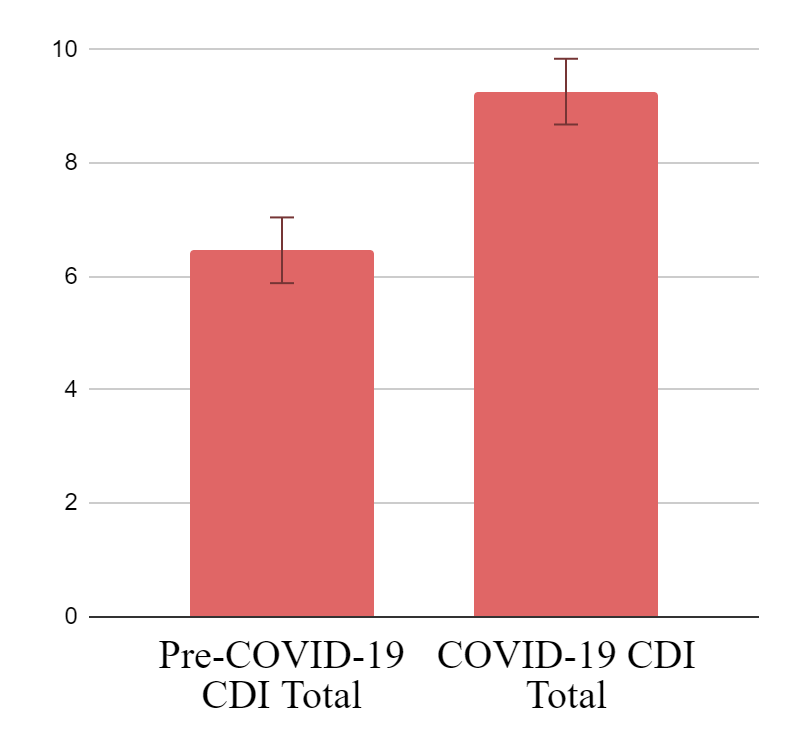
The CDI questionnaire is a self-report measure that assesses participants’ depressive symptoms (Kovacs, 1992). Scores were calculated by summing the item responses, which were Likert style (not often/doesn’t apply to me, sometimes/somewhat applies to me, very often/strongly applies to me). Participants completed the CDI assessment pre-COVID and during COVID.

Screen for Child Related Anxiety Disorders (SCARED)

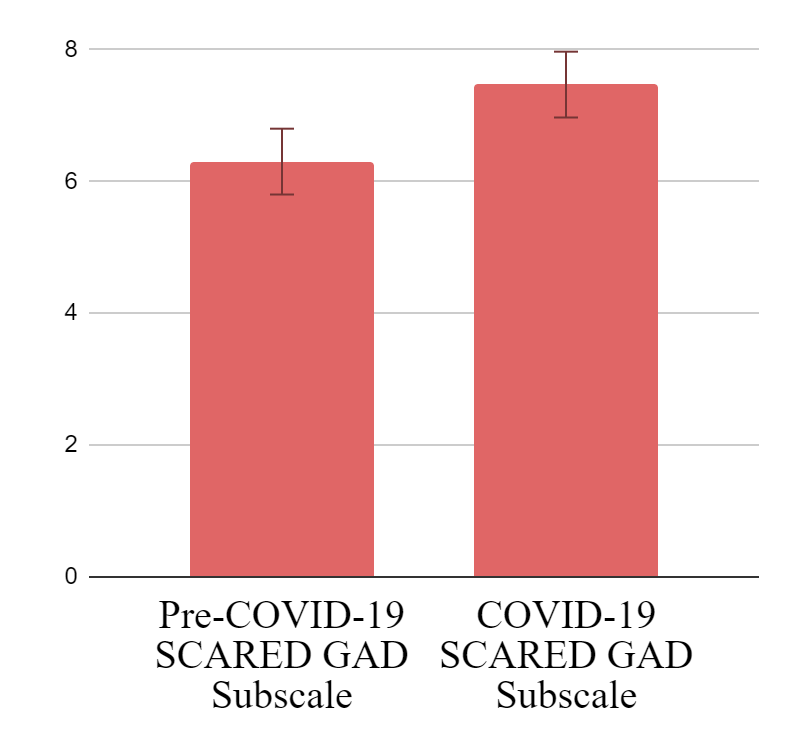
The SCARED questionnaire is a self-report measure that assesses participants’ anxiety symptoms. Each item had Likert-style responses (0 to 2: 0 = not true, 2 = very true) and was categorized into one of five subscales: panic disorder or significant somatic symptoms, generalized anxiety disorder (GAD), separation anxiety disorder, social anxiety disorder, and significant school avoidance. A total sum score of 25 or above (out of 82) indicated the possible presence of an anxiety disorder (Birmaher et al., 1997). The present study focused only on the GAD subscale, where a sum score over 9 indicated the possible presence of GAD. Participants completed the SCARED assessment pre-COVID and during COVID.

Data Analysis

Using IBM®️ SPSS®️ Statistics (v.27) software, we conducted two paired samples t-tests to examine whether depressive and anxiety symptoms increased during the pandemic as compared to pre-pandemic. Further, we conducted follow-up partial correlations (controlling for pre-pandemic symptoms) to investigate the relationship between relationship quality and depressive/anxiety symptoms during the pandemic.

Results & Discussion

Figure 1. Pre-COVID-19 vs. COVID-19 SCARED GAD Subscale t-test

t = -4.88, p < .001

Figure 2. Pre-COVID-19 vs. COVID-19 CDI Total t-test

t = -3.07, p < .01

Table 1. Correlations between SCARED GAD (COVID-19), CDI (COVID-19), and peer relationships

COVID-19 SCARED GAD SubscaleCOVID-19 CDI Total
NRI-RQV Best Same-Sex Friend Closeness (pre-COVID)-0.287**-0.080
NRI-RQV Best Opposite-Sex Friend Closeness (pre-COVID)-0.205*-0.259**
Controls: pre-COVID SCARED or pre-COVID CDI
p < .05*   p < .01**  p < .001***

Table 2. Friendship closeness vs. COVID-19 symptoms regressions

COVID-19 SCARED GAD Subscale (β)COVID-19 CDI Total (β)
NRI-RQV Best Same-Sex Friend Closeness (pre-COVID)-.168**.074
NRI-RQV Best Opposite-Sex Friend Closeness (pre-COVID)-.018-.124****
Controls: pre-COVID-19 SCARED and CDI; COVID-19 SCARED or CDI
p < .05*   p < .01**  p < .001*** trending****

Results indicated support for the first hypothesis. Across the sample, participants had greater depressive (t = -4.88, p <.001) and anxiety (t = -3.07, p < .01)symptoms during the COVID-19 pandemic, as compared to pre-pandemic. However, results indicated only partial support for the second hypothesis. Pre-pandemic friendship closeness was associated with changes in anxiety and depressive symptoms; specifically, stronger pre-COVID same-sex friendship closeness uniquely correlated with smaller increases in anxiety symptoms during COVID (r = -.29, p < .01), while stronger pre-COVID opposite-sex friendship closeness uniquely correlated with smaller increases in depressive symptoms during COVID (r = -.26, p < .01). When controlling for pre-pandemic symptoms, pre-COVID same-sex friendship closeness still predicted changes in COVID anxiety symptoms (r = -.17, p < .01). Mother and father relationships were not found to be significantly predictive of changes in mental health during COVID.

Conclusion

Interpretations

It is possible that participants were more comfortable expressing worry to same-sex friends (girls), buffering against increased anxiety symptoms. Perhaps they shared feelings about missing friends or romantic interests at school. Findings also suggest that opposite-sex friends (boys) may have helped improve participants’ moods, buffering against increased depressive symptoms. The girls may have had a crush or two and were happier interacting with them, even if only virtually, while following stay-at-home orders.

Limitations

The sample was predominantly Caucasian and middle class, and from the Long Island, New York area. As such, the sample is certainly not representative of the entire United States, as the U.S. is much more racially and socioeconomically diverse. It is unclear whether or not these results would be similar for individuals of different backgrounds, since a variety of factors, including race, ethnicity, sex, and economic class, impact the degree to which people have been affected, either positively or negatively, by the pandemic (Center for Disease Control and Prevention). For example, Black and Indigenous Americans had the highest COVID-related death rates, while Asians and Whites had much lower rates (APM Research Lab Staff). According to the Pew Research Center, lower-income individuals were also more likely to report lost income and jobs due to the pandemic (Parker et al., 2020). As such, the present study’s sample may not have been affected by COVID-19 as much as other groups.

Further, all measures were self-reported, so participants may have been reluctant to share the full extent of their relationships and COVID-19 experiences. Another important consideration is that there was over a year, on average, between the pre-COVID and during-COVID assessments, meaning we could not account for potential significant life changes, such the death of a parent, losing touch with a friend, moving to a new place, and changes in relationship nature itself. Therefore, the present study’s results regarding pre-pandemic relationship quality may not be fully applicable to pandemic-era relationship health.

Future Directions

Overall, the results were largely what we hypothesized. Increased anxiety and depressive symptoms during the COVID-19 pandemic were evident across the sample and peer relationships predicted changes in mental health. Future studies should investigate these findings further and consider potential gender, race, and socioeconomic class differences that were not found in the present sample. Social factors like gender norms, double sex standards, race/ethnicity, and wealth may further influence the nature of adolescents’ social support networks and how they experienced the COVID-19 pandemic.


References

APM Research Lab Staff. (2021, March 5). The color of coronavirus: COVID-19 deaths by race and ethnicity in the U.S. APM Research Lab. https://www.apmresearchlab.org/covid/deaths-by-race

Birmaher, B., Khetarpal, S., Brent, D., Cully, M., Balach, L., & Kaufman, J. (1997, April). The screen for child anxiety related emotional disorders (SCARED): Scale construction and psychometric characteristics. J Am Acad Child Adolesc Psychiatry 36: 545–553. https://doi.org/10.1097/00004583-199704000-00018

Center for Disease Control and Prevention. (2021, April 19). Health equity considerations and racial and ethnic minority groups. https://www.cdc.gov/coronavirus/2019-ncov/community/health-equity/race-ethnicity.html

Furman, W., & Buhrmester, D. (2010). Network of relationships questionnaire manual. Unpublished manuscript, University of Denver, Denver, CO, and the University of Texas at Dallas.

Hawes, M.T., Szenczy, A.K., Klein, D.N., Hajcak, G., & Nelson, B.D. (2021, January 13). Increases in depression and anxiety symptoms in adolescents and young adults during the COVID-19 pandemic. Psychological Medicine, 1–9. https://doi.org/10.1017/s0033291720005358

Hyde, J.H., Mezuklis, A.H., & Abramson, L.Y. (2008). The ABCs of depression: Integrating affective, biological and cognitive models to explain the emergence of the gender difference in depression. Psychological Review, 115, 291-313. https://doi.org/10.1037/0033-295x.115.2.291

Magson, N.R., Freeman, J.Y., Rapee, R.M, Richardson, C.E., Oar, E.L., & Fardouly, J. (2021). Risk and protective factors for prospective changes in adolescent mental health during the COVID-19 pandemic. Journal of Youth and Adolescence, 50, 44-57. https://doi.org/10.1007/s10964-020-01332-9

Kovacs, M. (1992). Children’s depression inventory. Multi-Health Systems, Inc.

Parker, K., Horowitz, J.M., & Brown, A. (2020, April 21). About half of lower-income Americans report household job or wage loss due to COVID-19. Pew Research Center. https://www.pewresearch.org/social-trends/2020/04/21/about-half-of-lower-income-americans-report-household-job-or-wage-loss-due-to-covid-19/

Santini, Z.I., Koyanagi, A., Tyrovolas, S., Mason, C., & Haro, J.M. (2015, April 1). The association between social relationships and depression: A systematic review. Journal of Affective Disorders, 175, 53–65. https://doi.org/10.1016/j.jad.2014.12.049

You Can Sit With Us, But You Shouldn’t Have To: The Hidden Benefits of Social Cliques

by Vineeta Abraham, May 9, 2021

Many adults with yearbooks filled with high school “horror stories” will claim they  originated from the rigid, harsh social structure they had to adhere to, complete with bullies,  queen bees, and their select array of victims. This myth is the reason behind many administrative efforts to integrate students in middle schools and high schools across the country as an attempt to attack the issue of social circles or “cliques” from multiple angles. When doing this, they often think that tackling the main problem involves eliminating the social hierarchies that exist in the halls of almost every high school. While this seems to be in the students’ best interests, it may be doing more harm than help. What teachers and administrators often fail to recognize is that when students are socially structured, they are able to create identities for themselves and thrive in the niches that the school environment creates for them. While most people assume this means that a sense of privilege will linger among several of these social standings, it should be noted that allowing students to stay comfortably within their social groups might be a better alternative than forcing them to intermingle. Although people have misconceptions about the nature of so-called “cliques,” and are therefore enforcing programs to dismember them, allowing these social circles to thrive, while taking care to encourage healthy cooperation between them, can help students develop psychologically in group settings and avoid the negative effects of not having a social group to call their own.

Much of the skepticism surrounding the existence of social circles in schools comes from  stereotypical assumptions about them. These are often fueled and exaggerated by the media,  through means such as books, television series, and teen-drama movies. The entirety of the  infamous 2004 comedy Mean Girls revolves around a typical new girl trying to outmaneuver the  social ladder that exists at her new school, including the “A-list girl clique” described in the  summary provided on the internet movie database, IMDb. In this movie, many types of cliques  and social circles are represented, as well as a clearly defined ladder that is topped by the so called “mean girls.” The movie highlights the entitled, harmful personalities of those who top these social hierarchies and proposes that cliques tend to remain vicious towards each other and cannot coexist peacefully (IMDb). Media such as this promote a general sense of wariness in the minds of their audiences, which include families, educators, and administrators, through their use of pure exaggeration. One may argue that some schools do in fact have a strong presence of social hierarchies and social ladders, but it must also be noted that this is not very different from how society is structured in a world outside of the school building. Status is not a foreign concept for our communities, and treating it as such in school doesn’t prepare students for what they will face long after graduating from their microcosms of the real world. However, it is possible to attract attention towards eliminating the toxic potentials of social hierarchies while still encouraging the social groups. 

Social circles have existed in schools for generations, and although the way they’re structured has varied through generations, their general formulas remain fairly consistent. Cliques are nothing new, as shown by Jerry Adler, a former senior editor of Newsweek who has written for magazines such as The New Yorker, The Smithsonian, and Scientific American. In a 1999 Newsweek article, he explains that these groups include “athletes and preppies and wanna-be gangsters; pot-smoking skaters and sullen punks; gays and nerds and, yes, morbid, chalk-faced Goths,” and remain “surprisingly similar from coast to coast” (Adler). This consistency further supports the idea that these social structures are not only normal, but even instinctive, especially for adolescents. Shayla Ahamed, a blogger from Penn State University, writes that most people are simply “inclined to become friends with people that are similar to them and share their interests,” claiming that while negative side effects seem to be the focus in the media, forming groups are for the students’ own benefit (Ahamed). Additionally, Daniel A. McFarland, a sociology professor at Stanford University, uses his 2014 study for the American Sociological Review to discuss details of social structures, calling them “supportive and protective” and claiming that this is what leads students to tend to create them more often than not (McFarland). Perhaps the universality in these adolescents’ instincts to self-segregate is an important reason why we should nurture, rather than destroy, this phenomenon that we term “cliques.”  

Although Adler describes that in some places, these hierarchies demand a certain  evaluation of “status” be added to the existing situations, this is not always the case (Adler).  McFarland discusses how “adolescent societies” form when students begin to create groups “with individuals who share similar attributes, behaviors, or attitudes,” continuously  emphasizing the term “homophily” to describe how students constantly look for a sense of  “familiarity” (McFarland). As students begin the extremely trying time in their lives  corresponding to their high school years, their need for connecting to others like them increases immensely, highlighting the importance of having a strong social system to guide them  (McFarland). Although one may believe that social divisions can lead to insensitivity or other  undesirable side effects like bullying, the truth is that proper lessons in respect can, together with  these groups, be advantageous to the student body.  

These avoidable consequences of cliques encourage educators and administrators to overcompensate and actually cause more harm. This anti-clique mentality is inspiration for programs such as “Mix It Up at Lunch,” a social campaign started by the Southern Poverty Law Center’s Learning for Justice project. The “Mix It Up” program aims to encourage students to spend time at lunch with people who are not in their primary friend groups by eating with people outside of those social circles. Learning for Justice has also created multiple other activities to promote integration, including “Mix it Up Dialogue Groups” (“Mix it Up”). Another such example of programs created in an attempt to dismantle these social structures is Abigail N. Kirk’s teacher inquiry for Penn State University called “Kick the Cliques,” in which she promotes classroom activities to encourage girls to cooperate with each other while avoiding the creation of self-made groups (Kirk). These and other similar programs aim to teach students to adapt to other personalities and promote large group settings by straying away from creating smaller groups or self-segregating. While their intentions are pure, programs like these are usually a mix of ineffective and awkward for the students being forced into them, typically without having the choice to opt out. While one may argue that current discomfort will pay off later on, the chances of making most long-lasting friendships from continuously forced collaborations are slim. Furthermore, continuous efforts by the administration to intervene in students’ social decisions can be more harmful than beneficial. 

Rather than trying to eliminate these cliques, schools should embrace the idea of  encouraging kids to thrive within their own social circles. Physician Susan Biali Haas, M.D. argues in her 2013 Psychology Today article, “Stop Trying to Fit In, Aim to Belong Instead,” that people should stop “trying to be something [they’re] not in order to gain acceptance,” which is what integration promotes (Haas). This viewpoint emphasizes the idea that people should embrace their own characteristics and look for those with similarities in order to find their social circles rather than drastically changing their personalities to match those of a preexisting group. The alternative to having to change oneself for the benefit of fitting in would be to allow students to create groups that are naturally suited for their personality types and interests — in other words, allowing them to focus on belonging (Haas). The concept of belonging encourages self-acceptance and self-esteem, thereby providing students with more helpful guidelines for life and helping redirect the goals of administrators. For example, rather than focusing on rearranging students’ social groups, administrative intervention can include teaching students to avoid mean or hateful actions towards those who don’t necessarily fit into their own cliques. Furthermore, author Mark Rowh writes in an article for Current Health 2 that many students claim cliques can be “useful anchors in their social lives,” showing the true benefits they can have on the socioemotional health of students (Rowh). 

Being in small group settings can be psychologically beneficial, and studies of “social  psychology, for example, examine how emotion, cognition, and action are shaped by the social  environment” (McFarland). In an interview with psychologist Dr. Stacey Scott from Stony Brook  University, whose research specializes in emotions and stress in development throughout the lifespan, she described the importance of having “social support” throughout one’s life and  claims that adolescents require that strong support just like adults do (Scott). She explains further by saying that the social segregation that occurs during high school or one’s adolescence is representative of how “adults function in society,” even claiming that “adults aren’t necessarily  friends with everyone, so adolescents shouldn’t be expected to be either” (Scott). She also  suggested that other research has been conducted in the past to explain the normalcy of students  to “view their peers as being nominated under certain groups” and that this is not something we necessarily need to eliminate (Scott). It also encourages students to join small yet fundamental clubs and sports. These clubs and sports follow the same general guidelines that most cliques do — the only difference between most of these clubs and allowing students to create their own social circles is the absence of administrative involvement.  Furthermore, cliques and social groups help students develop and thrive within a self-made “niche in some section of [their] society,” as examined by psychologist Jeffrey Jensen Arnett from the University of Maryland College Park in a 2000 article for the American Psychologist (Arnett). 

The fate is much worse for students who don’t belong to a clique at all. While students  may think that most of the so-called “shunning” comes from social classes of higher status  towards those of lower status, the ones who don’t belong to a specific group often get the worst  of the blow. Chris MacLeod, a registered social worker who founded the website Succeed Socially, claims that failing to socially integrate can lead to “slip[ping] through the cracks” of the community (MacLeod). This feeling of not being “right” for a certain group can lead to feelings of loneliness and exclusion. Although it’s true that those who don’t necessarily conform to a certain group may choose to be that way, either because they  “don’t have enough” of whatever that particular group demands of them or simply because they believe those groups are either “on a pedestal” or “below them,” MacLeod suggests that eliminating these mindsets and embracing the idea of joining a group would prove to be beneficial to one’s social state (MacLeod). MacLeod supports the idea that joining such groups even when apprehensive could help improve one’s social skills such as “making conversation, feeling more comfortable around others, [and] being able to open up to people” (MacLeod). Daniel A. McFarland further discusses the importance of this “peer network” in his research by stating that “cliquing increases” during adolescence because of the “attachment shift from parents and family to peers” (McFarland). Allowing these close-knit relationships to form between students would be a better alternative for educators instead of trying to break these social structures down. This, in turn, will eliminate many of the problems associated with adolescent loneliness, as described by researcher Ahmet Gurses in his 2011 article for Procedia Social and Behavioral Sciences as he attempts to connect the problems of loneliness in high school to “academic  unsuccessfulness” (Gurses). Students without groups at all can find themselves falling into a spiral of adolescent loneliness and social awkwardness, as described by MacLeod. The simple alternative is to embrace the benefits cliques can have on the student population (MacLeod).  

Although the use of the words “clique” and “social circle” have negative connotations, it  should be noted that the majority of these assumptions about the implications of creating social  structures come from personal experience. Most phenomena in society have the potential for negative side effects, but it is wiser to eliminate the side effects rather than their causes. Allowing social structures to flourish in a high school setting can actually be beneficial to the students both socially and psychologically. Rather than implementing programs to negate and eliminate the instinct of high schoolers to self-segregate, schools and educators should work to promote healthy segregation. This would encourage students to embrace their differences and connect with others by developing their similarities. Therefore, programs originally intended to eliminate the prospect of social groups should be redirected in order to fuel the creation of healthy divisions among students while promoting sympathy and amiability between these divided groups. The main focus of administrators and  educators should be shifted from reworking preexisting divisions that students make instinctively to teaching students how these divisions can help them flourish as they enter adulthood and the outside society.


Works Cited

Adler, Jerry. “The Truth about High School.” Newsweek, 10 May 1999, www.newsweek.com/truth-about-high-school-166686. 

Ahamed, Shayla. “The Science of Cliques.” SiOWfa15: Science in Our World: Certainty and  Controversy, Penn State University , 8 Sept. 2015, sites.psu.edu/siowfa15/2015/09/08/the-science-of-cliques/. 

Arnett, Jeffrey Jensen. “Emerging Adulthood: a Theory of Development from the Late Teens  through the Twenties.” American Psychologist, vol. 55, no. 5, 2000, pp. 469–480. 

Gurses, Ahmet. “Psychology of Loneliness of High School Students.” Procedia Social and  Behavioral Sciences, vol. 15, 2011, pp. 2578–2581. 

Haas, Susan Biali. “Stop Trying to Fit In, Aim to Belong Instead.” Psychology Today, 17 Oct. 2013, http://www.psychologytoday.com/us/blog/prescriptions-life/201310/stop-trying-fit in-aim-belong-instead.

Kirk, Abigail N. “Kick the Cliques: Activities to Promote Positive Relationships among Girls in the Classroom.” Penn State U, 26 Apr. 2006. Penn State University, www.yumpu.com/en/document/read/51491966/kick-the-cliques-activities-to-promote-positive-relationships-among-. Manuscript. 

MacLeod, Chris. “When You Feel like You Don’t Fully Fit into Any Social Group.” Succeed  Socially, http://www.succeedsocially.com/dontfitintoanygroup. Accessed 20 November 2019.

McFarland, Daniel A. “Network Ecology and Adolescent Social Structure.” American  Sociological Review, vol. 79, no. 6, 2014, pp. 1088–1121. 

“Mean Girls.” IMDb, http://www.imdb.com/title/tt0377092/. Accessed 20 November 2019. 

“Mix it Up.” Learning for Justice, http://www.learningforjustice.org/mix-it-up. Accessed 5 May 2021. 

Rowh, Mark. “The In-Crowd: the Not so Shocking Truth about Cliques.” Current Health 2, a Weekly Reader Publication, vol. 34, no. 2, pp. 11+.

Scott, Stacey B. Personal interview. Oct. 2019. 

The Impact of Gender Discrimination in the Workplace on Women’s Mental Health

by Farah Hasan, April 3, 2021

Perhaps the most defining moment of the Women’s Rights Movement to date was the passage of the Nineteenth Amendment in 1920 following the valiant efforts of those who spearheaded the project, such as Susan B. Anthony and Elizabeth Cady Stanton, and those who fearlessly backed the movement as a novel mark of progressivism. This momentous occasion is regarded as the single largest extension of democratic enfranchisement in the history of the United States (“The woman suffrage movement”). Despite such enormous strides having been accomplished for the advancement of women in a society where men had always dominated the government, the economy, the workforce, etc., women are far from seeing gender equality in the United States. Although the right to enfranchisement has contributed to the virtual elimination of overt prejudice, implicit bias against women still pervades. Evidence of such implicit bias is seen in numerous places including pop culture, educational institutions, and the workplace. Particularly in the workplace, despite making gains in the labor force participation rate over the last several decades, women working in male-dominated fields have significantly different experiences at work than their counterparts in fields with more female representation (Parker, 2018). Gender discrimination stands as an impediment to many women’s success in their professional and occupational lives, and often deters them from seeking promotions/leadership. Thus, perceived gender discrimination in the workplace has profound negative effects on women’s mental health regarding clinical depression and anxiety, especially in comparison to men’s mental health when faced with the adverse stimuli of gender-based prejudice. 

Gender discrimination in the workforce manifests itself in various forms and is thus perceived in varying extents of severity. One of the most pronounced forms of gender discrimination is the wage gap between men and women, with women earning about 80% of every dollar that a man makes for the same or similar job. Particularly in male-dominated fields, a toxic workplace culture is developed in which job performance and commitment are measured solely by the number of hours dedicated to work, the number of weekend shifts taken, etc. This takes away any hope for having flexible hours, which many women need in order to balance family commitments (as women are often primarily charged with keeping up with familial responsibilities). Consequently, many women are unjustly perceived to be lazy, not dedicated, and not committed to their job role. The lack of female role models in senior roles and leadership positions is also quite disheartening when it comes to female empowerment and promotion. Without figureheads for reference, women are more likely to undervalue themselves, be modest in talking about their accomplishments, and forgo opportunities to seek promotions (Agarwal, 2018). Women with a bachelor’s degree or higher report experiencing higher levels of workplace discrimination than women with lower levels of education. 57% of employed women with postgraduate degrees report experiencing some form of gender discrimination, compared to 40% of working women with a bachelor’s degree and 39% of women who did not complete college (Parker & Funk, 2017). Similar trends are seen when it comes to receiving support from senior leaders, being passed over for promotions, feeling isolated at work, and being paid less than their male counterparts. 30% of women with family incomes of over $100,000 say they’ve been paid less than a man doing comparable work, compared to 21% of women with lower incomes (Parker & Funk, 2017). Regarding the workplace environment, women employed in majority-male workplaces are more likely to see their gender as a limiting factor to their professional advancement, are less likely to report fair treatment in personnel matters, and experience more gender discrimination. 49% of women working in male-majority workplaces report sexual harassment as a problem in their workspace, compared to 32% of women who say the same about female-majority workplaces. Lastly, only 49% of women in male-dominated workplaces report that their workplace is putting enough effort into increasing workplace diversity, compared to 78% of women working in places with an even gender mix and 71% of women working in female-dominated places (Parker, 2018). 

The manifestation of gender discrimination and implicit bias against women in different forms and at so many different levels often translates into adverse consequences on women’s mental health. In a study titled “Perceived discrimination and health: A meta-analytic review,” Pascoe and Richman defined gender discrimination as a “behavioral manifestation of a negative attitude, judgment, or unfair treatment toward members of a group” and included studies that discussed poor service and treatment of women in public situations, derogatory comments, and harassment (Pascoe & Richman, 2009). It was found that perceived discrimination plays a role in increasing the incidence of depression, psychological distress, and anxiety. Experiencing discrimination on a regular basis causes more frequent activation of the body’s natural stress response, resulting in a perpetual negative mood state. Chronic stress and discrimination may also diminish one’s level of self-control, leading to increased use of and reliance on smoking, alcohol, and other substances to relieve the negative mood state. This may also decrease engagement in healthy habits, such as cancer screening and diabetes management (Pascoe & Richman, 2009). Risk of depression, in particular, is increased by stressful life events such as the loss of a loved one, a chronic disability/illness, or a business failure. Rejection, social exclusion, and embarrassment/humiliation also contribute to increased risk of depression. Gender discrimination in the workplace increases the odds that women will develop depression, regardless of the type of discrimination faced, whether it be regarding hiring, promotion, assignment of job-related tasks, wages, and firing. Women under 40 years old are particularly susceptible to developing depressive symptoms due to workplace gender discrimination compared to women over 40, adjusting for socio-demographic factors (Kim et al., 2020). 

While gender discrimination often puts women at a disadvantage, it is important to recognize that men could also be subject to such discrimination in the workplace. Due to the salience of historical instances of gender-based discrimination impeding women’s social advancement, most empirical research has focused exclusively on the impact of gender discrimination on women. This may be due to the fact that women have been entering male-majority fields at accelerating rates over the past several decades, but men’s entry into female-dominated fields has been largely stagnant. Regardless, research into gender discrimination may also apply to men entering female-dominated fields. Francesca Manzi of the Department of Psychology at New York University reviewed congruity models of gender discrimination (CMDs) to determine if men in female-majority fields face the same challenges as women in male-majority domains. It is important to note that while it is possible for men to be subject to gender discrimination, they may not be perceived as victims because they do not belong to a group that is commonly discriminated against, and discrimination of an “upper-class group” by a “lower-class group” (in this case, women discriminating against men) is usually not perceived as such. Female-majority occupations are often devalued and perceived to require less skill and intelligence, and thus do not come with significant status or monetary rewards, so exclusion from these occupations on the basis of gender is not seen as socially or economically hindering, and thus is not seen as discrimination. A potential source of stress, however, could be the incongruity of gender identity and occupation. Men may feel increased rates of depression and anxiety after perceiving a conflict between their gender and their job, which may lead to lower job satisfaction, dedication, and commitment. This is largely tied to the stereotype threat that comes from gender norms, where men’s quality of performance in female-dominated jobs is impaired when their gender is made salient (the stereotype threat also affects women in  male-dominated jobs). Conversely, it has previously been reported that men do not face gender discrimination in female-oriented jobs and actually experience facilitated upward mobility on the organizational ladder due to their gender (gender-based male advantage in female-dominated jobs is known as the “glass escalator” phenomenon). Unlike in the case of women being seen as incompetent in a “man’s” field, a man’s gender is seen to be a positive attribute that he brings to an otherwise female-dominated field, and thus the male stereotype works in his favor. Ultimately, this suggests that men have the advantage over women, even in female-dominated professions. Accordingly, men report receiving workplace support and report low levels of workplace inequality and/or mistreatment. Compared to the anti-female sentiment in male-dominated jobs, the anti-male sentiment in female-dominated jobs is insignificant (Manzi, 2019). 

The existing literature shows that both men and women can experience gender discrimination in the workplace. Due to the relative recency of the Women’s Rights Movement, the #Metoo movement, etc. women still have a long way to go in terms of equality and unfortunately bear the brunt of workplace gender discrimination. Women are subject to lower wages, fewer promotional opportunities, workplace isolation, sexual harassment, etc. On the other hand, it is important to recognize the barriers that men may face upon entry to female-majority professions, although further research must be done on this topic. Men face challenges associated with workplace gender discrimination, but on a much smaller scale than women, as they are less likely to report lower wages, be regarded as incompetent due to gender, receive less support from senior leaders, and be passed over for important assignments (Parker & Funk, 2017). Regardless, both men and women may experience some extent of psychological distress, depression, and negative mood state as a result of gender discrimination and/or incongruity between gender and occupation. Most men (67%) and women (68%) report that their gender has not played any role in hindering their professional success, but some workers are still experiencing the challenges of gender-based prejudice (Parker & Funk, 2017). Actions can be taken to counteract implicit bias and gender discrimination by encouraging diversity in workplaces (especially in occupations that are either male- or female-dominated) and normalizing the presence of other gender(s), allowing flexibility in work schedules, promoting female leaders, having strict disciplinary policies against sexual harassment, enforcing equal pay laws, and researching occupational barriers impeding men. Eliminating workplace gender discrimination may be a slow process, but with time, dedication, and sincere activism, it is an immense stride toward achieving true gender equality in America. 


References

Agarwal, P. (2018, August 31). How you can encourage more women into your workforce. Forbes Magazine. Retrieved from https://www.forbes.com/sites/pragyaagarwaleurope/2018/08/31/how-you-can-encourage-more-women-into-your-workforce/

Kim, G., Kim, J., Lee, S.-K., Sim, J., Kim, Y., Yun, B.-Y., & Yoon, J.-H. (2020). Multidimensional gender discrimination in workplace and depressive symptoms. PloS One, 15(7), e0234415.

Manzi, F. (2019). Are the processes underlying discrimination the same for women and men? A critical review of congruity models of gender discrimination. Frontiers in Psychology, 10. doi:10.3389/fpsyg.2019.00469

Parker, K. (2018, March 7). Women in majority-male workplaces report higher rates of gender discrimination. Retrieved August 2, 2020, from Pewresearch.org website: https://www.pewresearch.org/fact-tank/2018/03/07/women-in-majority-male-workplaces-report-higher-rates-of-gender-discrimination/

Parker, K., & Funk, C. (2017, December 14). Gender discrimination comes in many forms for today’s working women. Retrieved August 2, 2020, from Pewresearch.org website: https://www.pewresearch.org/fact-tank/2017/12/14/gender-discrimination-comes-in-many-forms-for-todays-working-women/

Pascoe, E. A., & Smart Richman, L. (2009). Perceived discrimination and health: a meta-analytic review. Psychological Bulletin, 135(4), 531–554.

The woman suffrage movement. (n.d.). Retrieved July 31, 2020, from Womenshistory.org website: https://www.womenshistory.org/resources/general/woman-suffrage-movement