Mental Health is Also Physical

by Sara Giarnieri, March 12, 2021

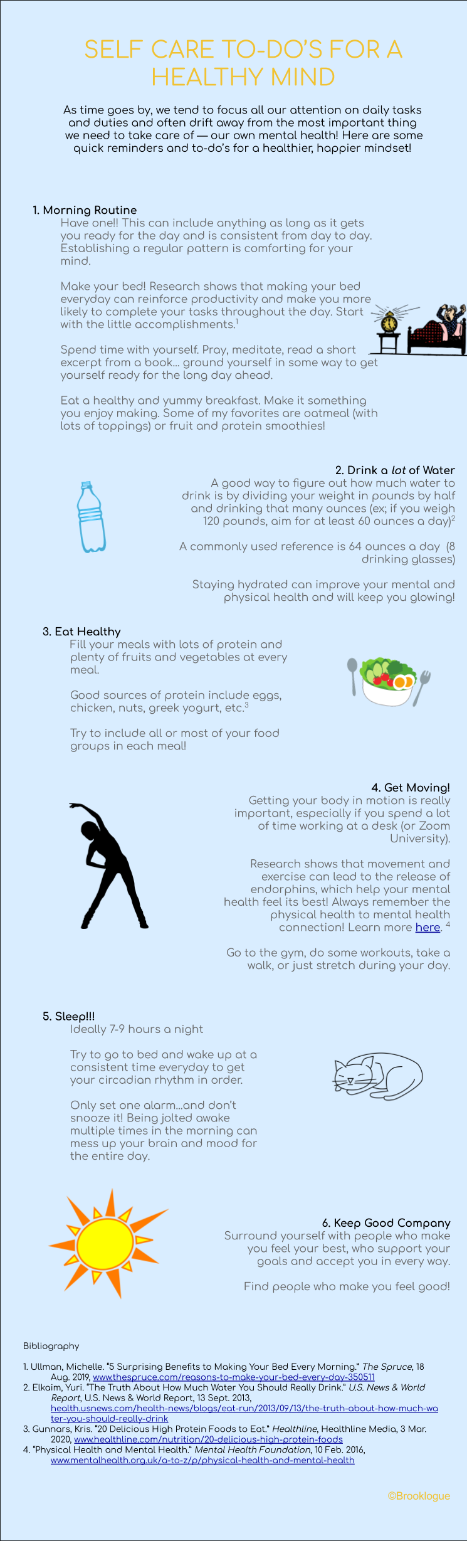
When you think about mental health, what comes to mind? 

Are you thinking of emotions, or maybe just general well-being?

Did you know that mental health plays a significant role in your physical health as well? 

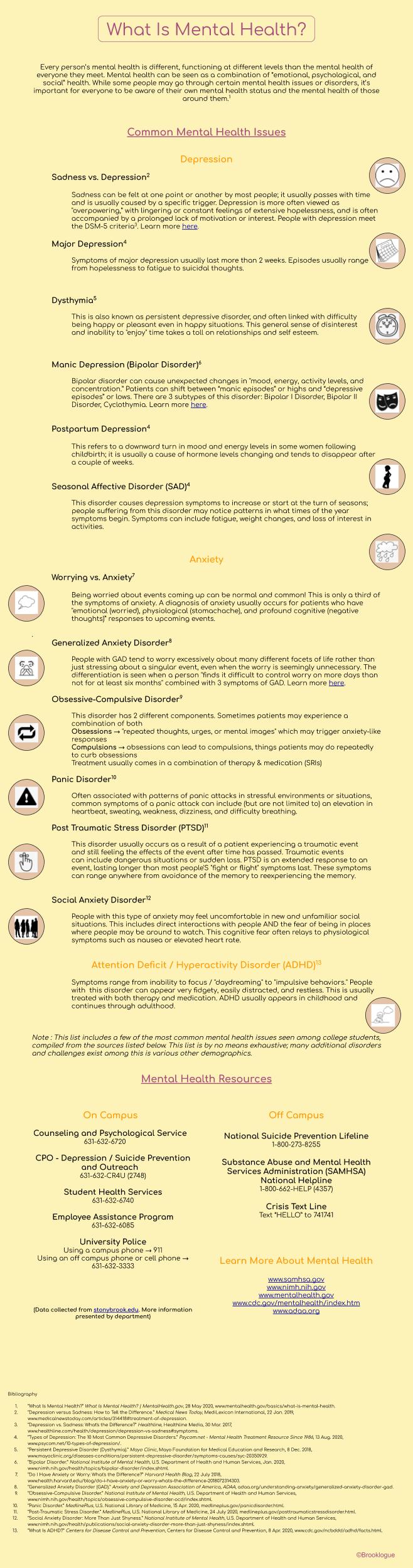
Depression, anxiety, and other mental health conditions are often associated with our emotional responses. Yet there are physical characteristics of mental health conditions that aren’t as readily acknowledged such as muscle tension, upset stomach, and chest pain (“Stress symptoms,” 2019).

Why do mental and physical health go hand in hand?

This is because a disruption in mental health can prevent us from maintaining a healthy lifestyle. As the Office of Disease Prevention and Health Promotion states (2020), “Mental illnesses, such as depression and anxiety, affect people’s ability to participate in health-promoting behaviors.” For someone debilitated by mental health, riding a bike may not be as easy for them compared to someone who may be in a stronger state of mental health. The neglect of our health due to psychological conditions can lead to physical symptoms. 

For instance, some common physical signs of depression are fatigue, changes in appetite, and headaches (“Depression,” 2018). Anxiety can also cause fatigue, rapid heart rate, and a decline in focus (“Anxiety disorders,” 2018). Anyone experiencing physical symptoms like these should recognize that it could be due to mental health, which is an aspect of our lives that is often ignored. Mental health should receive the critical attention needed in order to lessen these physical symptoms and achieve a happier, healthier life. 

Those who are battling psychological conditions may also be at risk for long term physical health conditions.

Studies have shown that people who are struggling with mental health are more likely to have certain health conditions. The New Zealand Journal of Psychology studied the correlation between mental health and physical health and found that those with psychological conditions such as depression and anxiety are more likely to suffer from cardiovascular disease, stroke, arthritis, asthma, and chronic pain (Lockett et al., 2018). The careful treatment of our mental health can help to prevent the development of serious physical conditions. 

How can we take care of our health?

Make sure you are listening to yourself both mentally and physically, as the two coincide with one another. Pay attention to how much sleep you get, provide your body with enough nutrients, and exercise daily. Set aside time to find and indulge in activities that make you feel good. Most importantly, don’t be afraid to reach out! If you feel that you are struggling, don’t hesitate to speak to a friend, family member, counselor, or someone you trust. They are there to help you. 

Think back again: What is mental health to you? Did your answer change, or did it remain the same? Either way, everyone can take more time to learn about mental health and how much it truly influences our lives. 


National Mental Health Resources

National Suicide Prevention Lifeline: +1 (800) 273 – 8255

Substance Abuse and Mental Health Services Administration (SAMHSA) National Helpline: +1 (800) 662 – HELP (4357)

National Alliance on Mental Illness (NAMI) Top HelpLine Resources

MentalHealth.gov

Stony Brook University Mental Health Resources

Counseling and Psychological Services (CAPS)

Mental Health Outreach and Suicide Prevention


References 

Anxiety disorders. (2018). Retrieved from https://www.mayoclinic.org/diseases-conditions/anxiety/symptoms-causes/syc-20350961

Depression (major depressive disorder). (2018). Retrieved from https://www.mayoclinic.org/diseases-conditions/depression/symptoms-causes/syc-20356007

Lockett, H., Jury, A., Tuason, C., Lai, J., & Fergusson, D. (2018). Comorbidities between mental and physical health problems: An analysis of the New Zealand Health Survey data. New Zealand Journal of Psychology, 47(3), 5–11.

Office of Disease Prevention and Health Promotion. (2020). Mental Health and Mental Disorders. Retrieved from https://www.healthypeople.gov/2020/topics-objectives/topic/mental-health-and-mental-disorders

Stress symptoms: Effects on your body and behavior. (2019). Retrieved from https://www.mayoclinic.org/healthy-lifestyle/stress-management/in-depth/stress-symptoms/art-20050987

Mean Girls and Boys That Don’t Cry

by Ayesha Azeem, February 27, 2021

Whether we want to believe it or not, stereotypes control our conscious and subconscious thoughts, influencing our actions and behaviors towards society. As Leslie Scrivener’s article “The Cult of the Mean Girl” highlights, our perceived ideologies about how women behave toward each other influence our behavior in practice. Because we believe women are supposed to indulge in gossip and jealousy due to social norms, we as a society expect and even participate in this behavior. Ideologies and perceptions of men’s behavior also exist; while society perceives women as emotional and judgmental, we also expect men to remain professional, dominant, and violent. These thoughts and expectations not only affect how we behave towards others but also how we recognize ourselves. 

As soon as we are born, we gain awareness about the accepted and rejected behaviors in our society. One of these expected roles of a woman include “being nasty to each other … one of the rigidly enforced North American standards of what constitutes femininity” (Scrivener 1). Society expects women to treat each other as antagonistic competition, making them their own worst enemies. Little girls are not directly taught about these attitudes from their mothers, yet women around the world understand and engage in hostility towards each other. Girls watch their mothers gossip about neighbors and coworkers and administer this pettiness within themselves as well.

Society expects young women to rely entirely on their husbands and center their appearance, behavior, and mindset around what the men in their life anticipate and desire. As a result, women may prioritize their romantic relationships over friendships with other females since “women receive messages that their primary relationship should be with men, and that they have to compete for those relationships” (Scrivener 3). This often induces unwarranted aggression and possessiveness as part of the rivalry against female peers and thus destroys any connection they once felt. With the heavy emphasis on supporting the patriarchy, the media influences women to yearn for successful romantic relationships as their ultimate goal in life, belittling friendships and enhancing incivility among women. Because of this, when women suffer domestic violence and other relationship-related stress, they find themselves alone with no one to confide in. The stereotypes women comply with cause failures in their connection with peers and foster unnecessary cruelty. However, stereotypes and social norms control not only women, but also men.

We expect men to act dominant, controlling, and violent, and we criticize them when they do not make these traits apparent. From minor reprimanding like “real men don’t cry,” to extreme, life-changing situations such as forced enlistment into the military for men in South Korea, the way in which our society regards and expects men to behave alters the way they recognize and think of themselves. Generally, we expect men to remain nonchalant and unaffected, whereas we portray women as overly emotional. When men find themselves unable to effectively communicate their feelings because they learn at a young age that their tears are forbidden, they tend to internalize their feelings of depression, pain, and hatred, which may transition into radical acts of violence. Studies find that nearly 1 in 4 women experience physical abuse issued by an intimate partner, generally a male (National Domestic Violence Hotline). However, men are also victimized by abuse and rape. 15% of domestic violence victims are males who may not have the support they need to speak up about their struggles for fear of being labeled as an instigator or facing disbelief — or even taunts — rather than the help they desperately need (National Domestic Violence Hotline). Other men may resort to mass violence instead, attempting to get revenge on society for trying to isolate men from their feelings. The recent mass shootings witnessed in the United States have been overwhelmingly committed by male gunmen, from El Paso to Parkland, Florida. The terror and fear only increase as time goes on (Reese). 

Rather than allowing young boys to communicate their feelings and feel heard, society ignores their violence as “boys will be boys” until the resentment transitions into horror.  Additionally, with the emphasis on the patriarchy and the supposed role of a man, young boys are forced to grow up earlier than they are meant to. Society expects every young man to graduate college with a degree, find a career immediately, buy a house and find a suitable woman to make his wife before he grows old. The pressure put on young men without providing an effective and safe outlet causes harm both for themselves and the people surrounding them. 

With this generation’s eagerness to raise awareness about the immoralities around the world, we would benefit from diminishing the unnecessary stereotypes held about gender and how one’s sex and gender should affect the way they convey their emotions. Parents should nurture their children in a way which young boys do not feel obligated to conceal their emotions and vulnerability, and young girls should feel encouraged to create enduring friendships with other females rather than focusing on finding an intimate partner. After all, we have bigger things to worry about than whether our behavior matches that which society expects of us. 


References

  1. Scrivener, Leslie. “The Cult of the Mean Girl.” Toronto Star, 5 Mar. 2006.
  2. “Statistics.” The National Domestic Violence Hotline, https://www.thehotline.org/resources/statistics/.
  3. Reese, Phillip. “When Masculinity Turns ‘Toxic’: A Gender Profile of Mass Shootings.” Los Angeles Times, 7 Oct. 2019, http://www.latimes.com/science/story/2019-10-07/mass-shootings-toxic-masculinity.

The Micronesian Suicide Epidemic

by Brandon Chavez, January 25, 2021

Brandon Chavez is a Class of 2024 undergraduate majoring in History. He enjoys learning about social and political issues in other countries & places around the world. He also enjoys learning about the challenges faced by indigenous populations.

***FALL 2020 CONTEST SUBMISSION***

”Suicide rates since 1960 in Micronesia (the U.S. Trust Territory of the Pacific Islands) have undergone an epidemic-like increase. This phenomenon is focussed narrowly within the 15-24-year male age-group”

(Rubinstein, 1983).

Family plays a quite significant role in Micronesian society. An individual’s self-esteem is very dependent on the acceptance and support of the family, more so than any other contributing factor. A firm place and role in the family is a source of self-esteem for an individual. The significance of familial relations and approvals are shown with one of Hezel’s statistics in his data: “Over 70 percent of all the suicides since 1960 were precipitated by conflicts within the consanguineal family” (Hezel, 55).

This phenomenon of high suicide rates among the male youth in Micronesia was first noticed by Reverend Francis Hezel, a Jesuit who was the director of Xavier High School in the Chuuk islands for nearly 18 years. Reverend Hezel wrote a magazine article about this phenomenon in 1977. Dr. Rubinstein, a researcher at Honolulu’s East-West Center, and Reverend Hazel later decided to research the issue further in the following years where they collected many facts about the situation but unfortunately did not come up with any solutions at the time. A later publication by Hezel in 1989 described the magnitude of the situation in Micronesia in comparison with the suicide rates of the United States: “The general suicide rate for Truk is 40 per 100,000. The rate for Trukese males between 15 and 25 is a startling 250 per 100,000. This is 20 times the youth rate in the United States” (Hezel, 1989).

Hezel observed that these suicides can be linked to small disputes between a young man and an older family member, like an older sibling or parent. Two examples were cited by Hezel to show his observation of the trend: one 13 year old boy hung himself after being scolded by his mother and a 16 year old boy also hung himself after his father refused to give him $1.

Another trend Hezel recognized was that the suicides would be clustered in groups; the death of one young man would often lead to suicides of others in the area. 

When thinking about possible causes for these trends, Hezel initially thought that the process of modernization and its pressures clashing with traditional island societies was responsible for this phenomenon. Hezel and Rubinstein looked further into the issue and found that poor family relations were a common pattern with their research. 

Hezel also described another insight into the issue that he gathered from his research: 

“Rather than an impulsive act, we found the suicides were often the result of a longterm intolerable situation”

(Hezel, 1983).

Reverend Hezel’s insight reveals that these suicides in Micronesia are not impulsive, but that there is a cultural aspect to the situation, regarding a traditional island defense mechanism taken to an extreme. The word “amwunumwun” is used by the Chuukese to describe the behavior of young men using withdrawal to express shame or anger. Refusing to eat or being silent are examples of actions that these young men engage in when showing this behavior. 

Reverend Hezel and Dr. Rubinstein believed that the strategy of amwunumwun became violent in the 1960s and 1970s where suicide might be considered the most extreme form of this behavior of bringing harm to oneself to save a relationship. A Chuukese suicide victim thought that being dead would repair more to a damaged relationship than if they were alive.In a later publication Reverend Hezel shed new insight on the suicide epidemic in the Chuuk islands (Hezel, 1989).

Figure 1

Note. Hezel found that anger was the leading cause of suicide in several islands in Micronesia (Chuuk, Pohnpei, Kosrae and Yap), the Marshall Islands and Palau (Hezel, 1989, p. 49).

Hezel also sought to find out the significance of the types of interpersonal and familial relationships that lead to suicide in Micronesia. Below is the table of his recorded data:

Figure 2

(Hezel, 1989, p. 51)

The table revealed that a relational disruption or conflict between a young man and his parents was often the most common cause of relational disruption that led to suicide. Hezel notes that in suicide cases that were led by disruptions in nonfamily relationships, the victim might break off familial ties because of the shame that might be bringing to their family and fear of what their family members’ reactions woud be. The victim was ashamed of actions that could offend their family and feared a consequential disruption in familial relations.

In 2007,  Dr. Mao-Sheng Ran, a professor at the University of Hong Kong, reviewed pre-existing data on the characteristics of suicide in Micronesia. 

Dr. Ran’s research found another phenomena that highlights the effect of mental health on suicide in Micronesia the effect of mental health on suicide in Micronesia compared with another country such as the United States.

Figure 3

(Ran, 2007, p. 83).

The bar graph above reveals an interesting and peculiar observation about the correlation between mental illness and suicide victims in Micronesia. Only 10% of suicide victims in Micronesia had psychiatric disorders, while 90% of suicide victims in the United States had mental illness. Dr. Ran states that: “Mental illness did not appear to be an important factor in Micronesian suicides. Most of the victims have had no serious delinquency problems, psychological abnormality, or psychosis” (Ran, 83).

Dr. Ran noted that intergenerational conflict was the most common cause that led to suicide and most suicides occured because of a conflict, misunderstanding or argument between a young victim and their parents or older relative. 

The definition of anger in Hezel’s research is further explored in Dr. Ran’s review. Hezel’s publication in 1989 cited three distinct patterns of suicides which included anger suicides, shame suicides and psychotic suicides. It was previously mentioned in Hezel’s publication that anger suicides were the most prominent in Micronesian suicide cases, but this definition of anger adds a new understanding to the situation. Ran established that:”The definition of ‘anger’ was similar to the way Americans describe depression”(Ran, 2007, pg. 84). This definition of anger shows a cultural difference in how anger is defined in Micronesian society and American society. 

The review also included several aspects and social changes that may be responsible for the high suicide rate in Micronesia. The first change is the expansion of a cash economy in Micronesia and the decreasing reliance on subsistence production. The production may be responsible for weakening the significance of clan and lineage activities. The decline in clan and lineage activities narrows social support for teenagers, increases reliance and dependence on parents, and increases  parental-adolescent conflicts.The second change is the acceptance of suicide which can be attributed to this increase in suicide rates. As suicide becomes common among the youth, it became more acceptable and even expected.

According to Hezel, western solutions such as suicide prevention hotlines and counseling would not fully solve the suicide epidemic witnessed in Micronesia as the issue is not only psychological but also cultural. Dr. Ran offered several suggestions for future research to combat the issue. Ran suggests that there should be more surveillance on suicidal behavior in Micronesia, independent research on preventive and risk factors, and a longitudinal study on social and economic shifts affecting the male youth. Since there is not many mental health professionals available, Ran suggests that more individuals should be trained to counter the issue of suicide. 

The Micronesian suicide epidemic is quite unique as the root of the issue is concerned more with the inter-generational conflict and socio-cultural elements found within Micronesian society rather than mental illness. Solutions to the issue and research on the topic cannot be treated in a western approach, as the act of suicide has shown to be woven into the youth culture of Micronesian society. Future studies, research, and clinical approaches must consider the socio-cultural elements of Micronesian society & family to make progress in combating the Micronesian suicide epidemic.


References

Hezel, F. (1989). Suicide and the Micronesian family. The Contemporary Pacific, 1(1/2), 43–74. Retrieved November 30, 2020, from http://www.jstor.org/stable/23701892 

Micronesia’s male suicide rate defies solution. (1983, March 06). The New York Times. Retrieved November 30, 2020, from https://www.nytimes.com/1983/03/06/us/micronesia-s-male-suicide-rate-defies-solution. html 

Ran, Mao-Sheng. (2007). Suicide in Micronesia: A systematic review. Primary Psychiatry, 14(11), 80–87. Retrieved November 30, 2020, from https://www.researchgate.net/publication/262882325_Suicide_in_Micronesia_A_Systematic_Review

Rubinstein, D. H. (1983). Epidemic suicide among Micronesian adolescents. Social Science & Medicine, 17(10), 657–665. doi:10.1016/0277-9536(83)90372-6

COVID-19 Does Discriminate

by Patricia Kozikowski, September 28, 2020

Throughout the coronavirus (COVID-19) pandemic, we have heard the phrase “the coronavirus doesn’t discriminate” multiple times. But if the virus doesn’t discriminate, why are certain groups of people suffering more than others?

A perfect example of this social issue is the differences in fatality rates in New York City and its surrounding areas. On May 8, 2020, Dr. Sandro Galea reported that the fatality rate from COVID-19 in Brooklyn is 7.8%, in the Bronx is 6.5%, in Queens is 6.8%, in Nassau County is 3.8%, in Suffolk County is 2.6%. Brooklyn has had a COVID-19 fatality rate that is two times higher than in Nassau County. Both of these communities are only 50 minutes away from each other. So why are twice as many people dying from the pandemic in Brooklyn than in a neighboring community that is less than an hour away?

A number of risk factors have been identified as contributing to these differences. Most of these risk factors correlate with income and race (Brown & Ravallion, 2020). While anyone can be infected by COVID-19, people with low-income are suffering more cases and deaths than people with high-incomes. Researchers W. Holmes Finch and Maria E Hernández Finch (2020) at Ball State University examined incidence and death rates during the first ten weeks of the pandemic. They discovered that counties with higher overall poverty had higher numbers of confirmed COVID-19 cases than in other counties. Additionally, they discovered that a larger number of deaths were associated with higher incidence of low birth weights and urban areas.

People with low-incomes are not only at a higher risk for infection and other physical health conditions, but they are also at a higher risk for developing mental health issues (Khullar & Chokshi, 2018). Prior to the pandemic, the National Survey of Drug Use and Health (NSDUH) reported that 9.8 million adults in the United States had a serious mental illness and 25% of those individuals were below the poverty line. Some of the factors that contribute to this relationship are community violence, food insecurity, unstable housing, low-income, and low access to healthcare (Jordan, 2015). Living in this uncertainty can cause a lot of stress and anxiety, eventually leading to larger mental health issues.

Since the start of the coronavirus pandemic, mental health symptoms have risen dramatically in the general population. In a KFF Tracking Poll, 53% of adults in the United States reported that the coronavirus has negatively impacted their mental health (Panchal et al., 2020). This was significantly higher than the mental health rates reported in the beginning of March. The pandemic has resulted in a lot of stress and anxiety about infection, social isolation, months of quarantine, the loss of jobs and businesses, and economic uncertainty. Additionally, Torales et al. (2020) reported that lower socioeconomic status (SES), interpersonal conflict, lower resilience, and lower social support are some risk factors that can increase mental health issues during the pandemic. The mental well-being of the general population has decreased, but what does this mean for individuals who were living with low-income before the start of the pandemic?

Residents of low-income communities suffered the mental health effects of poverty long before the coronavirus pandemic. The virus has only added stress to the daily lives of people in these communities. In general, people living with low-incomes report higher levels of negative mental health related to the coronavirus than those with high-incomes. In a KFF Tracking Poll conducted in July, 35% of individuals making less than $40,000 a year, 22% of individuals making between $40,000 to $89,999, and 20% of individuals making over $90,000 reported that they experienced negative mental health related to worry and stress from the coronavirus (Panchal et al., 2020). Additionally, Pew Research Center American Trends Panel conducted a survey measuring the proportion of respondents experiencing psychological distress (Keeter, 2020). They observed that psychological distress was substantially larger in participants in the lower income tertile (33%) than the upper income tertile (17%). Both of these findings suggest that people living with low-incomes are disproportionately affected by the pandemic than their advantaged counterparts.

The coronavirus calls attention to many social issues that are going on in the United States. These physical and mental health issues are not novel but are rooted in decades of systematic inequality. Residents of these low-income communities have always suffered the most. The pandemic has only exacerbated the issues that they deal with on a daily basis. The next time you hear someone say that the coronavirus doesn’t discriminate, please remember that some of us are at a higher risk for experiencing the negative effects of the virus. 


References

Brown, C., & Ravallion, M. (2020).  Poverty, inequality, and COVID-19 in the US. https://voxeu.org/article/poverty-inequality-and-covid-19-us.

Finch, W. H., & Finch, M. E. H. (2020). Poverty and Covid-19: Rates of Incidence and Deaths in the United States During the First 10 Weeks of the Pandemic. Frontiers in Sociology, 5. https://doi.org/10.3389/fsoc.2020.00047

Galea, S. (2020, May 8). COVID-19 Is Bad for All but Devastating for the Poor. https://www.psychologytoday.com/us/blog/talking-about-health/202005/covid-19-is-bad-all-devastating-the-poor.

Jordan, R. (2015, May 13). Poverty’s toll on mental health. Urban Institute. https://www.urban.org/urban-wire/povertys-toll-mental-health

Keeter, S. (2020, July 27). People financially affected by coronavirus outbreak are experiencing more psychological distress than others. Pew Research Center. https://www.pewresearch.org/fact-tank/2020/03/30/people-financially-affected-by-covid-19-outbreak-are-experiencing-more-psychological-distress-than-others/

Khullar, D., & Chokshi, D. A. (2018, October 4). Health, Income, & Poverty: Where We Are & What Could Help. Health, Income, & Poverty: Where We Are & What Could Help | Health Affairs. https://www.healthaffairs.org/do/10.1377/hpb20180817.901935/full/ 

National Survey on Drug Use and Health (NSDUH). https://nsduhweb.rti.org/respweb/homepage.cfm

Panchal, N., Kamal, R., Chidabaram, P., Cailey, Hamel, L., Garfield, R., … Orgera, K. (2020, August 21). The Implications of COVID-19 for Mental Health and Substance Use. https://www.kff.org/coronavirus-covid-19/issue-brief/the-implications-of-covid-19-for-mental-health-and-substance-use/

Torales, J., O’Higgins, M., Castaldelli-Maia, J. M., & Ventriglio, A. (2020). The outbreak of COVID-19 coronavirus and its impact on global mental health. International Journal of Social Psychiatry, 66(4), 317–320. https://doi.org/10.1177/0020764020915212

COVID-19: A Different Type of Health Concern

by Vineeta Abraham, September 7, 2020

Unprecedented.

Over the past few months, we’ve heard this word used in almost every conversation or speech, and rightly so; COVID-19, coronavirus, the pandemic — however it is referred to, the mere idea of the event that took the country, and the world, by storm could have never been predicted or prepared for. Everyone was caught off guard, from healthcare providers to politicians, scrambling to provide any sort of assurance to the vast majority of Americans that we would be okay. 

But would we? 

In March 2020, everything seemed to shut down almost immediately. Stores were closing, restaurants were putting up “Closed Indefinitely” signs. Even colleges were forced to tell their residents — students who had started to carve their entire lives into their new homes in their college dorms — that they couldn’t live on campus anymore. 

The change was not taken lightly. 

Aside from the obvious results of the unexpected safety measures put into place — lack of preparedness for education, loss of jobs, a general frenzy for necessities, etc — hidden, deeply rooted problems began to unfold as the days of quarantining turned into weeks, then months, before everyone’s eyes. 

Just one of these problems? Mental health. 

The importance and benefits of staying home were extensive. COVID-19 was, and still remains to be, an incredibly dangerous virus with an extremely “wide range of symptoms, ranging from mild to lethal” (Katella). Since no one is “completely immune to the virus,” it’s hard to predict the extent to which this will go until it is no longer a concern (UCI Health). In order to contain the situation, social distancing was, and still is, a must. 

However, people often ignore the very serious downsides of forcing people to stay in homes that they don’t want to be in, and not just because they miss their friends or going out to the mall. 

As shocking as it might seem to some, mental health issues at home are still very prevalent in today’s society, and these were only amplified during the quarantine. Research following past quarantines, such as in Toronto in 2002, shows that people coming out of quarantine felt the effects of “social isolation” and even faced “longer-lasting psychological distress for around a month afterward,” in addition to “almost 29% of participants [displaying] PTSD symptoms, and 31.2% [showing] depressive symptoms” (“How Does Quarantine”). It’s safe to say that these and other effects may be seen when looking at the mental health of people who were expected to quarantine for close to five months. 

In many cases, mental abuse in homes increased as well. The sudden lockdown led to increased tensions as parents began to “respond to their children’s anxious behaviors or demands in aggressive or abusive ways” as a result of increased stress (SAMHSA). Parents were under a lot of stress — stress about the virus, stress about their jobs, and stress coming from the lack of “extended family, child care and schools, religious groups and other community organizations” that they had relied on in the past (SAMHSA). Unfortunately, children and spouses—or other family members—were oftentimes the direct target of their frustration, leading to emotional, mental, and in some cases, physical abuse (SAMHSA). Worst of all, stay at home restrictions left  the victims with nowhere else to go. 

Even though some mental health patients were fortunate enough to have access to therapy through these trying times, it wasn’t nearly the same as what they had expected. In accordance with social distancing rules, “therapists and their patients turned to remote therapy using phones and web cams to continue their sessions,” a shift that presented a whole new array of challenges (Naftulin). While this new method might have been “convenient and accessible,” obstacles such as the “lack of body language reading as one could in an in person session” and general awkwardness for some patients made it difficult for communication to be what the patient or the therapist needed for successful treatment (“The Pros and Cons”). While technology certainly provided a temporary solution the problem, through the use of phone calls and video chatting, virtual therapy simply wasn’t the same as an in-person session. 

It’s now September. Some states are beginning to see better days, like New York, where the rate of infection “has been less than 1% for 30 days — or an entire month” (News). Places are beginning to open up, slowly, and with great caution. People who were stuck at home, stuck inside with some of their worst struggles and thoughts, are slowly beginning to venture out again, filled with hope, or fear, or maybe a mix of both. 

But the problem isn’t over. It’s up to all of us to make sure we don’t return to the state we were in just six months ago. The risks of staying at home are often overlooked in favor of public safety, but we can’t ignore the very real toll another quarantine would have on those suffering from mental health issues. If we’re not careful, we could be forcing people right back into their worst nightmares. 

Stay smart. Wear your masks. Protect yourself, but also protect others. 

Keep each other alive.


Find resources for coping with Mental Health through the pandemic here: 

https://www.cdc.gov/coronavirus/2019-ncov/daily-life-coping/managing-stress-anxiety.html 
https://www.verywellmind.com/protect-your-mental-health-during-quarantine-4799766


Works Cited

Cherry, Kendra. “How to Cope with Quarantine.” Verywell Mind, 7 Aug. 2020, www.verywellmind.com/protect-your-mental-health-during-quarantine-4799766  

“The Pros and Cons of Online Therapy.” Verywell Mind, 11 May 2020, www.verywellmind.com/advantages-and-disadvantages-of-online-therapy-2795225 

Katella, Kathy. “5 Things Everyone Should Know About the Coronavirus Outbreak.” Yale Medicine, 4 Sept. 2020, www.yalemedicine.org/stories/2019-novel-coronavirus/ 

Naftulin, Julia. “How to Get the Most out of Long-Term Virtual Therapy When You’re Living and Working from Home.” Insider, Insider, 4 May 2020, www.insider.com/how-to-do-longterm-virtual-remote-therapy-2020-4 

News, Eyewitness. “Reopen NY: COVID Infection Rate Stays below 1 Percent for 30 Days.” ABC7 New York, WABC-TV, 6 Sept. 2020, abc7ny.com/reopen-new-york-ny-covid-19-coronavirus/6411561 

SAMHSA. “Intimate Partner Violence and Child Abuse Considerations During COVID-19.” Substance Abuse and Mental Health Services Administration, 2020, www.samhsa.gov/sites/default/files/social-distancing-domestic-violence.pdf UCI Health.

“Why Is COVID-19 So Dangerous?” UCI Health , 29 Apr. 2020, www.ucihealth.org/blog/2020/04/why-is-covid19-so-dangerous

“The Woman’s Advocate:” The Vicious Consequences of Beauty Standards

by Sophia Garbarino, August 13, 2020

The Woman’s Advocate

I step; you are disappointed, I see.

The number drops, but never satisfied.

I failed and I know it; don’t you agree?

Striking lights and shooting cameras blind me

As I walk, stop, and turn, my head held high

I step; you are disappointed, I see.

I loved you til the time I turned thirteen

When you pushed pain down my throat; I complied.

I failed and I know it; don’t you agree?

Deafening silence, struggling to breathe

But my knees are so weak, shaking mid-stride.

I step; you are disappointed, I see.

You killed my dream, slithering from the tree

I resisted; you persuaded and lied.

I failed and I know it; don’t you agree?

I pose for you and the paparazzi

Later, you knock, but it says occupied;

All gone; you are disappointed in me.

But I look so pretty; don’t you agree?


“The Woman’s Advocate:” The Vicious Consequences of Beauty Standards

Society has never been kind to women, and although women have more civil and political rights today than ever before, society has never been more unkind to them. The modern advertising and modeling industry has set impossible expectations for the female appearance, only valuing an hourglass figure, a slim waist, a large bust, and curvy hips. Without these things, a woman, according to beauty standards, is not beautiful, but ugly, worthless and fat, and therefore, she is worthless to society.

“The Woman’s Advocate” is based entirely on this idea of unrealistic beauty standards, as well as their destructive consequences. It is a villanelle composed entirely in iambic pentameter, with variation in metrics, and is formatted into five tercets with a concluding quatrain. The title, “The Woman’s Advocate,” is an ironic reference to the industry itself, with the “woman’s advocate” being not an advocate at all, but a powerful critic that is impossible to please. The title also establishes the ambiguous symbolism of the speaker’s audience, “you.”

Before discussing the smaller literary techniques used in this villanelle, I must first explain the meaning of “you,” which is purposefully left to have ambiguous meaning throughout the poem. There are four “you” meanings, and they are as follows: the first “you” is the physical scale upon which the speaker stands, measuring her weight; the second “you” is society as a whole, along with its beauty standards; the third “you” is the speaker herself, both in the past and in the present; and the fourth “you” is her eating disorder, bulimia. These meanings may appear together or may be difficult to distinguish from one another. This was done purposefully in order to emphasize how interwoven a woman’s sense of self-worth and societal expectations can become, eventually unifying as one. A woman’s own identity and self-esteem may become sp lost in her search for the “perfect body” that she can no longer distinguish society’s criticisms from her own.

This emphasis on appearance is depicted in the two refrain lines. The first line has different literal meanings in the poem, but the words remain exactly the same (except in the concluding quatrain): “I step; you are disappointed, I see.” The phrase “I see” continues to emphasize the value of appearance and the inability to be satisfied with one’s self-image. The second refrain line again emphasizes this inability to be satisfied with diction and a rhetorical question: “I failed and I know it; don’t you agree?” The word “failed” indicates that the speaker tried to be “beautiful” and was unsuccessful, and the rhetorical question emphasizes her need for society’s approval as well as her insecurity.

The first tercet introduces the speaker’s present situation, a situation which she has experienced several times in the past: weighing herself on a scale. The first metrical foot, “I step,” is a spondee, emphasizing the importance of weight. Weight is the only thing left that the speaker has control over, as suggested by the use of the spondee. For the remainder of the line, the speaker retreats into her insecurities and addresses the audience, valuing the audience’s opinion more than her own. This is portrayed through syntax, where the phrase “you are disappointed” is placed before “I see.” The second line of the first tercet, “The number drops, but never satisfied,” is still referring to the physical scale upon which the speaker stands. However, the second phrase, “but never satisfied,” as well as the words “disappointed” and “failed” in the other lines, utilizes diction to emphasize the negative consequences on her mental health. 

The first tercet introduces the topic by combining the past and the present, where the speaker stands on the scale yet again, still unsatisfied with her weight. The second tercet brings the reader to the speaker’s present career: modeling. She is physically walking on a runway, where “striking lights and shooting cameras blind” her as she “walk[s], stop[s], and turn[s], [her] head held high.” The words “striking” and “shooting” use diction to compare the runway to a war scene, also comparing the lethal effects of war to the harmful effects of modeling. The use of alliteration in the second line, “head held high,” emphasizes the irony in this statement. Holding one’s head high typically indicates pride, but the speaker has lost all of her dignity and self-worth, instead holding her head high because she is being paid to, because she must; because she has no choice. She must look pretty and dignified despite having no self-esteem left. The third line of this tercet, the first refrain line, has changed meaning, where instead of stepping on a scale, the speaker is now stepping and walking on a runway stage. Her insecurities have been brought into the open world, for all of society to see, no longer confined to a bathroom. The “you” is not only society and its expectations, but the highest fashion executives, the most critical critics, and the speaker herself. They have melded into one “you,” marking the first instance of identity loss. Their opinion is her opinion.

The third tercet brings the reader into the past, where the speaker reflects on how her insecurities began when she “turned thirteen.” The use of slant rhyme here emphasizes her desire for perfection but being unable to achieve it. The speaker addresses “you” again in the second line of this tercet, saying she stopped loving “you…/When you pushed pain down my throat.” This phrase is an allusion to bulimia, an eating disorder where a person often binge eats and guiltily purges herself after. The alliteration in “pushed pain” emphasizes how harmful and devastating modern beauty standards can be. 

The fourth tercet brings the reader from the past back to the present runway, where the speaker cannot breathe. The oxymoron in the phrase “deafening silence” emphasizes the inner conflicts that the speaker faces, and the en dash at the end of the first line creates a dramatic pause, like she is literally unable to breathe at this moment. This suspenseful effect works in tandem with the synecdoche in the second line, where her weak knees are used to represent her whole body, including her physical and mental state.

The reader is brought to the past once again in the fifth tercet. The speaker accuses “you” of killing her “dream,” a metonymy for her identity, as careers and aspirations are typically closely associated with one’s identity and sense of self. This tercet also employs an allusion to Genesis, where the serpent, “slithering from the tree,” persuades Eve to eat from the Tree of Knowledge, causing her and Adam to be banished from the Garden of Eden. The second line, where the speaker “resisted,” refers to Eve’s initial distrust of the evil serpent but “failed” to resist and succumbed to temptation. The speaker has lost her innocence, just like Adam and Eve. The “you” in this tercet again has double meaning: society’s beauty expectations and the speaker’s personified eating disorder. The en dash at the end of the first line indicates the continuing effects of this evil serpent (to which society and her eating disorder are compared) into the present time.

The concluding quatrain brings together the past and the present, which were broken apart after the first tercet. The speaker is in the present for the first line, “pos[ing] for you and the paparazzi,” and this imagery emphasizes the importance of appearance. She is in both the past and present when she forces herself to vomit in the second and third lines: “Later, you knock, but it says occupied;/All gone; you are disappointed in me.” Here is another allusion to the eating disorder, except now the speaker has nothing left in her stomach. In addition to this literal meaning of the phrase “all gone,” the speaker has figuratively lost all of her own identity. This is further emphasized by the second variation in this refrain line: “I see” has been changed to “in me.” Appearance no longer describes her: it defines her. The last line of the villanelle concludes the poem with the haunting rhetorical question, “But I look so pretty; don’t you agree?” This line again emphasizes the speaker’s insecure need for approval and the high price of appearance.

The concluding quatrain can also be read with a different, more dramatic interpretation. In this second interpretation, “posing” refers to the placement of the speaker’s body in her coffin, and the “paparazzi” refers to the attendees of her funeral. The “knocking” on the “occupied” door is an allusion to her coffin, which is occupied by her body, and the phrase “all gone” indicates that she has died. The disappointment in the third line ironically refers to the glorifying effect after a historical figure dies, where the public has a natural tendency to only remember the good things that person did despite the moral sins or illegal acts they may have committed. In the final line, the speaker’s question, “But I look so pretty, don’t you agree?” is in reference to a dead person’s outfit is typically strategically chosen in order to make the person look better and to send them into the afterlife with good standing. This question is also the most haunting line in the entire poem, where the speaker carries the insecurities about her appearance to her grave, emphasizing how society’s impossible beauty expectations never end, even beyond death.