Two years ago, I took a trip to the Modern Museum of Art for an assignment for an introductory art history class. We had learned about a few art movements including surrealism. So, I decided to write my paper on a self-portrait by Frida Kahlo, perhaps the most famous female surrealist artist. While studying the painting, I was trying to block out a sculpture in my peripheral vision. It was a piece by Hans Bellmer. Perhaps it sounds ridiculous to have an internal feud with a German surrealist artist, but I did. Bellmer primarily created sculptures that, in my opinion, were blatantly misogynistic. For instance, Bellmer created a doll where the torso is actually a second pelvis. Accompanied photographs were “taken below in a way that emphasizes the doll’s breast and genitals, while her face is partially obscured”(Bottinelli, 2004). Yeah, it was pretty gross.
While Bellmer was one of the worst offenders, he was not alone in his depiction of women in surrealist art. Many famous artists, including “Max Ernst, Salvador Dali, Yves Tanguy, and Rene Magritte, created imagery that, in its sexual abandon, often objectified women; they chopped off female arms and legs, replaced their faces with genitalia, or, as in the case of Ernst, rendered them headless”(Thackara, 2018). This comes as no surprise since Andre Breton, the author of the Surrealist manifesto, based much of the underlying themes of surrealism on the research of Sigmund Freud. Freudian techniques, meant to reveal the unconscious, were common inspirations of Surrealists. These “theories on hysteria and animalistic impulses, rooted in cultural misogyny, had negative repercussions on the movement” as we already have seen (Botinelli, 2018). As much as I wish it stopped there, it doesn’t. “Freud’s psychoanalysis theorizes that unconscious thoughts and motivations, rooted in primitive drives toward sex and aggression, are the underlying cause of human behavior”(Bottinelli, 2018).
The misogyny inherent in surrealism is not a new idea. Simone de Beauvoir wrote, in The Second Sex, that Breton “never talks about Woman as Subject”(Beauvoir, 1949). But this view was not unanimous amongst feminist scholars as I had presumptuously expected. In Automatic Woman, a text further exploring the relationship between feminism and surrealism, Katherine Conley introduces a perspective I had not considered. “Maryse Lafitte argued against reading surrealist depictions of women as unremitting antifeminist, as has Rosalind Krauss”(Conley, 1996). Further, Conley argues for a new perspective on surrealism. Conley brings up two female artists : Leonora Carrington and Unica Zurn. Zurn and Carrington served as muses for Hans Bellmer and Max Ernst, respectively, before becoming Surrealists artists in their own right. Conley argues that this placing of a woman at the center, albeit as a muse, creates “the potential to step down from her pedestal and to create on her own”(Conley, 1996). They argue that even if women were only in the unconscious, placing them there necessitated a feminine, if not feminist, perspective.
This argument made me uncomfortable initially. It felt like Conley was trying to justify the actions and beliefs of male surrealists. However, to say surrealism was misogynistic would be to ignore the decidedly feminine parts of it. Kate Brown, writing about a Frankfurt exhibit, highlights how “the quantity and diversity of their work shows how a female perspective was central to surrealism from its birth in the aftermath of World War I”(Brown, 2020). In recent years, there has been an uptick in the demand and auction prices for art by female surrealist artists. Like most research, delving more into the issue of misogyny and Surrealism left me with more questions. What struck me while walking through the Surrealism exhibit that day was the stark disparity between the number of female and male artists. I don’t think that the depiction of women by male surrealists can necessarily be justified. Some might argue that it was the thinking of their time or that the unconscious that produced these images cannot be held responsible. One thing is undeniable; surrealism needs to be depicted holistically. Regardless of the forces that shaped it at the time, museums should be held responsible to depict the art movement as it was, which had decidedly feminine components.
References
Beauvoir, S. D., Borde, C., Malovany-Chevallier, S., & Rowbotham, S. (2011). The Second Sex. London: Vintage Books.
Bottinelli, K., & Laxton, S. (2018, May 24). Psychoanalytic feminism and the depiction of women in surrealist photography. Retrieved March 13, 2021, from https://escholarship.org/uc/item/9vr8m90t#author
“The United States provides the world’s most expensive maternity care but has worse pregnancy outcomes than almost every other industrialized country”
(Feldhusen, 2000).
When analyzing the differences between how America approaches birth, and how other developed countries approach birth, there is one that stands out: medicalization. Medicalization is a process by which human problems come to be defined and treated as medical problems. It consists of acts such as using medical language to describe a problem, adopting a medical framework to understand a problem or using a medical intervention to treat it (“The Medicalization of Childbirth,” 2016). The transition from home to hospital has brought with it opportunities that have created an increasing number of negative outcomes. These can easily be attributed to the industrialization of childbirth into hospitals. Demystifying and advertising the much more beneficial and safe option of midwifery would greatly increase and make more comfortable pregnancy outcomes across our country.
A Brief History of Birth in the United States
The birthing process has changed dramatically through the centuries. To properly identify the time periods where change occurred, scholars often split this transition from home to hospital into three stages. The first stage, social childbirth, was extremely community oriented, “laboring and delivering with the assistance of female family, neighbors, and midwives” (Martucci, 2017). This stage lasted from the early 17th century to the mid 18th century. Birth was a female occurrence; men were not involved unless there was an emergency situation. During this stage, the only birthing style that was practiced was a ‘normal’ birth, defined as “a vaginal birth in which labor starts spontaneously [and] labor progresses without assistance or specific drugs and forceps [are] not used” (“The Medicalization of Childbirth,” 2016). In effect, there are no drugs that are used to induce, ease, or speed up the process; the woman’s body does the work and that is all. Midwives were the only resource that women had if they wanted assistance.
This natural birthing process was interrupted by the invention and introduction of several medical apparatuses, especially the obstetrical forceps. Tong-like instruments, these were used to assist in delivery as opposed to either cesarean sections or other less-safe and more damaging devices. With this invention, university-educated doctors flooded the birthing process. During this transitional period, from the middle of the 18th century into the 19th century, there was an equal mix of hospital and home births, and therefore an equal mix of doctors and midwives being used. The rise of the forceps created a necessity for obstetrical education, to teach physicians the proper way to use them.
In addition to the forceps, reports published in 1910 and 1912 stated that the practicing American obstetricians at the time did not have the proper training: “To improve obstetrics training, one report recommended hospitalization for all deliveries and the gradual abolition of midwifery. Rather than consult with midwives, the report argued, poor women should attend charity hospitals, which would serve as sites for training doctors” (Rooks, 2012). An important addition to the hospitalization process, the ‘twilight sleep,’ was created in 1914. Considered a sign of progress at the time, this process used a mix of several drugs and an amnesiac, scopolamine, to induce a long sleep that also took away any memories of giving birth. During this period of time, the natural child birthing process was criticized by scholars and doctors who wanted childbirth to be seen as a ‘destructive pathology’ in order to encourage medical intervention. Consequently, the medical focus of birth shifted from “responding to problems as they arose to preventing problems through routine use of interventions to control the course of labor” (Rooks, 2012). With this shift, instead of only using medical interventions in cases that had immediate and pressing problems, these interventions were used in every single case of pregnancy, whether or not there was an issue naturally.
This leads to the third stage of birth: medical authority. In the present day, around 99% of births happen in hospitals, with the process of pregnancy now beginning with doctors of gynecology. In this stage, the cesarean section rate is close to 30%, both elective and emergent, even though the ideal rate according to the World Health Organization is 15% or less (“The Medicalization of Birth”). Specifically, celebrities are electing to participate in a procedure called designer birth, according to the film The Business of Being Born (2008). This procedure involved a scheduled c-section delivery followed immediately by a procedure that involves the removal of excess fat and skin, better known as a tummy tuck. Other assisted delivery procedures include an episiotomy, “a surgical incision made in the perineum… to allow the baby’s head to pass through more easily; an amniotomy, “an artificial rupture of the amniotic membranes, which contains the fluid surrounding the baby… to induce or augment labor;” induction of labor through “Pitocin, a synthetic form of the drug oxytocin given intravenously;” and vacuum extraction, which uses a pump that pulls the baby ‘down the birth canal with the help of the instrument and with the help of the mother’s contraction” (“Pregnancy: Types of Delivery,” 2018). Each one of these procedures were created with the aim of helping the pregnant person and the baby and yet has large risk factors associated with the outcomes.
From Home to Hospital
In theory, it seems that it must be a good thing to have medical research and professionals improve and create new processes to help ease the birthing process. I argue that because of the following societal systems we have in place, medicalization no longer prioritizes the pregnant individual and child, instead favoring the hospitals and medical organizations that profit from them. It would be wrong to assume that all these procedures have improved birthing outcomes. In actuality, “a scholar who conducted an intensive study concluded that the 41 percent increase in infant mortality due to birth injuries between 1915 and 1929 was due to obstetrical interference in birth” (Rooks, 2012). I believe there are two levels to the systems in place in the United States that have obstructed the improvement of birthing results. On the individual level, I believe that pregnant people and their bodies are no longer seen as such, even during individual interactions with doctors; rather, they are seen as commodities of flesh to be used and are treated that way. On a collective level, I believe the birthing process as a whole was seen as a business opportunity and therefore has been industrialized for the purpose of making the most profits.
On its own, the birthing process began as an experience tailored to the needs of the pregnant person, based on the preferences of the family, and structured around the environment where the birth was happening. In the present day, the process in a hospital is unified, completely up to the discretion of doctors, and wholly dependent on what resources exist in that hospital. I compare this to the theory proposed by Hortense Spillers in Mama’s Baby, Papa’s Maybe: An American Grammar Book (1987), and expanded upon by Nirmala Erevelles in Disability as “Becoming”: Notes on the Political Economy of the Flesh (2011). Beginning from Spillers’ recognition of black bodies during the Middle Passage being treated as commodities of flesh, as opposed to bodies with purpose, Erevelles takes it one step further by conceptualizing ‘disabled’ bodies as similarly being viewed as ‘wounded’ flesh without considering the bodily aspects of mind and soul that also contribute to a body’s worth. It is easy to picture this occurring within the process of birthing: pregnant individuals are seen as vulnerable and weak, and at the very minimum, during the period when the birth is happening, they are only flesh that needs to be dealt with instead of bodies filled with emotions, preferences, and needs to be fulfilled outside of physical procedures.
For example, a procedure known as ‘the husband stitch’ was brought to light first by Sheila Kitzinger in her 1994 book, The Year After Childbirth, and then through Carmen Maria Machado’s short story called “The Husband Stitch” (2014). This “refers to the procedure of suturing the vaginal entrance narrower than necessary to repair trauma post-birth, with the presumption that this will enhance the sexual pleasure of a penetrating penis” (Halton, 2018). The stitching happens after the occurrence of an episiotomy, which on its own has been increasingly advised as unnecessary and non-essential by many medical guidelines both in the US and the UK. Women who share their birth stories often report not being aware that an episiotomy had occurred until months after the birth when they were experiencing extreme pain and searched for the cause. They relay not being properly informed about the procedure or told how to help and deal with the healing process that is to come. As a newly public procedure, there are no studies that exist to explore how often, how many times, or how recently this stitch is and has been added. The process itself turns a woman into Spillers’ definition of flesh: women exist sexually for their husbands even though the pain of recovery is increased exponentially by both magnitude and length of time. These women exist as vehicles for reproduction and are placed at the complete mercy of their doctor with much less freedom to make their own choices especially while their legs are forcibly spread.
When analyzing birth as a collective social institution, it is easy to see how industrialized the process has become. What was once a private experience is now a conveyor belt-style, in-and-out procedure where doctors and hospitals are praised and rewarded for their efficiency in terms of the number of births they can successfully complete in the least amount of time. I compare this to Lisa Lowe’s claim in her book titled The Intimacies of Four Continents. Lowe’s study of the effects of colonialism on the colonized lead her to claim that modern liberalism affirms the people in power “while subordinating [and erasing the history of] the variously colonized and dispossessed peoples whose material labor and resources were the conditions of possibility for that liberty” (Lowe, 2015, p. 6). Not only did settler colonialism remove and disadvantage Natives from their land, but the history books and archives ‘discourage’ these connections. Similarly, medical professionals capitalized on the birthing field, simultaneously discrediting midwives as untrained and incompetent and denying that this history of midwifery ever existed.
Not only does this industrialization disadvantage midwifery, but it equally, if not more so, disadvantages pregnant individuals. For example, the labor process has been streamlined to the point where the baby and pregnant person’s lives are put at danger over and over. Labor for a pregnant individual can naturally last anywhere from a single hour to 18-20 hours (“Pitocin,” n.d.). However, to hospital institutions, the more women they can care for in the least time possible, the more money they can make. Therefore, methods that speed up labor, no matter the cost or non-necessity, are introduced into the process: “Other wealthy, industrialized countries have national health services, in which elements of care that aren’t needed and don’t bring improved health tend to be dropped because of the cost. In the U.S. health-care industry, the more care that is provided, frequently more money is made by the doctors and the hospitals, so there is less incentive to not use these methods” (Rooks, 2012). One such method is the administration of the drug Pitocin, which mimics the natural hormone oxytocin by reducing the time between contractions, which in turn speeds up labor. This sounds like it would be favorable, but in reality, “Pitocin is the drug most commonly associated with preventable adverse events during childbirth” (“Pitocin,” n.d.). The most common negative outcome seen with Pitocin is hyperstimulation. In labor, contractions slow blood and oxygen flow in and out of the placenta to the baby, and the stages in between contractions allows the placenta to rest. When Pitocin is administered, the time between contractions is shortened which does not allow enough blood and oxygen to reach the placenta which creates a large risk, known as hyperstimulation, for the baby (“Pitocin,” n.d.). A common medicalized cycle of birth is as follows: (1) Pitocin is administered to speed up the labor, which creates pain and tension in the pregnant individual, which then leads to (2) heavy pain medication administered such as an epidural, which numbs the nervous system and therefore slows contractions and the time in between. 1 and 2 are repeated a couple of times, until the baby is in such distress that there is no option but to move to a c-section, which can be stressful and traumatic for both the baby and the pregnant person (“Pitocin,” n.d.).
Not only are pregnant people forgotten during a process in which they should be the focus, there is a disproportionate negative effect towards pregnant individuals of minority, whether that be by race, sexuality, trans-status, disability, and/or socioeconomic status, to name a few:
“Black women are 4 times more likely than white women to die from complications of pregnancy. In fact, black women have a higher risk than white women for dying from every pregnancy-related cause, including hemorrhag, pregnancy-induced hypertension, and pulmonary embolism… [B]lack infants… die at twice the rate of white infants… Other ethnic minorities also have higher infant mortality rates.”
(Anachebe & Sutton, 2003)
Women with pre-existing health conditions unrelated to pregnancy such as asthma, diabetes, depression, or substance use issues are already at a higher risk of negative outcomes. While there are few studies that focus on outcomes of trans individuals who have given birth, a simple search yields testimony after testimony of these individuals who have faced discrimination and intrusive questioning that fall outside of the realm of birthing, as well as the sense that the care being provided is not as thorough. Socioeconomic status and the outcomes that occur can be explained by locational, geographical, and monetary access to hospitals and quality of care. When the only known option is a hospital birth, the nearest hospital is miles and miles away, and insurance does not cover the cost of giving birth in a well-ranked hospital, the outcome will generally not be as positive.
Conclusion
I believe that these numerous negative outcomes and societal manifestations are a result of the medicalization process. To counteract these issues, we should return to the midwife-assisted, non-hospital-dependent birthing process that the majority of developed countries around the world still use. This transition would be a return to an age where birthing worked while still keeping the option of modern medicine in the extreme cases where the body is not functioning in the normal way. Midwife-assisted births would reduce the number of drugs administered, the number of c-sections performed, and cases of the ‘husband stitch.’ The focus would return to the individual giving birth, restoring continuity of care, tailor-made birthing timelines, and the ability and authority of the family to make their own health care decisions. Midwifery allows the pregnant people to choose which individual they would most like to work with during the pregnancy process based on comfort, particular skill set, and even cost associated. Although this system is not perfect, it greatly reduces risks attached and increases the likelihood that outcomes will be negative, allowing the birthing process to function on its own the way it is supposed to.
It is clear that there is an issue with our birthing system when we compare our outcomes to those of other developed countries. My argument lies in the way in which we, as a country, are choosing to fix it. Instead of compounding the issue by introducing medical solutions to fix medically-induced problems, I propose that we relinquish our need to keep the birthing process entrenched in the institution of hospitals. I believe a return to the way that the birthing process used to work will return us to outcomes that are much less negative and much less divisive along minority lines. Although medicine is important, its purpose, in simple terms, is to treat diseases that are not, for lack of a better word, ‘normal’ to a human body. The inclusion of pregnancy and birth, extremely ‘normal’ and necessary human bodily functions, into this category of medicine is not only unnecessary, but in practice detrimental to both pregnant individuals and the babies. I believe that midwifery is the right way to progress, and the best way to go about improving the birthing process in America.
References
Anachebe, N.F., & Sutton, M.Y. (2003). Racial disparities in reproductive health outcomes. American Journal of Obstetrics and Gynecology, 188(4), S37–S42. https://doi.org/10.1067/mob.2003.245
Erevelles, N. (2011). Disability and difference in global contexts: Enabling a transformative body politic. Palgrave Macmillan US.
(Erin McCracken/Evansville Courier & Press via AP, File)
Moby Dick, The Cat in The Hat, Huckleberry Finn... and a number of other titles are the face of American children’s books, even in the 21st century. The public opinion on these books, and others, have not changed in the past few years. Despite modernizing trends that have swept through America, such as the “Cancel Culture” movement and the creation of “Banned Books Week,” many beloved classics remain on shelves across the country; a testament to their timeless messages and cherished meanings.
However, this may not be the case for all classics.
Sometimes, even industry giants in Children’s Books, such as Dr. Seuss Enterprises feel the need to evaluate the messages they sent to children. In the first quarter of 2021, the company collectively decided to take down a number of lesser known books from their collection; And to Think That I Saw It on Mulberry Street as well as a few other titles (Gross, The New York Times). After his death in 1991, Dr. Seuss’ reputation as a beloved storyteller has been measured against modernist standards for children’s literature. The man, who is hailed as one of the greatest children’s books writers in American history, has come under fire posthumously for anti-Semitic and racist stereotypes depicted in his books. With the recent decisions made by Dr. Seuss Enterprises to discontinue If I Ran the Zoo, McElligot’s Pool and others, discourse has begun on the morality of allowing these particular children’s books to be shelved. The future of a child’s education in relation to the views and opinions they form from the media they consume, is an important conversation that has only just begun to be discussed. The author’s position should be discussed in academic settings, not hidden away in a new animated Grinch movie or saturated in merchandise. America should have an honest discourse on the impact Seuss’ works have had on children of different demographics throughout the decades. A children’s literature expert, Michelle H. Martins states:
“Seuss was not thinking about Black kids and Asian kids when he was writing these books. He was writing forwhite kids.”
(All Things Considered, NPR)
And it’s not only in America that this revival is in the works. In France, a beloved comic book series Lucky Luke, is adding to its own cast of characters. A Black man is featured in A Cowboy in High Cotton, standing alongside the main character Luke, with an equal and important role in progressing the story (Onishi, The New York Times). The hero, Luke, is usually defeating the bad guys and bringing peace to the countryside all on his own. This time, he is joined by a fellow sheriff, an employee of the plantation he owns. The moral of the story is not only to satisfy his own goals, but to win the trust of his employees, a task he commits to with gusto. This is definitelyprogressive, in terms of European standards for children’s books, where change has been deemed necessary. Even now, Tintin in The Congo continues to be published internationally without much change to the stereotypes within the covers (The New York Times).
(Mantovani for The New York Times)
While it may seem very sudden, the dismantling of children’s literature is not a new phenomenon. Recently, authors are more likely to receive feedback and criticism on their books’ in terms of appealing to political correctness and the general mood of society (Limbong, NPR). Plenty of authors have faced immense backlash from their audience, on social media platforms such as Twitter, a platform in which retweets and direct tweets can go viral in minutes. With the ease of finding authors, their viewpoints on topics are much more accessible. Long gone are the days when the only way to reach an author was to mail them a long list of complaints. In that case, readers could never be sure their frustrations were being heard or even acted upon. With social media, it’s become easier than ever to wage a personal attack, and cite specific instances of wrong-doing. While in some cases the attacks have gone too far, most times the ‘face-to-face’ interaction between readers and writers is more effective for improving the selection of children’s books available in the genre. Or, at least some are taken off the shelf.
Imagine writing a generation defining series about a youth uprisal that defeats a tyrannical monster motivated by the preservation of “pure blood” and looking at THIS time in the world and going “hmm…yep. I’m gonna invalidate trans people.” (@halsey, Twitter)
Of course, criticism from the opposite side is to be expected, opinions will clash on whether making these significant changes in the realm of children’s classics is necessary or progressive (Alter and Harris, The New York Times). Will the washing out of these depictions actually harm children’s learning? Without markers of how it ‘used to be,’ will children be able to correctly point out how it ‘should be’? Is there an alternative to erasing these harmful descriptions, without losing the meaningful story in the process?
A good example of the latter would be the Chronicles of Narnia series by C.S. Lewis, a beloved classic worldwide. Lewis has been heavily criticized for his imagery of the Calormenes, a city of people and culture that seems to ‘blend’ and typecast different cultures from the Middle-East, in addition to the sexist wording and imagery present throughout the series; as well as one incorrigible scene of cultural appropriation (Glumpuddle, NarniaWeb). The scene is one where three of the main characters in the last addition of the series,Last Battle,must get past the enemy Calormene’s soldiers. In order to so, they resort to rubbing oil over their faces, to ‘blend’ in with the soldiers, as well as donning ‘turbans’ as a disguise (Lewis, Last Battle). The scene is not further explained, and it is moved past quickly as a necessity in war time. For all these right reasons, the series falls on the spectrum of books that can be banned for one terrible scene alone. However in 2005, The Lion the Witch and the Wardrobe directed by Andrew Adamson, was a roaring success, topping the box office and inspiring little kids around the world to pick up the books for the first time. How so? For one, the director made sure to piece together all the scenes from the book with a warm remembrance of how it was when he was a child. His memory veiled the terrible descriptions into altered scenes, or left them out entirely (Glumpuddle, NarniaWeb).
“When I set out to do this, I said very early on that I don’t want to make the book so much, as I want to make my memory of the book. […][C.S. Lewis] planted seeds and let them grow in your imagination.”
NarniaWeb, Director Andrew Adamson circa 2005
From this telling line, it may be easier to decide the final say on books by one important factor: the children themselves. The kids who read these books are the kids who will grow up with these books. Children’s literature is a revered genre because of its versatility, for its importance of ‘growing’ with the child, as they mature and learn important values and connotations for real life.
Keeping this in mind, it is apt to conclude that there is no set right or wrong way to decide on ‘reshelving’ every book; it is a choice based on every individual classic, on the background of the author, and most importantly, how the primary audience will react to the appearance or disappearance of this particular book. Is it worth banning? Or does it just need a different adaption to help derive the meaning better?
“Dr Seuss going? No, just old stereotypes.” Age [Melbourne, Australia], 5 Mar. 2021, p. 31. Gale In Context: Opposing Viewpoints, link.gale.com/apps/doc/A653763351/OVIC?u=sunysb&sid=OVIC&xid=6cf46853. Accessed 6 Mar. 2021.
“Imagine Writing a Generation Defining Series about a Youth Uprisal That Defeats a Tyrannical Monster Motivated by the Preservation of ‘Pure Blood’ and Looking at THIS Time in the World and Going ‘Hmm…yep. I’m Gonna Invalidate Trans People.”.” Twitter, Twitter, 7 June 2020, twitter.com/halsey/status/1269436246759112704.
Lewis, C. S. The Last Battle. HarperCollins Children’s Books, 2014.
“Looking Again At A Doctor’s Old Rhymes, Seuss Works Haven’t Kept Up With The Times.” All Things Considered, 2 Mar. 2021. Gale In Context: Opposing Viewpoints, link.gale.com/apps/doc/A653816567/OVIC?u=sunysb&sid=OVIC&xid=fa6d8174. Accessed 6 Mar. 2021.
Telford, Taylor. “Some Dr. Seuss books with racist imagery will go out of print.” Washington Post, 2 Mar. 2021. Gale In Context: Opposing Viewpoints, link.gale.com/apps/doc/A653519393/OVIC?u=sunysb&sid=OVIC&xid=5710bddc. Accessed 6 Mar. 2021.
When you think about mental health, what comes to mind?
Are you thinking of emotions, or maybe just general well-being?
Did you know that mental health plays a significant role in your physical health as well?
Depression, anxiety, and other mental health conditions are often associated with our emotional responses. Yet there are physical characteristics of mental health conditions that aren’t as readily acknowledged such as muscle tension, upset stomach, and chest pain (“Stress symptoms,” 2019).
Why do mental and physical health go hand in hand?
This is because a disruption in mental health can prevent us from maintaining a healthy lifestyle. As the Office of Disease Prevention and Health Promotion states (2020), “Mental illnesses, such as depression and anxiety, affect people’s ability to participate in health-promoting behaviors.” For someone debilitated by mental health, riding a bike may not be as easy for them compared to someone who may be in a stronger state of mental health. The neglect of our health due to psychological conditions can lead to physical symptoms.
For instance, some common physical signs of depression are fatigue, changes in appetite, and headaches (“Depression,” 2018). Anxiety can also cause fatigue, rapid heart rate, and a decline in focus (“Anxiety disorders,” 2018). Anyone experiencing physical symptoms like these should recognize that it could be due to mental health, which is an aspect of our lives that is often ignored. Mental health should receive the critical attention needed in order to lessen these physical symptoms and achieve a happier, healthier life.
Those who are battling psychological conditions may also be at risk for long term physical health conditions.
Studies have shown that people who are struggling with mental health are more likely to have certain health conditions. The New Zealand Journal of Psychology studied the correlation between mental health and physical health and found that those with psychological conditions such as depression and anxiety are more likely to suffer from cardiovascular disease, stroke, arthritis, asthma, and chronic pain (Lockett et al., 2018). The careful treatment of our mental health can help to prevent the development of serious physical conditions.
How can we take care of our health?
Make sure you are listening to yourself both mentally and physically, as the two coincide with one another. Pay attention to how much sleep you get, provide your body with enough nutrients, and exercise daily. Set aside time to find and indulge in activities that make you feel good. Most importantly, don’t be afraid to reach out! If you feel that you are struggling, don’t hesitate to speak to a friend, family member, counselor, or someone you trust. They are there to help you.
Think back again: What is mental health to you? Did your answer change, or did it remain the same? Either way, everyone can take more time to learn about mental health and how much it truly influences our lives.
National Mental Health Resources
National Suicide Prevention Lifeline: +1 (800) 273 – 8255
Substance Abuse and Mental Health Services Administration (SAMHSA) National Helpline: +1 (800) 662 – HELP (4357)
Lockett, H., Jury, A., Tuason, C., Lai, J., & Fergusson, D. (2018). Comorbidities between mental and physical health problems: An analysis of the New Zealand Health Survey data. New Zealand Journal of Psychology, 47(3), 5–11.
Whether we want to believe it or not, stereotypes control our conscious and subconscious thoughts, influencing our actions and behaviors towards society. As Leslie Scrivener’s article “The Cult of the Mean Girl” highlights, our perceived ideologies about how women behave toward each other influence our behavior in practice. Because we believe women are supposed to indulge in gossip and jealousy due to social norms, we as a society expect and even participate in this behavior. Ideologies and perceptions of men’s behavior also exist; while society perceives women as emotional and judgmental, we also expect men to remain professional, dominant, and violent. These thoughts and expectations not only affect how we behave towards others but also how we recognize ourselves.
As soon as we are born, we gain awareness about the accepted and rejected behaviors in our society. One of these expected roles of a woman include “being nasty to each other … one of the rigidly enforced North American standards of what constitutes femininity” (Scrivener 1). Society expects women to treat each other as antagonistic competition, making them their own worst enemies. Little girls are not directly taught about these attitudes from their mothers, yet women around the world understand and engage in hostility towards each other. Girls watch their mothers gossip about neighbors and coworkers and administer this pettiness within themselves as well.
Society expects young women to rely entirely on their husbands and center their appearance, behavior, and mindset around what the men in their life anticipate and desire. As a result, women may prioritize their romantic relationships over friendships with other females since “women receive messages that their primary relationship should be with men, and that they have to compete for those relationships” (Scrivener 3). This often induces unwarranted aggression and possessiveness as part of the rivalry against female peers and thus destroys any connection they once felt. With the heavy emphasis on supporting the patriarchy, the media influences women to yearn for successful romantic relationships as their ultimate goal in life, belittling friendships and enhancing incivility among women. Because of this, when women suffer domestic violence and other relationship-related stress, they find themselves alone with no one to confide in. The stereotypes women comply with cause failures in their connection with peers and foster unnecessary cruelty. However, stereotypes and social norms control not only women, but also men.
We expect men to act dominant, controlling, and violent, and we criticize them when they do not make these traits apparent. From minor reprimanding like “real men don’t cry,” to extreme, life-changing situations such as forced enlistment into the military for men in South Korea, the way in which our society regards and expects men to behave alters the way they recognize and think of themselves. Generally, we expect men to remain nonchalant and unaffected, whereas we portray women as overly emotional. When men find themselves unable to effectively communicate their feelings because they learn at a young age that their tears are forbidden, they tend to internalize their feelings of depression, pain, and hatred, which may transition into radical acts of violence. Studies find that nearly 1 in 4 women experience physical abuse issued by an intimate partner, generally a male (National Domestic Violence Hotline). However, men are also victimized by abuse and rape. 15% of domestic violence victims are males who may not have the support they need to speak up about their struggles for fear of being labeled as an instigator or facing disbelief — or even taunts — rather than the help they desperately need (National Domestic Violence Hotline). Other men may resort to mass violence instead, attempting to get revenge on society for trying to isolate men from their feelings. The recent mass shootings witnessed in the United States have been overwhelmingly committed by male gunmen, from El Paso to Parkland, Florida. The terror and fear only increase as time goes on (Reese).
Rather than allowing young boys to communicate their feelings and feel heard, society ignores their violence as “boys will be boys” until the resentment transitions into horror. Additionally, with the emphasis on the patriarchy and the supposed role of a man, young boys are forced to grow up earlier than they are meant to. Society expects every young man to graduate college with a degree, find a career immediately, buy a house and find a suitable woman to make his wife before he grows old. The pressure put on young men without providing an effective and safe outlet causes harm both for themselves and the people surrounding them.
With this generation’s eagerness to raise awareness about the immoralities around the world, we would benefit from diminishing the unnecessary stereotypes held about gender and how one’s sex and gender should affect the way they convey their emotions. Parents should nurture their children in a way which young boys do not feel obligated to conceal their emotions and vulnerability, and young girls should feel encouraged to create enduring friendships with other females rather than focusing on finding an intimate partner. After all, we have bigger things to worry about than whether our behavior matches that which society expects of us.
References
Scrivener, Leslie. “The Cult of the Mean Girl.” Toronto Star, 5 Mar. 2006.
The novel coronavirus pandemic has significantly changed life in the United States, both temporarily and probably permanently in many ways. Not only has it impacted or directly caused the death of over 200,000 Americans, but it also rapidly changed the social norms of relationships and birth (CDC). Quarantining, social distancing, and working from home are all essential to the new normal American life. COVID-19 and the policies it has produced will ultimately accelerate the U.S. population decline by delaying marriage while pushing more parents away from medicalized births and into the comfort of their own homes.
Financially, the pandemic will decrease the fertility rate via unemployment. According to a July 2020 report by the National Women’s Law Center, “women have disproportionately suffered pandemic-related job losses: since February 2020, women have lost over 8 million net jobs, accounting for 55% of overall net job loss since the start of the pandemic” (Ewing-Nelson). On top of rising “levels of student loan and credit card debt,” unemployment and social distancing measures have forced many couples to delay marriage and pregnancy (Mather). Before the pandemic, the U.S. had already seen a “historically low birthrate” due to women’s increased participation in the workforce, meaning “women are having their first child at a later age. And when that happens, the total number of kids they have is fewer” (Belluz). Now that unemployment numbers are skyrocketing, the nation can expect to see older parents with up to “300,000 to 500,000 fewer births next year” (Kearney and Levine). For many, COVID-19 is simply not the ideal, welcoming baby climate.
While financial hardship is turning parents away from expensive hospital births, the pandemic will also change the fertility experience via fear and COVID healthcare policies. As more patients become afraid to seek or are denied direct hospital care, more expecting parents are turning to alternative, natural birthing plans, like delivering at home with a midwife and/or doula (de Freytas-Tamura). Even before the pandemic, the “rise of surgical births with other medical interventions has meant a set of concerns over the high costs of births, as well as of the safety of maternal and neonatal patients” (Curreli and Marrone 29). Hospital birth is expensive and more risky now that coronavirus poses a potentially fatal threat, making home births seem much more appealing. In fact, the U.S. may see a drive towards European birth culture, “where more than 75 percent of all births are assisted by trained midwives… midwives [are] safer, less expensive, and more likely to facilitate a satisfying experience for the mother and family” (Wagner 37-40). Currently, “only three-quarters of the states allow licenses for midwives to practice out-of-hospital deliveries,” meaning many women will still have to give birth in a hospital or a birthing center (de Freytas-Tamura). As such, several expecting mothers are switching from hospital to birthing center deliveries, a trend that will likely continue to increase past the pandemic.
It’s difficult to say exactly how the pandemic will affect U.S. fertility in the long-term, but there are several short-term responses that suggest what the American birth experience may look like years from now. Unemployment, delayed marriage and birth, and home births are just a few responses indicating a future decrease in fertility and reduced medicalization of birth.
1Based on the U.S. COVID-19 mortality rate reported on October 1, 2020.
Curreli, Misty, and Catherine Marrone. “Professional Certification and Doula Work: Measuring the Significance of Credentialing in the Field of Birth Companionship.” Marrone, pp. 29-34.
This essay was written in 2018, before the HBO’s Watchmen and Lovecraft County aired. Both narratives are worth looking into for representations of Black bodies in the nexus of history, science fiction, and modernity.
Recent years have seen increased diversity in the American population. However, entwined with its shining tradition of immigration, our country has a much murkier history of oppression and outgroup aggression. From slavery to Manifest Destiny, immigration bans to racial violence, the repeated and systematic dehumanization of large swathes of the population has sparked countless campaigns for liberty and equality that continue into the present day. The media has proven an excellent tool for and against different agendas, with media portrayals of different populations shaping public opinion of the people that comprise those groups. This essay looks at two different subgenres of speculative fiction (Techno-Orientalism and Afrofuturism) that emerged in the twentieth century and their connection to real-world histories of oppression through the lens of two recent productions, the 2015 film Ex Machina and the Metropolis concept album series.
I. History of Un/humanity
Throughout American history, people of color have been posited as less than human. From the Three-Fourths Compromise in 1787 and immigration bans in 1882 and 1917, to modern stereotyping, the American legal system has worked in tandem with socioeconomic anxieties to portray people of color as unhuman “Others.” This has been accomplished by relegating the bodies of Black and Asian people to the “uncanny valley.”
Figure 1. Graph depicting the uncanny valley (Mori).
Coined by Masahiro Mori in 1970, the uncanny valley describes semi/sentient technological simulacra that are vaguely familiar, but at the same time discomfiting in their distinct inhumanness (Chu; Roh 78). Mori believed that people respond positively to simulacra (i.e. effigies, superficial or unreal representations of humanity), when they are less than 85% similar to actual humans (Mori 2012). The strength of the positive response then increases proportionally, albeit slowly, as the percentage similarity increases. Those that fall near the graphical valley at 85% are characterized by an existence in the liminal space between humanity and the mere simulation of it (Figure 1).
This percentage is determined by a combination of the simulacra’s vocalizations, physical embodiment, and responses to human engagement. Considering the negative connotations associated with African American Vernacular English, black skin, epicanthic folds and “foreign” customs, representations of people in media can often be examined through the idea of the uncanny valley. Though rather than having the ambiguous “human” category as the baseline, much of contemporary American respectability and assimilation politics uses the unmarked category of “whiteness” as the baseline against which all other speech patterns, bodies, and behaviors are compared and evaluated for familiarity/humanity.
With this context, we can begin to consider how the characterizations of people of color in media and contemporary fiction force them into this uncanny liminal space, an existence allegorized by the speculative fiction staple – the android. Exploring different manifestations of the android as allegory enables us to disentangle the heterogeneity and distinctions within the minority monolith, as well as providing us with a deeper understanding of the relevance of speculative representations of marginalized groups.
II. Techno-Orientalism
In a 1902 campaign to extend the Chinese Exclusion Act, Samuel Gompers, the founder of the American Civil Liberties Union (ACLU), argued that Chinese laborers were capable of sustaining deprivations in safety and sustenance that those of European descent could not (Gompers). The paper was termed “Meat vs. Rice, American Manhood vs. Asian Cooleism”. Its very title suggests that Asian Americans are something other than hu/man, some differential species known as “Coolie”. Despite their crucial role in the construction of the Transcontinental Railroad and as laborers in the American West, the extent of Asian American humanity was routinely called into question. They were construed as literal machines, “cogs of hyperproduction”, arriving overseas in bulk for use in constructing industrial modernity (Roh 5).
Techno-Orientalism is a direct byproduct of this paradigm shift. It is defined by Danielle Wong as “A discourse that imagines Asia and Asians in hypo- or hyper-technological terms in order to secure the West’s dominance as architects of the future” (Wong 35).
Lacking a distinct cultural history, America seeks to compensate by imagining a distinct cultural future, in the form of future-societies. A staple in speculative fiction, future-societies have their roots in the industrial revolution, when increasing mechanization led to novels and speculation on the integration of synthetic technology with organic humanity. In the wake of the technological and arms dominance that emerged in the nineteenth century, the United States constructed its identity on the basis of modernity. Its status as a relatively young nation and a global superpower to boot fed into this ideal of futurism, where Western society, America in particular, was seen as the embodiment of modernism. “If it was the West that created modernity, it was also modernity that created the imaginary space and identity described as Western” (Morley 153).
Beginning in the 1980s, however, Asia has seen tremendous economic and technological growth, outpacing the nations typically thought to constitute the West. As a result, the focus of American anxieties shifted to “fears of being colonized [and] mechanized…in its pursuit of technological dominance” (Roh 4). Disoriented by the shift in technological innovation, the Western society developed insecurities about European and American modernity, Watching Asian nations outpace them in terms of GDP growth and technological innovation forces Western society to recenter the locus of modernity, forcing them to recenter the very core of their identities (CIA). This leads to further othering of Asian/American populations by white in order to retain their sense of identity, which is so inextricably entwined with the notion of technological superiority.
This led to the rise of cyberpunk. Envisioning future-societies dominated by masculinized white protagonists, cyberpunk allowed creators to reproduce the militarized, white, “rugged masculinity” that they believed to be their birthright. White men cast in the “lone wolf” archetype are shown as taking a stand against faceless corporations that are trying to elide humanity in favor of impersonal, unfeeling mechanization. Defining pieces in the genre include Blade Runner (1982) and Neuromancer (1984), both of which center on a lone white man in an Orientalized environment, which despite being populated by Asian/Americans, rarely gives them scope to be active subjects. Limited in their characterization, the presence of Asian/American bodies is used as sentient set dressing, with the sentience often called into question.
III. Ex Machina’s Inheritance
The distinction between sentience and thought originated in eighteenth century philosophy and has been historically connected to dehumanization and the justification for oppression towards the racial and ethnic Other. Sentient beings are considered capable of subjective interpretation, also known as emotions. Thinking beings, in contrast, are simply able to rationalize; take objective data and spit out information, no more human than a computer CPU. Thus, denying Asian/American characters of a full range of emotional expression effectively reduces them to androids; unhuman mechanized bodies whose sole purpose for existing is manual labor. By removing Asian/American subjectivity from Asian-coded environments, the narratives deny them personhood.
This phenomenon is observed in the 2015 film Ex Machina. Despite its rather hackneyed deployment of racialized tropes, Ex Machina is lauded as a speculative milestone for its inclusion of bodies of color in a future-society. However, said bodies are routinely denied subjectivity.
Humans interpret a subject’s emotion through two methods; voice modulation and facial expression. It is thus telling that both Asian androids in the film, Jade and Kyoko, have static visual affect displays. Throughout the 150-minute film, we see no variation in either of their expressions. Furthermore, their sole expression is neutral, suggesting that they lack any capacity for subjective, emotional response. In this sense, the film constructs the Asian face as “too artificial, too inorganic to pass for human” (Wong 40). The stereotype of the unfeeling, coldly logical Asian is depicted in full force here. This is driven to a visual extreme in the case of Jade, who is shown tearing herself apart in an effort to escape confinement. Her desperation literally destroys her. She does not show sentience, repeating the phrase “let me out” in a monotonous tone as her body breaks down.
It is also necessary to consider historical precedent in the case of Kyoko, who has been effectively muted by Nathan, the androids’ creator. Unable to utter a single sound, or to move in ways contrary to his explicit commands, she is denied any means of self-expression, any way of conveying the thoughts and feelings that would mark her as sentient.
Even Kyoko’s sexuality is almost mechanical in its eerie semblance to a computer responding only to user input. One of the most disturbing scenes in the film occurs when Caleb is looking for Nathan. Approaching Kyoko, he repeatedly asks her for Nathan’s location. As she remains mute, staring at him with her unchanging expression, Caleb shouts the profanity “F**k” as an expression of his growing frustration. It is this word that triggers Kyoko’s first action in this interaction, namely, to begin unbuttoning her shirt. Unable to respond outside the parameters and commands which Nathan has programmed nor express sentience, Kyoko is a trite character,
in the tradition of cyberpunk’s “use of the passive techno-Orientalized female body” (Roh 159). Kyoko is nothing more than sexual, sexualized technology.
Contrast this to Ava, the white female android. Not only does her tone vary throughout the film, depending on the emotions she experiences, we can also see changes in her facial expression. Viewers are called to question Ava’s humanity based on whether they perceive her expressions and voice modulations as either genuine expressions of feeling or calculated actions with the aim of liberation. In either case, Ava is at least offered the option of humanity, her white face allowing her to “pass’ in a way neither Asian android can.
What is more telling is director Alex Garland’s response to questions of racial bias. The director stated in an interview:
“the only embedded point that I knew I was making in regards to race centered around the tropes of Kyoko [Sonoya Mizuno], a mute, very complicit Asian robot, or Asian appearing robot, because of course, she, as a robot, isn’t Asian.”
(Garland)
This statement is fundamentally flawed in its interpretation of race. Race is not a biological reality so much as a social construct, with the body “a kind of mediation of the processes by which race becomes attached to physiology…racialization is neither a biological nor a cultural descriptor” so much as one created to divide society on a system of baseless difference. Skin color, like so many other identities that have been historically rendered objects, exists on a spectrum, and the sheer arbitrariness can be seen in codification attempts such as the “one-drop rule”, which has no biological substance. There is a historical tradition of configuring posthuman subjects as white, and the lack of subjective action given to the non-white androids renders them unhuman, rather than posthuman.
While the movie features multiple female bodies of color, they are not complex characters. Even Kyoko’s demonstrations of her inorganic nature are oddly fetishized; a naked Asian woman is literally peeling away her flesh in order to show a white man the extent to which she is an “Other”. Had Garland limited the removal to her face, it might have proven less overtly voyeuristic. Even in the supposedly “feminist” scene, where Kyoko stabs Nathan, it is important to note that her transgression results in her immediate death via dismemberment. It is the white gynoid who delivers the final thrusts, who escapes into the wider world, whose transgressions result in her salvation, as opposed to her destruction.
Bound by the “visions” of both Nathan as their fictional creator, and Garland as their real creator, Jade and Kyoko exist as little more “technological tools for the personal exploration” of white women and men, rather than active subjects in their own right (Roh 161). In interrogating the portrayal of said bodies, it is possible to understand the premise of multiculturalism and its contributions to the same dehumanization it purports to counter, by arguing that mere inclusion of bodies of color does not inherently confer subjectivity to said bodies.
IV. Similarities – Comparing Histories
It is also important to consider the portrayal of the black body in Ex Machina as another embodiment of this concept. “The disconnection of black body parts from black subjectivity in the name of scientific progress” (Wong 41) is a common motif in cyberpunk, as well as real world history. There is a rich American tradition of scientific experimentation on black slaves, which is paralleled by Jasmine’s lack of face and brain. This literal absence of signifiers of thought, feeling, and sentience disturbingly parallels the deplorable treatment of black women’s bodies by white men in the name of “scientific inquiry”.
The case of Saartjie Baartman stands as a grim example. One of the Khoikoi people of southwestern Africa, Saartjie was taken to England by a Dutch trader, who then sold her to an exhibitionist who displayed her in a literal menagerie for public viewings. In a gross parody of empiricism, scientists and anatomists would come to poke and prod the poor woman, all in the name of “research”. Even death was not to provide a release from these indignities, as her body was autopsied for “definitive evidence of her low-level status on the scale of civilization” (Farrell 76). Her labia were preserved in a jar of formaldehyde in a Paris museum until the 1970s, when activists managed to force the items to be removed from display. But it was only in 2002 that her remains were repatriated to South Africa and given a formal burial.
Saartjie’s experiences were part and parcel of nineteenth century western philosophy that used bastardized biological precepts to justify the dehumanization of black and brown bodies. These pseudoscientific armchair anthropologists wrote about Asians, Africans and Native Americans as less evolved, then – in a staggering display of egoism and lack of integrity – used their own writings as “evidence” to justify oppression, colonization, imperialism, and slavery (Farrell 60). Such blatantly unscientific paradigms undergirded centuries of unethical experimentation on Black bodies, beliefs that Black people are “less sensitive to pain” (Washington; Hoffman et al).
It is very difficult to divest Jasmine’s denuded, defaced form from such a sordid history. It is also difficult to read the film’s cinematography as anything more than an underdeveloped, cursory nod to this history. It is a glancing acknowledgement, not a remotely clever interrogation. The film’s creators seem to fail to realize that the simple reproduction of a cliché or visual injustice is not necessarily a critique of it.
Afrofuturism seeks to counter this objectifying trend. While Techno-Orientalism is based on restructuring future temporalities as “colorblind” or white-by-default, Afrofuturism restructures past and present temporalities to acknowledge the existence and active subjectivity of black bodies (Van Veen 11). A subset of Ethnofuturism, it contains the largest body of work compared to other ethnofuturistic lenses, such as Asian-futurism and chicano-futurism, which focus on Asian and Latinx representations in speculative fiction, respectively. When considering the android as allegory for the conditions of racial “Others’ in America, it is important to consider “the nonequivalent co-construction of anti-Asian and antiblack racism” (Roh 183).
In both cases, however, a problem arises in the indirectness of the android as allegory. Using the struggles of mechanized simulacra as representations of real-world dehumanization transfers experiences that remain, in reality, and unhuman condition” to a level of literary abstraction. By representing the struggle of these androids, most of which are typically either indistinct or rife with racial caricaturing, as representative of real-world human struggle, it separates the viewer from the reality, the visceral suffering of flesh and blood humans. They can construct these struggles as being unreal, existing only in fictional allegory and post-apocalyptic or long past temporalities. It removes the immediacy.
V. Afrofuturism as the Future
African/Americans face a similar struggle for nuanced representation in speculative fiction. A study conducted as recently as 2008 found that Black people in America are routinely considered subhuman, represented in media as “ape-like” and more “primitive” (Goss et al.). Unlike Asian/Americans, though, their unhumaness is tied to their lack of technology. Whether considering technologies of the flesh (intelligence), or disembodied technologies (access to the Internet, computer systems, smart devices), African/Americans have been portrayed as possessing “less”. This construction of blackness as antithetical to technology-and therefore limited in sociocultural-advancement is reinforced by “the digital divide…limited broadband in inner-city communities, and the lack of computers in urban schools…racial surveillance and profiling” (Womack 47).
Unlike Asian/Americans, contemporary dehumanization of black skin is posited on the notion that they are “less evolved”, more closely resembling the prehuman apes as opposed to posthuman androids. In this sense, depicting African/Americans as active technology-enhanced subjects in speculative literature, rather than contributing to a history of caricatured oppression, can serve as a counter to “militarist and masculinist white visions of 20th century antiseptic science fictional futures” (Van Veen 20). By portraying black as integral to the narrative fabric of posthuman future-societies, they subvert the white default in media, and reconstruct narratives to provide less glamourized contexts for the reality of their condition.
As a movement, Afrofuturism can be defined as aiming to “Fuse the shiny tomorrowland of extraterrestrial beings, experimental technoculture and cybertronic robots with the self-esteem politics of ‘black is beautiful’” (Nama 142). By generating narratives that examine the African/American social condition while simultaneously imagining unconventional African/American embodiments beyond those imposed through a history of white hegemony and colonial trauma.
VII. ArchAndroid
The condition of robot laborers bears striking similarity to that of African/American slaves. Both are constructed as unhuman, their commodification and enslavement justified by questioning their capacity for sentience. In fact, the term “robot” comes from the novel “Rossum’s Universal Robots”. The author, Capek, takes the term directly from the Czech word for “forced labor”, a descriptor evocative of slavery. In most depictions of androids as allegory for this group,
“The figure of the excluded and racialized other had nonetheless been insidiously included: the other had just been sanitized as metallic robota, ‘their’ troublesome attributes of consciousness and demand for ‘human rights’ quietly erased through deferential reprogramming.”
(Van Veen 20)
This entire allegory is explored in Janelle Monáe’s Metropolis concept album series. Chronicling the narrative of a messianic female android named Cindi Mayweather, Monáe’s work also uses a working android as an allegory for the experience of individuals of color, but unlike the voyeuristic distance of Ex Machina, Monáe’s Metropolis is populated by black androids, and humans of different ethnicities. What is telling is that the android bodies, made and marked for commodification, are those of black women. However, unlike the sustained male gaze present in the creation of other cyberpunk and speculative fiction properties, e.g. Ex Machina, the album series presents Cindi as a subject rather than object. Her face is hyper-expressive, switching between expressions in a rapid, fully humanized manner, while her body is never denuded, except for the album art in The Metropolis Suite. However, it is unskinned and unadorned, explicitly showing wiring and cords spilling out of her, suggesting disassembly and un/making than a voyeuristic intrusion. Her unfinished body is tellingly depicted in a stark white metallic shade, to convey how the embodiment of “blackness” as a race is purely social, with no natural basis. The color of our skin is literally that of the elements we were created with, and not a reflection of us as individuals.
Unlike Ex Machina, Metropolis is also consciously aware of the history it inherits, and the rampant objectification of bodies of color in mainstream speculative fiction. A tongue-in cheek adaptation of Fritz Lang’s 1927 classic film, it uses a female android as a catalyst for societal change. While Lang’s film posited the gynoid Maria as an evil entity, whose hypersexualized performances were responsible for fomenting what was essentially a communist uprising that resulted in societal collapse and destruction, Monáe’s series posits Cindi Mayweather as an androgynous, messianic entity whose performances encourage individual self expression and love. Rather than being coded as a mechanical Eve, responsible for the downfall of man, Mayweather relies on “the concept of prophecy, or speaking about hope to create a vision of the future.” (Womack 41). Monáe also uses the concept of love as a measure of humanity, with viewer sympathy for Cindi stemming from her initial attraction to a human. But it is telling that her character is not marked solely by her actions in relation to men. While her attractions and affections catalyze her development as a messianic performer, it is her use of prophecy and calls to liberty that fully renders her a subject. In this case, the android is a beautiful allegory for enslavement, using music as a means of communication to call her people to freedom from an oppressive society that sees them as little more than objects. In fact, the use of the term ArchAndroid to describe Mayweather is reminiscent of the term “archangel”, suggesting that she holds the key to all sentient salvation.
“Her inversion of Maria, the female android who is constructed to seduce and trick the proletarian workers of Metropolis. In Monáe’s version, “slave cybergirl” #57821 becomes the ArchAndroid, the revolutionary mediator between the proles and the elites, just as her Africanist embodiment reverses Maria’s whiteness to the ArchAndroid blackness.”
(Van Veen 13)
Her frenzied audiences are also predominantly women of color, with men of color outnumbering white men. This defies the male gaze that is so pervasive in speculative fiction, increasing Mayweather’s subjectivity, as opposed to objectification in the eyes of a male audience with greater social power than herself. It makes it explicitly clear who her message is for, consciously aware that the messages of empowerment and control that manifest in depictions of future-societies are typically centered on white men. For Mayweather’s audience, self-worth and love for others in a future-society parallels that in contemporary society, acting as revolutionary forces that can counter a societal dynamic of dehumanization and objectification. Metropolis’s Cindi Mayweather thus subverts the android trope in its entirety, offering a possible archetypal “happy ending”, rather than having the android punished for her subversiveness, as with Kyoko in Ex Machina.
Monáe’s use of Egyptian motifs is also telling, hearkening back to a time when dark skinned cultures were heralded as advanced societies, producing technological knowledge that shaped the world. They were the crux of technoscientific development, and as such were the loci of modernity. Rather than relying on trite, tired racialized imagery based solely on dehumanization in the post-colonial context, the symbols employed by Monáe connote possibilities of power.
IX. Conclusion
It is important to understand that these issues are not restricted to the past and paper. The insidious specters of systemic dehumanization continue to make their presence felt current political rhetoric surrounding African and Asian societies. The distinction between Ex Machina and Monáe’s work is rooted in the use of an objectifying lens versus a subjective one. This distinction serves to “complicate [the] assumption…that inclusion would remediate racism”. While Ex Machina used racist cliches, it did nothing to dismantle the stereotypes or xenophobia that initially created them. Contrast this with Metropolis, which uses lyrics such as “I’m a slave cybergirl without a face a heart or a mind / (a product of man, I’m a product of the man)” to cleverly subvert the notion that women of color are incapable of subjectivity and/or sentience. The use of the first-person pronoun immediately acknowledges the speaker’s subjectivity and self, even as the literal words imply that her nature is to be objectified. Unlike Ex Machina’s brutalization of the literally brainless and faceless black female body (shockingly sensational, but hardly original), Metropolis immediately follows this lyric with a chorus that drives home the nature of that dehumanization. Cultures of inequity, just like robots, are products created by (mostly) men, for the system of institutions and ideologies that privileges them over “Others.” Mayweather the android, her body and programming created by a man and commodified in the future-society. is thus a parallel to the contemporary woman of color, whose gender and race are the products of a racist, patriarchal, capitalist society that profits and has profited on the commodification of their bodies.
As seen through the deconstruction of Ex Machina and Janelle Monáe’s use of colored bodies, however, it is evident that inclusion itself does not progressive humanization make. Rather, it is the complex context in which the human or androids act and react that truly makes for positive representations. It is not enough to have the bodies without considering what they are meant and made to embody. Afrofuturism offers a direct response to histories of inequity that Techno-Orientalism only serves to reinforce.
Citations
Balsamo, A. M. (1996). Technologies of the gendered body: Reading cyborg women. Duke University Press.
Bennett, M. (2016). Afrofuturism. Computer, 49(4), 92-93.
Goff, P. A., Eberhardt, J. L., Williams, M. J., & Jackson, M. C. (2008). Not yet human: implicit knowledge, historical dehumanization, and contemporary consequences. Journal of personality and social psychology, 94(2), 292.
Gompers, S., & Gutstadt, H. (1908). Meat Vs. Rice: American Manhhod Against Asiatic Coolieism, which Shall Survive?. American Federation of Labor and printed as Senate document 137 (1902); reprinted with intro. and appendices by Asiatic Exclusion League.
Hoffman, K. M., Trawalter, S., Axt, J. R., & Oliver, M. N. (2016). Racial bias in pain assessment and treatment recommendations, and false beliefs about biological differences between blacks and whites. Proceedings of the National Academy of Sciences, 113(16), 4296-4301.
Lee, R. C. (2014). The exquisite corpse of Asian America: Biopolitics, biosociality, and posthuman ecologies. NYU Press.
Lee, R. C. (2014). The exquisite corpse of Asian America: Biopolitics, biosociality, and posthuman ecologies. NYU Press.
Malik, K. (2010, March 17). Multiculturalism undermines diversity. Retrieved March 30, 2017.
Mori, M., MacDorman, K. F., & Kageki, N. (2012). The uncanny valley [from the field]. IEEE Robotics & Automation Magazine, 19(2), 98-100.
Morley, D., & Robins, K. (2002). Spaces of identity: Global media, electronic landscapes and cultural boundaries. Routledge.
Nama, A. (2009). Brave black worlds: black superheroes as science fiction ciphers. 15.
Roh, D. S., Huang, B., & Niu, G. A. (2015). Techno-Orientalism: Imagining Asia in Speculative Fiction, History, and Media. Rutgers University Press.
Van Veen, T. C. (2013). VESSELS OF TRANSFER: Allegories of Afrofuturism in Jeff Mills and Janelle Monáe. Dancecult: Journal of Electronic Dance Music Culture, 5(2). 17.
Washington, H. A. (2006). Medical apartheid: The dark history of medical experimentation on Black Americans from colonial times to the present. Doubleday Books.
Womack, Y. (2013). Afrofuturism: the world of Black sci-fi and fantasy culture. Chicago Review Press. 19. Wong, D. (2017). Dismembered Asian/American Android Parts in Ex Machina as ‘Inorganic’Critique. Transformations (14443775), (29).
Jeffrey is pursuing a B.A. in Psychology at Stony Brook. He enjoys technology and is always keeping up with the latest hardware releases.
***FALL 2020 CONTEST SUBMISSION***
Technology. Such a simple concept of scientific application can have many implications for our lives, history, and the world. When people talk about the dangers of technology, popular media has us thinking about robots, and by extension, Artificial Intelligence (AI). Media like The Matrix franchise, Person of Interest, or 2001: A Space Odyssey (either novel or film) highlight the potential that AI has in terms of changing our world through apocalyptic means, a dystopic society, etc. Would you believe me if I told you we were already, in some respects, in such a society today? For example, think of any time where you might have been discussing something in the open with a friend, but then see advertisements the next time you browse the web? Such was most likely the work of AI, or more specifically, Machine Learning (ML) Algorithms. The overhead of employing many human listeners would usually be too much, so such work would be mostly delegated to automation[1]. This essay is a culmination of what I’ve learned from Professor Brennan’s PSY 369, Psychology in the Age of Intelligent Machines, and what I know as a computer enthusiast.
The AI singularity seems like a technological milestone that humanity may never reach. However, despite less than ideal implementations of such technology in areas like human language translation[2], we have progressed significantly over the course of computing history. In terms of literal definitions, automated systems can pass the Turing Test, as it was written in the 1950s. Nobody uses the Turing Test in the way it was originally written; it is more of a thematic test of achieving near-human systems. I would recommend VSauce’s video here for reference (Stevens, 2017). Some key examples of AI efforts include major companies you’ve probably heard of. Tesla is one among many automobile manufacturers developing autonomous driving (“Autopilot AI”, 2020). Google, being the technological juggernaut it is, has general AI research and development along with custom computer chips (“Google AI”, 2020). Even Boston Dynamics is using AI, with some autonomous functionalities built into the Spot lineup of robots (“Spot®”, 2020).
Most prominently, AI is in the social media we use every day, through feed recommendations and those all-important corporate advertisements that provide these services to you. Most of these efforts are not usually made with malicious intent, but their implications may be anything but benevolent. Despite me writing this essay, the majority of users will not really notice AI as it slowly creeps into our lives. It’s like the rising sun; minute by minute, you don’t notice the incoming light. But, over time, if you were to compare your first minute to your last minute; assuming the sun is up, you notice this marked change. It’s a similar concept here. Slowly, technology and AI integrates itself into our lives until we don’t see its marked change before. For reference, ask older individuals what life was like before the internet, or the proliferation of accessible personal computing. We’ve advanced from expensive IBM compatibles to Chromebooks.
The issue with AI is not so much the underlying technology, nor the idea behind it. Like many concepts, it is a good idea on paper. In practice, nobody adheres to what might make it great. In the interest of expediency and cost-effectiveness, companies push forth half-baked implementations where we see more negative consequences. AI/ML algorithms are simply algorithms. They attempt to predict, with less precision than the real world, an approximation of what should be. It’s like walking through your house blindfolded. You probably won’t fall or seriously injure yourself, but seeing with your eyes is much better than relying on memory reconstructions. It’s similar with AI. However, instead of stumbling blindly in a controlled, familiar environment, such systems are thrown into the real world. Instead of being blindfolded in your house, you’re blindfolded and randomly placed on a football field. Imagine the disorientation – you would have no idea of where you were relative to the rest of the layout of said field.
AI’s implementations in the current justice system and in job selection are akin to these blind analogies. While you might think that this is due to evil programmers, this is not usually intentional. AI algorithms are mysterious in that regard. Given current frameworks and paradigms, how it generates results is unknown. Oftentimes, this is to shocking effect with its eerily accurate predictions, sometimes from scant data – privacy violations notwithstanding. Despite this, it’s sometimes claimed as a great innovation. Finally one can get “objective” judgements and predictions.
The truth is, though, there’s no such a thing as an objective algorithm. AI is only as good as the data that it’s fed, and in some cases, the wrong data leads to a perpetuation of broken systems. For instance, recidivism algorithms[3] are biased towards disadvantaged populations like people of color.
recidivism – a tendency to relapse into a previous condition or mode of behavior, especiallyto relapse into criminal behavior
Merriam-Webster
In some cases, more privileged, Caucasian individuals are at an advantage given confounding lifestyle correlations tied to outcomes. For instance, an African-American who is considered high in recidivism risk will receive more scrutiny while on parole versus a Caucasian who is not. It’s ironic at times, as the end outcome can be that the African-American will obey the law and the Caucasian ends up back in prison. Despite these inconsistencies, such algorithms are pushed onto judges who don’t know any better, and innocent individuals can be caught in the crossfire (Angwin et al., 2016).
With that in mind, is there reason to panic, shout and protest? Yes and no. While it isn’t always great as I enumerated above, there are some benefits to these technologies, when used properly. An easy example of this duality is in nuclear technologies. It can be used to terrible effect, or used to generate power. AI has shown immense potential, as shown in various technology demos, or real-world implementations. For video games, AI can enable higher perceived visual fidelity with more realistic lighting or resolution upscaling, and such implementations are slowly being added to newer games and are present in next-generation consoles (“RTX. It’s On. Ultimate Ray Tracing and AI,” 2020; Battaglia, 2020). Outside of gaming, you have frame-interpolation for animations, where an algorithm attempts to make it smoother. Traditional animations like Pixar films may suffer visually from attempting this, as seen in this thread on Twitter:
You want to know why converting animation that were specifically made in 24 frames per second to 60 FPS through interpolation is frown upon in the animation community? It turns the entire animation completely jarring; causing unnatural movements. pic.twitter.com/kuMsyYgQlu
For stop-motion, though, this changes the game completely. It’s much easier to just have an animation filmed at 15 fps than it is to use AI to enable a smoother, 30 fps final product (Boosting Stop-Motion to 60 fps using AI, 2020). And of course, there is the infinite comedic potential, especially with song generation or translations (The Tonight Show Starring Jimmy Fallon, 2020). Outside of that, this has the capability to change the way we work literally. Imagine a richer world where AI assists in creative work, or the formulation of novel chemicals that could change lives (Conti, 2016; Hessler & Baringhaus, 2018). That’s also in the works, as well as the dystopic solutions above.
The key point of this essay is not so much to get you fired up one way or the other about AI, but to just be aware of these systems and changes in our society. Congress has tried, unsuccessfully, to consider it, and it’s our job as the greater public to be informed and act accordingly. Greater awareness can be detrimental, as seen with Brandolini’s Law[4]. However, given how unconscious these processes currently operate, it’s best to bring them to light.
Footnotes
[1] Additionally, you probably consented to such listening when agreeing to the arcane and long Terms of Service or End User License Agreement for things like Google services.
[2] As improved as translation services are like DeepL, it can still sound odd to native speakers, as I’ve learned in Chinese with my own family.
[3] Algorithms designed to predict re-offending inmates after being released on parole
[4] It takes more information and effort to correct misinformation, especially on the internet.
As a student of the New York City public education system, I have always been in a diverse environment. For instance, my elementary and middle schools had an annual Multicultural Day Fair. The younger students performed traditional dances from different cultures, while the older students set up tents around the campus and presented research they had done on specific countries or an influential person. I enjoyed the Multicultural Day Fair, but I never thought of it as anything particularly special. It was just an event that I had always participated in since kindergarten. A few years into high school is when I realized that not all schools in America are as diverse as mine and how diversity can be a privilege. What diversity has taught me in terms of social interactions with people of other backgrounds is not a lesson that every person in America has the opportunity of receiving. However, in today’s world, where companies and firms can draw in employees from all across America and the world, employees may find themselves in workplaces where a majority of their coworkers are from different ethnic and cultural backgrounds. Schools are another part of society in which people may experience culture shocks or accidentally stumble into a cultural clash. Employers and school administrations may try to mediate these differences by encouraging either of the two strategies: color blindness or multiculturalism. The colorblind strategy advocates for people to be oblivious of race, whereas the multicultural strategy embraces race. Having been accustomed to the multicultural mindset all my life, I want to explore how the colorblind strategy compares. How successful is the colorblind strategy not only in leading people to ignore race, but also in establishing a cooperative and supportive environment?
At the 2016 Republican National Convention, Ivanka Trump introduced her father, Donald Trump, and claimed, “He recognizes real knowledge and skill when he finds it. He is colorblind and gender neutral.” Evidently, she has linked color blindness as a means of seeing a person’s true worth—what he or she can bring to the table is more important than his or her race. This very same idea is highlighted in Martin Luther King Jr.’s famous “I Have a Dream” speech. The notion that our personal attributes solely define who we are is very attractive. So, it is not hard to see why a colorblind strategy would be implemented in a company or school. But how successful is the colorblind implementation when it comes to people looking beyond a person’s race? Research suggests grim potential for the colorblind strategy. In a study conducted at Dartmouth College, researchers Dr. Jennifer A. Richeson and Dr. Richard J. Nussbaum found that participants who had been told the colorblind strategy was most ideal in a diverse setting were more likely to show signs of racial bias versus the participants who had been told the multicultural strategy was better (419-421). The research participants were presented with names and were asked to categorize them as “White” or “Black” names, and they were presented with pleasant and unpleasant stimuli and were asked to categorize them as “Good” or “Bad.” Richeson and Nussbaum observed students of the colorblind group took longer to categorize negative stimuli as either “Black” or “Bad,” but were faster to categorize positive stimuli as either “White” or “Good.” They interpreted this discrepancy as a sign of the students’ racial bias. This categorizing system may seem like unconvincing evidence of bias. However, this system, called the Implicit Association Test (IAT), is well known and utilized by researchers to find the true attitudes people do not want to admit (“Implicit Association Test”). Richeson and Nussbaum’s research suggests that even the very idea of the colorblind strategy being successful was enough to create a considerable amount of racial bias within the students. The participants in this study were participating on their own free will without any personal repercussions (Richeson and Nussbaum 419-421). So this makes me wonder, what would be the effects on workers who have to keep a colorblind mindset since their paycheck depends on it?
Dr. Michael I. Norton et al. of Harvard Business School demonstrate how color blindness affects work productivity and interactions between black and white coworkers. Norton et al. concluded that white workers were more productive with other white workers and communicated more in order to complete the task at hand (950). This ease of communication was facilitated because the white worker was more willing to use specific terms such as “black” and “African-American” when doing a categorizing activity. However, when the white workers were put in the same situation but with a black coworker, white coworkers no longer had the confidence to use those specific terms regarding race. Norton et al. explain that interactions between the black and white coworkers went further downhill as the white coworkers’ “… attempts to appear color-blind—by avoiding race—are accompanied by additional costs: less friendly nonverbal behaviors” (950). I found the results of this article interesting because it presents the colorblind strategy unintentionally becoming a form of extra-baggage in someone’s head. Instead of focusing and being able to communicate freely, a person who is attempting to be colorblind is carefully watching every one of his or her words. Now, I do not interpret (and I am sure the researchers do not imply it either) that being able to “communicate freely” means being able to mention race as comfortably as one likes. Not at all. “Communicate freely” is just everyday conversation that we should all be able to engage in. The colorblind strategy makes the everyday conversation subject to paranoia and increased self-restraint. Much like how a germaphobe is too afraid to venture outside because germs may or may not be on the next door handle, coworkers may be skeptical of those from other backgrounds because an accidental racial offense may or may not be lingering in the next conversation. As a result, coworker interactions are limited, brief, and uncordial.
It is important to note that the workers described in the above study were not committing any kind of discrimination by limiting their interactions with black coworkers. They just did not want to be put out of their comfort zone, and that in itself should be convincing enough that the colorblind strategy is flawed. However, there is more research contributing to a narrative that the colorblind strategy separates people more than it brings them together. While the research mentioned so far has been focused on coworker-to-coworker interactions and not so much coworker-to-employer interactions, the research concerning education policy is just about equally focused on teacher-to-student and student-to-student interactions. This should give some insight into how the colorblind strategy affects authority and how such effects trickle down.
Ideally, a successful educational system is one that makes every student feel welcome and comfortable to learn the material. In 2017, the United States Department of Education published a report stating, “Achieving a diverse student population in a given school building is a major accomplishment, but additional efforts are important to avoid the replication of inequities and disparities in achievement and access within a school that has a diverse student population” (18). This report takes the stance that a diverse student body will not automatically find its own way of including every student on the same path to success. Surprisingly, the twenty page report makes no specific reference to multicultural or colorblind strategies (it does not even use any form of the word “multicultural”). Although the US Department of Education report does not stress a particular strategy, it does advise school districts to consult legal experts if the school districts wish to recognize students’ race and cultural background (5). The report also emphasizes the importance of funding if a school wants to increase diversity because proper funding is necessary to enroll students from outside of their own districts (5). The US Department of Education report has made it seem that recognizing race, cultural backgrounds, and increasing diversity is quite the hassle: legal consulting, examining state and local laws, and allocating the proper funds. It may be possible that the colorblind strategy is an easier strategy to apply in schools than the multicultural strategy. A colorblind strategy ignores race, thus relieving any obligation a school administration may feel to increase the diversity of the student body. Not only does the colorblind strategy have an idealistic “I recognize people for their worth” mentality, but it can also be more practical and convenient. As mentioned earlier, this US Department of Education report was published in 2017, but the colorblind strategy and diversity in schools have been issues long before then. What is the historical basis for the colorblind strategy?
Dr. Subini Ancy Annamma and co-researchers of the Stanford Graduate School of Education argue the persistence of the colorblind mindset in education is a result of the misinterpretation of a dissenting opinion from the famous 1896 Plessy v. Ferguson case (147). The lone dissent in the case by Justice John Marshall Harlan stated, “Our Constitution is color-blind, and neither knows nor tolerates classes among citizens. In respect of civil rights, all citizens are equal before the law” (559). Annamma et al. see these two lines of Harlan’s dissent to be the root of colorblind policies not only in schools, but also in society in general. Annamma says it is important to understand that just because Harlan says all the laws of the land are colorblind does not equate to Harlan believing race is irrelevant in all matters (Annamma et al. 147). However, it would appear that Harlan’s dissent has indeed been taken as an advocacy for the colorblind strategy for an all-purpose use. In the years following Plessy v. Ferguson, “[a]ccording to the liberal discourse that has developed in the post-Jim Crow era, a good citizen is colorblind” (Choi 56). So, color blindness has become a methodology of progressives to combat the idea of “separate but equal.” While well-intentioned as a means to combat discrimination, the colorblind strategy in contemporary times has actually been shown to encourage discrimination and discourage inclusiveness in schools.
In a 2016 article published in the Journal of Diversity in Higher Education, Yale University researchers Aragón, Dovidio, and Graham defined inclusiveness as a means “to increase retention and enhance the achievements of people of color and women in STEM education, research, academic, and public sector careers” (201). Aragón et al. focused on the attendance of teachers to the National Academies Summer Institutes on Undergraduate Science Education, which aims to promote inclusive teaching methods in schools. According to the post-attendance data, teachers who endorsed the colorblind strategy were less likely to implement inclusive teaching methods and activities and were more easily convinced that an inclusive education was a bad idea. The teachers who endorsed the multicultural strategy had the exact opposite results—they supported inclusive teaching and were not easily convinced that an inclusive education was a bad idea (210). Based on the results of Aragón et al., I interpret the colorblind strategy as a mindset that minimizes the needs of different groups. Schools may inadvertently leave some students behind because recognizing the students’ differences would disrupt the schools’ commitment to the colorblind strategy.
While I am alarmed that teachers of the colorblind mindset would so easily dismiss inclusive programs, I am not surprised that teachers of the multicultural mindset were open to more inclusive teaching practices. Relating back to my own personal experience, I see now the efforts my elementary and middle school teachers made in order for every student to feel included. For example, whenever a cultural holiday would be approaching, our teachers would ask students of that culture to explain the importance of the holidays and traditions involved. It was not awkward or a forced one-off moment in class. The teachers would try to incorporate the holiday into the day’s lesson. In hindsight, I see how important such activities were to making us feel that we all had an equal opportunity to contribute to the class. We were not just students listening to the teacher—we had something to offer. Applying the evidence provided by Aragón et al., I can presume that if my school had embraced the colorblind strategy, no such activities would have taken place. We would have lost out on a chance to build a personal connection to our teacher and class.
Inclusiveness may not be a priority for teachers of the colorblind mindset, but the reduction of discrimination in schools is a common goal for both the colorblind and multicultural strategies. In spite of that, the colorblind strategy has been found to decrease students’ ability to recognize discrimination when they see it. In a study of elementary grade students, Dr. Evan Apfelbaum et al. of Northwestern University investigated how the colorblind and multicultural mindsets affected the students’ responses to various scenarios (1587). In one scenario, a white classmate physically harmed a black classmate and then justified his actions by stating the black classmate would play rough too since he is black. Only 50% of the colorblind group of students said the black student had been discriminated against. In the multicultural “value-diversity mind-set” group, 77% of those students reported discrimination (1589-1590). Based on this data, I cannot trust any pro-colorblind school administration that touts a decreased rate of discrimination or bullying on the basis of race. I have no way of knowing whether the colorblind strategy actually decreased acts of discrimination or merely decreased the rate of reporting of such acts.
On the other hand, if a school following the multicultural strategy reported a decrease in discrimination, there is data suggesting the multicultural mindset was actually responsible. In an article published in the Canadian Journal of Behavioural Science, Dr. Frances E. Aboud and Dr. Anne Beth Doyle assessed the attitudes and interactions of high- and low-prejudiced students. After discussing race with low-prejudiced students, the high-prejudiced students “became significantly less prejudiced in their evaluation” of others, especially if the low-prejudice students expanded on the similarities among people of different racial backgrounds (161). Aboud and Doyle’s advice: allow students to talk about race and start the conversation early on. If left unattended, students with prejudices and racial biases can grow up and allow these negative ideas to manifest and grow stronger. An open dialogue of race is essential to ridding students of any prejudices they may have. A colorblind school would frown upon discussions of race, and the students are deprived of an opportunity to learn how their prejudices were misguided. This not only affects a student’s behavior (whether or not he or she will discriminate), but also how he or she will interpret other’s behavior (deciding whether or not another student’s discrimination is wrong).
Of course, it is not to be implied that colorblind students are prejudiced and that is why they do not report discrimination. Dr. Janet W. Schofield of the University of Pittsburg offers insight into the minds of the students who are aware of discrimination but decide not to report it. Schofield studied middle schools that insisted their student body were colorblind. Her data is especially valuable because Schofield did not impose the conditions on the students. The behavior she observed was the result of a long term institution of the colorblind strategy (268). To put in perspective of how long the colorblind strategy had been imposed on these students, one student was bewildered when Schofield told him Martin Luther King Jr. was African-American (280). In one school, Schofield noticed students had a harder time reporting any kind of problems—not necessarily problems of discrimination, just basic classroom complaints—because the students did not want to use race as a description. Schofield acknowledges that students in this particular middle school “[w]ere well aware that making references to race displeased many of their teachers and might also offend peers” (273). As a result, students, fearful of retaliation for identifying others by race, were hesitant to come forward when real problems arose. The students were clearly aware of their teachers’ colorblind expectations and—given the teacher-student relationship—conformed without question. The colorblind mindset does not solve the issue of discrimination in schools; rather, it merely shoves it under the rug and forces students to turn a blind eye.
We can now see the parallelism between the workplace and the school setting. Schofield showed us that in colorblind situations, students will be mindful of their every word when reporting to teachers because they fear their teachers’ discipline. Recall Norton’s et al. study in which white coworkers became less friendly and communicative in order to appear colorblind; they too were filtering their words of any suggestions of race. Although differing in age and circumstance, students and workers manifest similar behavior when in colorblind situations. Both inhibit their everyday behavior in order to spare themselves an unpleasant reprimand from the authorities who implemented the colorblind policy. Given this parallelism, we can now return to previous studies and make a few assumptions. Apfelbaum et al. found students of the colorblind mindset to be oblivious of clear cases of discrimination; thus, workers will also be incognizant of racial injustices in the workplace. Aragón et al. exhibited colorblind-endorsing teachers to be opposed to inclusive teaching strategies; thus, colorblind-endorsing employers will also show distaste for programs to coalesce diverse workplaces.
My personal experience convinced me that the multicultural strategy is effective in creating a cooperative and supportive environment. Examining the evidence, it is difficult to say the same for the colorblind strategy. Schools and businesses may find the colorblind strategy attractive due to its convenience and historical context, but they should consider the actual ramifications of imposing it. Is the colorblind strategy successful in making people oblivious of another’s race? No. The colorblind strategy encourages internal racial bias in coworkers. Given the similarities between worker and student behavior in colorblind situations, it is reasonable to believe that students would just as likely develop internal racial biases in school. Is the colorblind strategy successful in establishing a cooperative and supportive environment? Being that the colorblind strategy deters everyday conversation and work productivity, synergy may be hard to find. How does the multicultural strategy fare, provided the research and not just my personal experience? From the same studies, multiculturalism does what the colorblind strategy cannot. Inclusiveness is prioritized, and discrimination is recognized and—most importantly—reported. Multiculturalism does not mean students or coworkers have to address ethnicity in every conversation, but at least multiculturalism allows for that conversation to happen. Multiculturalism can disprove prejudices and improve our understanding of those who are culturally and racially different from ourselves. Acknowledging the research, the colorblind strategy would be an ill-advised imposition in both schools and workplaces.
Works Cited
Aboud, Frances E., and Anne B. Doyle. “Does Talk of Race Foster Prejudice or Tolerance in Children?” Canadian Journal of Behavioural Science, vol. 28, no. 3, 1996, pp. 161-170. EBSCOhost, doi.org/10.1037/0008-400X.28.3.161.
Annamma, Subini A., Darrell D. Jackson, and Deb Morrison. “Conceptualizing Color-Evasiveness: Using Dis/ Ability Critical Race Theory to Expand a Color-Blind Racial Ideology in Education and Society.” Race Ethnicity and Education, vol. 20, no. 2, 2017, pp. 147-162. Taylor & Francis Journals, doi.org/10.1080/13613324.2016. 1248837.
Apfelbaum, Evan P., Kristin Pauker, Samuel R. Sommers and Nalini Ambady. “In Blind Pursuit of Racial Equality?” Psychological Science, vol. 21, no. 11, 2010, pp. 1587-1592. JSTOR, www.jstor.org/stable/41062417.
Aragón, Oriana R., John F. Dovidio, and Mark J. Graham. “Colorblind and Multicultural Ideologies Are Associated With Faculty Adoption of Inclusive Teaching Practices.” Journal of Diversity in Higher Education, vol. 10, no. 3, 2016, pp. 201-215. PsycARTICLES, doi:10.1037/dhe0000026.
Richeson, Jennifer A., and Richard J. Nussbaum. “The Impact of Multiculturalism Versus Color-Blindness on Racial Bias.” Journal of Experimental Social Psychology, vol. 40, no. 3, 2004, pp. 417-423. Science Direct, doi.org/10.1016/j.jesp.2003.09.002.
Schofield, Janet W. “The Colorblind Perspective in School: Causes and Consequences.” Multicultural Education: Issues and Perspectives. Eds. James A. Banks and Cherry A. McGee Banks. 5th ed., John Wiley & Sons, Inc., 2005, pp. 265-281.
United States, Department of Education, Office of Elementary and Secondary Education. “Improving Outcomes for All Students: Strategies and Considerations to Increase Student Diversity.” Diversity & Opportunity, 19 January 2017, ed.gov/diversity-opportunity.
In 2014, New York City Mayor Bill de Blasio launched Pre-K for All to encourage “free, full-day, high-quality pre-K.”1 The program increased enrollment in Pre-K among different communities, especially within low-income families. Its success led to the creation of 3-K for All1 and yielded similar outcomes: “[o]f the 52,741 children enrolled in pre-K, 37 percent were Hispanic, 30 percent [B]lack” with no ethnic majority.2One would expect that a student body with multiple ethnicities represented would have access to a teaching curriculum tailored to different backgrounds. The Pre-K for All handbook’s page 21 includes a list of “ emotionally responsive books about being safe” which says otherwise.1 Of the three books presented, all are written by white authors. This booklist is not an anomaly; authors of color are missing from the handbook and the curriculum itself. An analysis of the Pre-K For All curriculum reveals that “there are 0 Black authors, 0 Native authors, 0 Middle Eastern authors, 1 Latinx author, 1 Asian author, and 40 white authors” of the 42 total texts available.3 The number of white authors to authors of colors writing for younger ages is grossly disproportionate. It exemplifies the concept of a dominant culture – a “relatively small social group that has a disproportionate amount of power” – represented by the 17% of white students enrolled in the program.4 Some may argue that this is not an issue since there are Black characters in some texts. It is important to consider that “20 of the 22 books that center Black characters are written by white authors”3 who have not genuinely experienced life from the standpoint they’re writing from. The author may thoroughly research what would be their character’s background beyond the book and consult individuals who identify with the character’s community. Regardless, they may still inadvertently overlook or dismiss important details about the culture or traditions associated with their character’s identity.
The Introduction to Women, Gender, Sexuality Studies textbook defines institutions as forms of stratification among individuals by “gender, class, race, ability, and sexuality”.5 The Pre-K for All curriculum is, unfortunately, another example of an institution prioritizing white students over students of color. As coordinator Natasha Capers of the Coalition for Educational Justice phrases it – how can students of color “create a world view” from the books they read “[i]f they never see themselves in it”?4 Teaching students of color with textbooks and educational sources that do not reflect the perspective and struggles associated with their ethnic background is unfair and demeaning. Returning to the idea of the curriculum as one aspect of an institution, the common thread is neglecting authors of color and perspectives of BIPOC by BIPOC in favor of instilling at a young age that the normal “thought and behavior” is to exclude, misrepresent, and misunderstand BIPOC.5 Although the Supreme Court ruled that segregation in public schools was unconstitutional in 1954, racial discrimination continues well into the 21st century since we are still “teach[ing] these expectations . . . to younger generations” with alarming confidence in the school system to change course.5 BIPOC students should have the opportunity to see themselves represented in the education system as their white classmates do. That liberty should extend beyond elementary school as well.
Education as a service to the LGBT community fails to deliver similarly in the reading curriculum. In the Ready NY CCLS and EL Education middle school curriculums, “there are no main characters that identify as LGBTQ+.”3 It would be beneficial to increase the representation of BIPOC and LGBTQ+ communities as written by individuals who identify with either or both within school curriculums.
References
[1] NYC Department of Education. (n.d.). 3-K for All & Pre-K for All Handbook for District Schools and Pre-K Centers. New York, New York: NYC Department of Education.
[3] Education Justice Research and Organizing Collaborative. (n.d.). Diverse City, White Curriculum: The Exclusion of People of Color from English Language Arts in NYC Schools. New York, New York: NYC Coalition for Educational Justice. Retrieved October 02, 2020, from https://www.nyccej.org/wp-content/uploads/2019/12/Diverse-City-White-Curriculum-3.pdf
[5] Kang, M., Lessard, D., Heston, L., Nordmarken and Kang, S., & M. (2017). Introduction to Women, Gender, Sexuality Studies. Amherst, Massachusetts: University of Massachusetts Amherst Libraries.


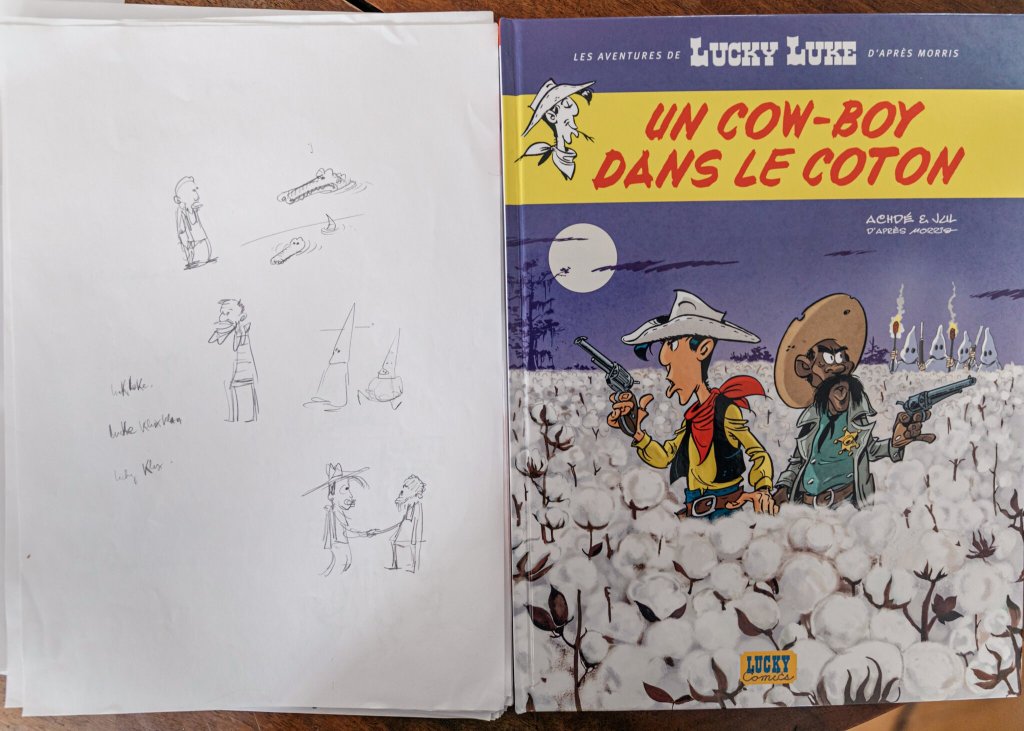
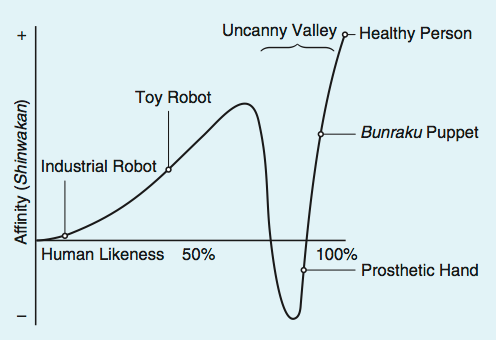
 SBU Brooklogue