Scattered Reflections: Haikus by Eli Olevsky


I. Melancholy & Memory

Someday, I would like
To run in a flower field.
Then, I’d be happy.

Every note, a tear.
Crying seas of melodies,
Pianos don’t float.

Sunsets mark the end.
A seasonal depression—
Then the cold sets in.

Cold, dead, leafless trees.
Spines of their beautiful selves,
Reborn in the spring.

Down by the river,
Reflections looking at you—
What have you become?


II. Darkness & Disillusionment

Afraid of the dark.
Afraid of what’s in the dark.
The dark is lonely.

Screams overwhelm me,
But silence unsettles me.
My ears deceive me.

The stars in the night
Are just satellites up high:
Techno-pollution.

Truth is fallacy.
Lies, just hiding behind cloaks—
Soon to be revealed.

A childhood ruined,
Fond memories corrupted.
Cocoa made by slaves.


III. Wander & Wonder

Staring at my screen,
Light pierces my retina.
I lay motionless.

If you jump up high,
Maybe you can touch the sky.
They’ll call you spaceman.

Do not fight the waves,
For they will carry you home—
Just go with the flow.

Alone in my mind,
I travel through time and space.
I find memories.

When you’re having fun,
Time sure likes to go by fast.
Isn’t that kind of cruel?


Threads of Being: Short Poems by Eli Olevsky

————————————————————————————————————–

Seasons

A Summer ending with a fallen leaf,

A tree standing bare, lonely in a daze.

Whispers of Autumn, the song of a thief,

Blankets of warmth and light, gone in a haze.

Beasts retreat amidst Winter descending,

A father’s call, “Где ты, моя солнушка?”

A sun hides, tired, in its gaze, relenting.

“I’m sorry, I have to sleep now, Papa.”

And yet, a lowly flower lies unharmed,

The aftermath of war, a survivor.

A tear of pollen, a bloom of hope sired

From the heavens, melodies of a lyre.

Visions of light, once made a pariah,

A sign of Spring, hymns of the Messiah.

—————————————————————————————————————

Deception

(Inspired by survivor accounts of the Nazi Death Marches)

I can’t stop running, 

You’re so tired 

My body is shaking, 

Take a break 

I can feel my heart beating, 

Go to sleep 

I look up, it’s snowing 

It’s so cold 

The silence is captivating, 

Say something 

I’m not breathing, 

What is that smell? 

I think I’m bleeding, 

You’re too weak 

The light is fleeting, 

It’s getting dark 

I can feel myself collapsing, 

This is the end 

I wake up, 

You weren’t dreaming. 

————————————————————————————————————–

Manifesting Divinity

Who is God without Adam? 

Who is Adam without God? 

The touch of life and its duality 

The connection between two worlds 

One cannot live without the other 

Connected like the atoms in our body 

The movement of electricity 

Gives meaning to our world 

Supposed greatness perceived 

By what is tangible and what is not 

Who is God without Adam? 

Who is Adam without God?


Sunburned

So, how’s your day?

Sun-sick skin

Scorching sand sizzling

Soaking, salt stinging

Aquatic arms aching

Ashy aromas abound

Albatross alarms air

And still, it’s a blissful day

————————————————————————————————————–

Scintillating Sky

The scintillating sky soars above, scattered so high. 

A creature overlooking, an all-seeing eye. 

It watches from afar, 

Like an empire and its Czar. 

It’s light will soon fade away, 

To be seen again the next day. 

The scintillating sky soars above, scattered so high. 


We carry

(Inspired by “Things We Carry on the Sea by Wang Ping” )

We carry memories of happiness 

We carry memories of sadness 

We carry the hugs of our mothers 

We carry the lessons of our fathers 

We carry the heat of hot summers 

We carry the cold of icy winters 

We carry the leaves that fall from trees 

We carry the ocean’s gentle breeze 

We carry our sins and our greeds 

We carry our virtues and good deeds 

We carry our hopes and dreams 

We carry our egos and high self esteems 

We carry the first breath out of our lungs 

We carry the death of our loved ones 

We carry memories of happiness 

We carry memories of sadness 

The Appalling Reality of Bykov’s film The Fool; the Pitiable State of Modern Russian Society and the Prevalence of Human Apathy

by Maria Sazonova, May 17, 2023

Summary

The film Fool, released in 2014 and directed by Yuri Bykov, received instant popularity and spurred nuanced discussion of the film’s creative execution and purpose. Fool, without further introduction, thrusts us into the severe and authentic reality of modern Russian society. In a small city N, at an unknown time during the night, the viewers are witnesses of a Russia on the verge of falling apart, where dissatisfaction, apathy and violence are pervasive. 

Dmitrii Nikitin, a stoic and serious plumber’s assistant, is sent to fix a leak in a dilapidated building and discovers a sizable crack that runs vertically in the wall, threatening imminent disintegration of the whole structure. This endangers the lives of 800 residents of the dormitory, the “trash” of society that no one actually cares enough to save. Dmitrii takes up his fears with the city’s thoroughly corrupted higher-ups, who have been continuously and unabashedly stealing government funds meant for capital repair. They act only in selfish interests, imperiling and impoverishing the general public. The necessary rescue operation and the subsequent need for resettlement of all of the people in the dormitory will garner the attention of Moscow  and expose the rampant theft the mayor’s gang indulges in. Tensions run high, and N’s city authorities are paralyzed with indecision and fear. They decide to avoid responsibility and make the sinful choice of inaction. Dmitrii Nikitin does absolutely everything to bring attention to this issue, of both among the authorities and the residents, yet is mocked and dismissed. The ordinary plumber’s actions are so discordinant with the callous reality that he is labeled as a fool for trying to do good in a damned society. 

Bykov’s “Chernukha”/“Чернуха” and Hopelessness in Fool 

Political corruption of government officials is a chewed-over topic in Russian cinema, partially due to its pervasiveness in Russian social context. But Bykov gives a fresh take on it, alongside brilliantly portrayed poverty, impuissance, and philistinism of the people in the precarious dormitory. Additionally, in Fool, Bykov simultaneously exposes the tragedy of a single person and the tragic fate of society at large with a delicate and masterful dramatism.

Bykov’s seemingly favorite artistic choice is characterized by the unflattering term “chernukha”, meaning blackness or darkness coupled with feelings of all-consuming hopelessness, that pervades his films and provides an extremely pessimistic view of reality. The Fool received a radically bipolar response from audiences; the film’s simplicity and intelligibility invoked rapture in half and roiling repulsion in the rest. Nevertheless, Fool strikes a chord deep within a Russian person and pains them with its undeniable truth. 

This film is truthful, merciless, and a coarse reflection of reality portrayed as a grotesque anti-utopia. Bykov gives a diagnosis that doubles as a condemnation of a diseased society. Fool is a parable of enormous effect and consequence, plainly conveyed in its stinging images and adverse mannerisms. Bykov’s central message is frightfully depressing: In this world it is pointless to be good to others and true to your moral compass, because people of today’s society are poisoned by neglect. Any attempts to change the established course of things is bound to fail. Good people are an anomaly, shunned and hated by the nebulous, seething, and resentful cloud of the masses. This parable is angry and hateful but surprisingly strong and soul-striking; a genuine outcry of pain and imploration for change. Moreover, the hysterical quality of Bykov’s central message hides a passionate desire to be absolutely understood by as wide an audience as possible. Bykov bashes the viewer’s head into the asphalt in an attempt to knock some sense into them; such artistically violent means are necessary and even beneficial for an audience of selfish, rotten, and spiritually dormant people (In Bykov’s view, Russian citizens are as such). 

There are many criticisms that argue that Fool is too morally dichromatic and thus simplistic, contains generic and convincing dialogue, as well as excessively comical confessions to wrongdoing by the city’s authorities. Despite these justifiable points, critics unanimously agree that insistence on the film’s low quality is blasphemous. Personally, I recognize the genius of script, mood, and core meaning imported onto the audience in Fool. Though I wouldn’t outrightly recommend such a burdensome and fatalistic film, I do believe in its brilliance and significance. 

Naturally, this film is indisputably a depiction of an extreme, and I would caution against an overly literal perception of it; not all the societal details are as horrific and wretched in real life as they appear on the screen, but the similarities are chilling. It might seem that Bykov had lost faith in the Russian people and advocates an abandonment of any remaining scattered hope. But the heart strives for vitality and sparkling wishes! Some meek reviewers squeal that in spite of the hideous deformities in the extremities and organs of the Russian Motherland, the people still have a slippery hold on their pride, honor, and dignity. They are slowly but steadily sobering up, gaining momentum, and cultivating spiritual energy. The country is peppered with warriors like Dmitrii Nikitin, because good people exist and continue to fight – we must believe it, lest we sink into engulfing melancholy. 

Falling Building as a Metaphor for Modern Russian Society

In Fool, collective irresponsibility and unresponsiveness to pressing issues has resulted in complete collapse of communities and society at large that mirrors an internal demolition of a functioning moral and value system. Though the stereotypical villains in the movie are supposedly the city’s authorities, the viewer involuntarily starts considering the actual residents of the crumling dormitory – the majority are drug addicts, alcoholics, theives, abusers, and young hooligans chasing cheap highs and lovelessly fucking in dark attics. Due to the country’s collapse and absence of rewarding work, educational programs, and an open-minded community, these people have degraded, lost orientation and meaning on their  own existences. Most of them are fuelled by hatred and impudence, and it would be ridiculous to expect any shred of kindness or comfort from a neighbor in this building. The viewer inadvertently starts questioning: Are they really that innocent? Are they really worthy of saving? Is it worth endangering yourself and your family to save ungrateful strangers who are full of malice toward you, themselves, the world around them – as does the main character, Dmitrii? Or would the world be better off without the dregs of society? The viewer immediately denounces themselves for having such repugnant thoughts, but perhaps there are vestiges of truth in the assertion the public fully deserves the authorities they have, and nothing better. The people appear to be orphans of their government; unneeded and unloved and thus indifferent towards their own fate. But the normalized lack of love for life, empathy, and simple humanity that poisons the residents is sickening. The viewer is once again forced into an unbreakable cycle of questioning: who is to blame and what is to be done?

The people depicted in the film are ones without a future. They are weak and scared to death of any change in their wretched existence and any potential personal harm. The dormitory inhabitants will not raise a finger to improve their own life because they feel that “alas, that is the world we live in! There is no point in trying to improve it!” Instead of seeing regular people, the audience is brought before humanoid animals of various ages and genders, who don’t even care to consider themselves human; they impertinently engage in self-depreciation and refer to themselves as “trash”. The dormitory residents seem strangely proud of that flesh-brand; they reached the bottom of the barrel and had made a home there. However, in Fool, Bykov releases a silent scream that shatters your hearing with audible desperation: “Here before you is our greatest enemy! Not them — the elite, arrogant thieves, choking on their own wealth and fat but you yourself — cowardly, pathetic, silent!”

Dmitrii Nikitin’s Foolishness and Goodness 

Dmitrii Nikitin is almost killed, endures threats to his family and himself, and still, still, he remains truly and authentically Human and does everything in his power to save the ungrateful people around him. Though his sullen face, downturned lip-corners, and constantly scrunched eyebrows that abut a simple winter hat paint the picture of a solidified pessimist, Nikitin is desperately fighting the artifice and rot; he single-handedly tries to shape this world into something better. With an iron grip he clings to his ideals, his love and care for every stranger, and his abhorrence of cheating and theft. Dmitrii Nikitin stays honest, genuine, and honorable, despite the whole world’s attempt to kill that light inside of him. Everyone dismisses Dmitrii as a total fool, an idiot, because with the backdrop of continuous hypocrisy, lying, cheating, a good person is detested and regarded as a “white crow in a flock of black”. Nikitin is emphatically advised “don’t be a fool; don’t get involved in this, it’s not your problem”, and yet the main character refuses, embraces the label of ‘idiot’ since it allows him to cling to his ideals. The public is accustomed to such naively hopeful characters; one is tempted to doubt his overwhelming goodness and scrupulously search for any faults, to prove that he is just as bad as the rest of us. The crowd cannot accept Dmitrii Nikitin because he provides a painful contrast to their own pitiful state, and thus people tend to simplistically label others as “disgusting bastards” or “fools”, excluding any other possible categories. Therefore, the “bad” and “rotten” becomes indicative of normal and expected. 

In Bykov’s conception of Russian society, moral values become virtually nonexistent, and only rarely carried by “fools”. The prototype of the “holy fool” is quite frequent in Russian classical literature, most notable in the character of Knyaz (Prince) Lev Nikolaevich Myshkin in Fyodor Mikhaliovich Dostoevsky’s novel The Idiot. Like Myshkin, Dmitrii Nikitin completely gives himself over to others, and places his care for the people above personal gain and attainment of security and success. But even amongst regular and poor people like himself, the modern Knyaz Myshkin cannot find any supporters because nobody cares

Fool accurately captures the current Russian mentality (speaking from the perspective of a congregation of Russian people, solely in Bykov’s subjective interpretation): We don’t want the truth, because it is too crippling to bear. We hate being put before the fact of our misery, because we are perfectly cognizant of it ourselves. The plain-spoken truth will not help anyone and will only hasten the annihilation of the truth-bringer. We understand perfectly how we are living, the current state of us. We don’t want change, though we understand we are following the path to the bottom. Change will only make everything worse. 

Bykov understands that the Russian population has grown exceedingly unused to self-criticism, which makes Fool draw blood from softer skin. We (Russians) often prefer to compromise, brush aside problems, give in and bend under pressure to conform. Real fighters, real idealists like Dmitrii are very few and far between, and unfortunately life tends to break even the most well-intentioned and most resilient of them.

A Real Hero Battles Human Apathy 

Dmitrii Nikitin is a Real Hero, far from the flashy, red-underwear-clad American Superman. Nikitin is a benevolent and selfless person that actively fights injustice no matter the personal risk; he is the only person resisting total obliteration – to reiterate, both external and internal – but he is shackled with powerlessness and insignificance. On one hand, he is obstructed by higher-ups, who perceive everyone immediately outside of their aristocratic social circle as ‘dirt under their shoe’. On the other hand, a blatant factor in the dreadful situation is the sheer apathy of the actual residents of the crumbling apartments toward their own life and fate. Through this logical sequence of deliberation, an overarching idea is elucidated: The fatal defect of Russian people, as well as humanity in general, is omnipresent and all-consuming indifference. There is cataclysmic and irreversible loss of community, desire to live together, and help each other. Towards the end of the film, when Nikitin sends his wife and child away to safety while he stays behind attempts again to save the building, they have the following argument:

“- What world do you live in?? C’mon, let’s go!

– There’s hundreds of people there, hundreds! Do you have any conscience, no?

– Dim, they are no one to us.

– Shut up. Don’t you understand, we live like pigs, and die like pigs, only because we are no one to each other”.

Dmitrii’s wife expresses the egocentric sentiments he so despises, and the main character ends up misunderstood and ostracized by his family, though his words reflect the highest Christian love. 

Fool’s Ambiguous Ending: Mutilation of a Shunned Prophet

Bykov makes the Fool’s ending open ended and thus the central question remains unanswered: Does catastrophe occur and does the building crumble in the end? The final scene in the film is a symbolic slaughtering; The residents of the doomed building passionately “express their gratitude to their savior by violently beating him black and blue. Like Jesus Christ, Dmitrii Nikitin was killed – spiritually or physically, is inconsequential – by the very people he tried to save. Because, naturally, prophets are always “loved” by the public. Dmitrii’s frenzied efforts are completely futile – he genuinely wanted to help, to solve at least this dire problem in a world riddled with them, and this was the reward. Some of Fool’s reviewers admitted that sometimes, if you want to be heard you have to be willing to die (i.e. you must die to be heard). This is hauntingly explicit in the Fool’s final scene. In my mind, the true terror lies in the outcome of the beating; did Dmitrii’s devastation lead to disillusionment with his ideals? Was he emptied of his love for humanity? It physically chills me to ask, but how can anyone survive something like this and remain unchanged?

Bykov is a genius of symbolic interrogation of the audience and the reality they live in. He refuses to answer the burning questions he alludes to and intentionally steps back, confident in the thought that the light he flashes to expose all of the dirt in humanity – causing rats to scuttle and pupils shrink in fear – is enough to spur action or at least a deeper consideration of these issues. In a way, Bykov demolishes the 4th wall and invites multiple interpretations of his creation. The film’s story grips the audience until the ending and each viewer is put before this moral dilemma – reminiscent of the stylized ethical dilemmas such as the trolley problem – and left with yet another infuriating question: what would I undertake in this situation? 

A Secretly Coveted Motherland

In his interview dedicated to the Fool (Durak), Bykov exhibits loathing for the explosively excited Western  (i.e. American and European)  reaction to the film. He asserts that foreign viewers will readily perceive the Fool as a social criticism exclusively most importantly about Russia, exposing the saddening truth about its current state of physical and moral degradation. While it is an unapologetically a Russian film, a constituent of the infamously dark and pessimistic Russian modern cinema, taking into account a Western review puts it into a precarious position. The Fool unintentionally encourages the classic Western aversion and haughty disapproval of Russia and all things Russian, a perpetual attitude that is especially acute in the recent political atmosphere. Bykov’s masterpiece only further intensifies Russia’s antagonization and illusion of feebleness. 

Fundamentally, the call-to-action message of the film extends not only to dilapidated Russian society, but addresses similar broad problems just as potently  present in many different countries. It would be counterproductive to gleefully point fingers at a film based on sharp criticism of Russia, all while ignoring societal parallels in Western nations. Ironically, it seems that Bykov’s unflinching claims will turn out to be of little significance for changing prevalent Western interpretations of the film, mostly due to politicized media that benefits from casting Russia in the worst light possible (which begs a larger and nuanced discussion of fallacious media influence – an ailment that affects both countries equally – omitted here). 

Be that as it may, it’s crucial to realize that the premise of the film is not inherently political at all: it is about people and their process of internal abasement due to dire outside circumstances and rotting mass perceptions of the world and one’s community. And people are people no matter what race or nationality they identify with. 

For a Western thinker/viewer there is a peculiar phenomenon prevalent amongst Russian intellectuals; unthinkable to a simplistically (i.e. blindly) patriotic American, for instance. At the tailend of the interview, in a firm and unyielding tone, Bykov declares the following: “I do not like a lot of what is going on in this country, and I try to honestly discuss and portray that in my pictures. But concurrently, I don’t want them to think, over there, in the West, that I showed up to complain and invoke pity about my struggles in a desolate place. I don’t want to leave, I don’t want to go anywhere. I want to live here, I love my country. One does not choose their homeland – a Mother is a Mother. Even from the harshest critic of modern reality we observe an inherent devotion to its suffering and diseased Russia, as he bleakly portrays Her.

This Same Sentiment in Russian Literature Tradition

On the 8th of July 1827, in a letter to Pytor Vyazemsky, Russia’s most celebrated poet, playwright, and novelist Alexander Sergeyevich Pushkin produced a line that would encompass the feelings of the intelligentsia towards their homeland for centuries to come: “I, of course, despise my Motherland wholeheartedly, from the head to feet — but I’m aggravated/chagrined, if a foreigner shares my sentiment”. Russian intellectuals and cultural figures – then and now – share an intimate hatred for their country and its self-destructive political movements which is paradoxically irreconcilable with a concealed faith and familial love for Russian; one that cannot be removed even surgically. Thus arises the jealous overprotectiveness of Russia’s reputation against European and American prying media intrusions. 

Pushkin’s poem To the Slanderers of Russia, published in 1831 as a response to French military interventions against the Russian Army during the Polish rebellions of 1830 – 1831, expresses a similar fiery sentiment. Pushkin condescendingly dispels foreigners from Russian international political actions and flaunts an unshakable confidence in his people; an attitude most prominent in the following excerpts: 

“Desist: this is a strife of Slavs among themselves,

An old domestic strife, already weighed by fate,

An issue not to be resolved by you.

… 

Send then to us, oh, bards,

Your sons enraged:

There’s room for them in Russia’s fields,

‘Mid graves that are not strange to them”.

Likewise Fyodor Tyutchev, a renowned Slavophile poet, passionately states that “Russia cannot be known by the mind … Russia can only be believed in” (1866) in one of his most famous poems, You Cannot Know Her with the Mind… This illustrates the depth and intransigence of a Russian’s belief in their Motherland, regardless of the horrific historical and societal occurrences, which unfortunately tend to cyclically repeat. This grandiose idea of an unconditional love for a hulking country begs the statement that NONE of the horrors and crimes committed by the government heads operating this elaborate, rusted, moaning machine – at any point in Russia’s tumultuous history – can be invalidated or nullified. 

This patriotic idea reverberates in many of the grandest literary and poetic works of Russian literature across centuries. However, while its significance for the formation of ambiguous and idealistic Russian nationalism cannot be negated, it is more often  disputed and contested than blindly accepted and propagated. Throughout history, Russians have incessantly slandered their own country; ironically, this unnerving abhorrence remained the only stable thing in a chaotic and blood-soaked history. In Bykov’s view, people have lost an anchoring belief in their country and in themselves, setting them adrift in a headspace permeated with an absence of moral sense. Disillusionment with your nation and its inexorable decay inevitably accompanies despondence and nihilistic conceptions of one’s existence. 

[Concluding Note: Thank you for taking the time to read this piece! Fool can be found for free on Youtube.com with English subtitles

(in my rough translation)]

Dzen.ru. (n.d.). https://dzen.ru/a/Y0WTqQXABRHg-oxd 

YouTube. (2016, March 25). ДУРАК – Фильм Юрия Быкова. YouTube. https://www.youtube.com/watch?v=OrusrtlTHQA  

Антон Смаль 21 января 2015 в 18:50, Ridzhi 22 января 2015 в 00:11, & Polia 24 января 2015 в 17:53. (2022, December 28). “Дурак”: герои больше не нужны? Научи хорошему. https://whatisgood.ru/tv/films/durak-geroi-bolshe-ne-nuzhny/ 

Дурак (Дурак, 2014): Рецензия от автора #естькино на Ivi. Онлайн-кинотеатр Иви. (n.d.). https://www.ivi.tv/watch/126658/reviews/58600 

Дурак. Главная. (2014, September 8). http://rottenaparts.ru/film/%D0%B4%D1%83%D1%80%D0%B0%D0%BA 

Кому на руси жить хорошо. Кинопоиск. (n.d.). https://www.kinopoisk.ru/film/808639/reviews/ord/rating/ 

Партийный переулок, д. 1, к. 57, с. 3 115093 Москва, Россия info@iz.ru. (2014, August 20). “Я не хочу, чтобы на западе думали, будто я приехал пожаловаться.” Известия. https://iz.ru/news/575503 

Рецензия на фильм “Дурак.” (n.d.). https://www.film.ru/articles/horoshimi-delami-proslavitsya-nelzya 

Рецензия на фильм “Дурак” быкова: Журнал Интроверта. Рецензия на фильм “Дурак” Быкова | Журнал Интроверта. (2023, May 22). https://artforintrovert.ru/tpost/zzfafigst1-retsenziya-na-film-durak-bikova 

Юмор помогает жить // Обзор обсуждения фильма “Дурак” с Юрием Быковым. – Новости – Образовательная программа “Юриспруденция” – Национальный исследовательский университет “Высшая школа экономики.” (n.d.). https://www.hse.ru/ba/law/news/203365171.html 

Can AI Be Ethical?

by Shireen Zaman, May 17, 2024

Concerns over the alignment of artificial intelligence, or AI, to human goals, preferences, and values are at an all-time high as AI plays increasingly large roles in daily life and is starting to take up space in fields where all of the decision-making once belonged to humans. Researchers discuss how the often erratic actions and values of humans may even contradict, and expecting an AI to understand why and how to replicate those behaviors is often impossible. Researchers have tried workarounds, such as using neural networks to reward and punish behavior, but that often leads to the machines acting in unexpected and almost comical ways because of how they misconstrued the goal. That is why many have turned to focusing AI on interpreting the goals and intentions of humans rather than maximizing output for a certain objective, known as inverse reinforcement learning, or IRL (Mitchell, 2022). However, the question remains to be answered whether AI’s development into the decision-making sphere where humans would have been in control can develop into something ethical with IRL, or that can not be entirely true inherently because it was developed as a tool and is embedded with the values of its developers. That is why ethics within development is incredibly important, because those ethics will be translated into the AI’s neural networks and deep learning models. 

AI is a disruptive technology, meaning it has greatly changed the corporate and sociocultural world. While there have been many advances in the medical field and AI algorithms have made huge progress in the world of research, there have also been many concerns over the trajectory of its applications, such as algorithms within social media creating political echo chambers and discrimination in hiring. AI taught to want and be like its human counterparts may also pick up implicit biases, effectively embedding them through training datasets or other instructional methods. Then, once this has made its way into the broader public’s lives, the effects will become untraceable and inevitable, with corporations maximizing profits while claiming AI as “just a tool.”

The ripple effect of AI in the corporate world may be seen in many ways. For example, as mentioned previously, in the hiring process, there are many concerns that an AI algorithm being used to sort through applicants may reflect choices made by companies, but also be shaped by structural norms and practices in the field. These algorithms would be influenced by corporate incentives and regulatory framework, and not necessarily the developer’s choice, so finding the issue’s root would be very difficult. If IRL-oriented AI were to choose applicants with values like diversity and equity in mind, the outcome would be more ethical and fair. Another example would be chatbots used instead of customer service representatives or automatic content generation. If training data contains racist or sexist language, the AI may perpetuate stereotypes if it does not mimic the same kind of language. Narrow datasets, in general, can be very controversial and taxing, where skewed data for facial recognition technology may lead to misidentification or exclusion for populations with certain features, or biased risk assessment algorithms may disproportionately target minorities in sentencing decisions within the criminal justice system.

This all begs the question asked earlier, whether AI can move past this “just a tool” narrative when, in the end, the corporations and governments with the most vested interests in developing AI for marketing (such as social media) or surveillance (such as facial recognition) are largely in control of its deployment and have access to all the information it collects and works with. In the end, it is a tool for these large organizations but has far-reaching effects on the individual. Through this the difference in individual vs structural ethics can be seen because, to these organizations, violations of personal privacy, implicit discrimination, and stereotyping do not outweigh their larger goals/values of maintaining established social order, optimizing profit models, and ensuring the stability and safety of organizations themselves. 

Thus, developers are responsible for aligning AI to human interests by ensuring they are trained on large, representative datasets that reflect diversity and are imbued with human complexity. In addition, corporations and policymakers must implement measures that maintain fairness and transparency in AI models by detecting and mitigating biases in AI. Both parties must work together to create AI that is ethical and beneficial to human society and quell fears of a dystopian society where AI becomes destructive.

Works Cited

Mitchell, Melanie. “What Does It Mean to Align AI With Human Values?” Quanta Magazine, 13 Dec. 2022, www.quantamagazine.org/what-does-it-mean-to-align-ai-with-human-values-20221213/.

Facebook and Machine Learning: Powerful or Dangerous?

by Grace Sargent, April 9, 2024

The intertwined relationship between social media platforms and the technologies they rely on is often overlooked by its users, despite their relevance. Within the past decade, social media usage has increased immensely, and it has become second nature for many people. We have grown accustomed to logging onto our favorite websites and immediately being greeted with content that is tailored to our hobbies and interests, without truly questioning the work that led up to that satisfying experience. Thus, I would like to delve into the evolution behind Facebook and its machine learning—namely, its algorithms. I will then expand on the implications of this relation regarding both Facebook’s users and the development of the platform itself, exploring the question of its greater impact.

Though the two were not always intimately connected, the current, continued success of Facebook is largely due to the advancement of its machine learning; in other words, the two have become inextricably linked. At their inception, many social media platforms were created with pleasurability and collaboration in mind. Indeed, their significance has simply been an extension of the main purpose of where they are typically housed (our phones): to bring us together. When we think of our phones, we think of how we are afforded the opportunity “to stay connected with loved ones and friends no matter where they are” (Liberty). Facebook’s creation was then seen as an innovative way to do exactly that—to stay in touch. After launching in February 2004, the platform allowed users to view their profile page and make posts as they pleased. To check in on your friends, you were required to manually search their profiles. It wasn’t until 2006 when “News Feed” was introduced that users could enjoy a homepage that included the updates and pictures posted by their friends (Wallaroo). Facebook’s true incorporation of machine learning, however, was in November of 2007 when users were able to “like” posts, resulting in a News Feed that was more likely to display content the user would interact with (Wallaroo). Machine learning is defined as “a subset of artificial intelligence (AI) that focuses on the development of computer algorithms that improve automatically through experience and by the use of data” (Crabtree). From there, the power of Facebook’s algorithms took off, and so did how the platform facilitated engagement from its users. 

Machine learning and the algorithms it employs have advanced alongside the social media platforms that use them, allowing their accuracy to improve tenfold. As aforementioned, the preliminary stages of Facebook’s algorithms were solely dependent on the content a user would “like” or “dislike.” Currently, however, its algorithms consider multiple factors to formulate content that is tailored to the interests of each specific user. Not only do the algorithms take note of what users “like,” but also how frequently they will interact with certain types of accounts, and even at what times they do so (Zote). Furthermore, it takes into account large amounts of data that span more than individual incidents; it will take note of your overall behavior, and predict whether you would enjoy seeing content that is similar to what you have already expressed an interest in (Adisa). It is nearly impossible for users to regularly use Facebook without inadvertently creating a space for themselves where they are exposed to a specific genre of content. Thus, as its algorithms (machine learning) widened its capabilities to take in multiple variables (such as what type of content they engage with, which accounts they check frequently, etc.), Facebook’s curation has also become more accurate. This is beneficial to Facebook itself as it increases the likelihood of satisfied users who will return to their platform and further its notoriety, though it is not entirely positive for users in the long run. 

Facebook has evolved past being a website for friendly connections and has established itself as a space for the widespread sharing of important information that can educate the masses. This was seen prominently during the beginning stages of the COVID-19 pandemic when there was an urgent need for medical knowledge. When the world was experiencing unprecedented times, knowing how to take necessary precautions was incredibly important, and many people turned to Facebook as their source. In 2021, Facebook even partnered with the World Health Organization (WHO) to provide vulnerable communities with the means of accessing important health information. Facebook implemented their Discover mobile web, as well as Free Basics, which gave people “health information, job sites, communication tools, education resources, and local government information without data charges” (World Health Organization). This demonstrates how Facebook has managed to merge pleasure with practicality for its users who are navigating challenges while depending on their online platforms. 

Another way users have utilized Facebook is its ability to provide people with the opportunity for advocacy. Many people consider Facebook to be “pivotal for the innovation of online social networking platforms as the limitless functions of these platforms contribute to the construction of social change” (Kennedy). One of the best ways Facebook allows social activism to thrive is through its “Groups” function. Groups are where people gather with similar interests or ideas, and it allows them to unite, communicate, and collaborate promptly. Those same ideas can then be brought to larger audiences on the site, where they can gain further traction and attention to fulfill their ultimate goals of bringing about change. In other words, this social media site is often viewed—and used—as a legitimate means of mass communication.

Taking these purposes into account, it is interesting to then consider how some of Facebook’s demographics have changed over the years. Years ago, in 2012, Facebook was said to be especially appealing to women who were aged 18-29 (Duggan and Brenner). A reported 57% of its users were female, making 43% of them male (Alexander). Statistics for 2023, however, illustrate a change that has occurred over time. Across all age groups except for 65 and older, there are more male users than female users (Dixon). Additionally, the largest audience group was found to be men ranging from 25-34 years old (Dixon). Therefore, the kinds of users that Facebook attracts have changed along with its general purposes. Facebook is typically not regarded as a go-to social media site for younger audiences looking for pure entertainment—rather, platforms like Instagram and TikTok are most appealing. 

When considering the information that has been gathered and analyzed, I think it’s important to recognize the ongoing trends Facebook has experienced. As I previously explained, Facebook was first and most popular among college-aged adults, and it was used very casually. People enjoyed sharing small parts of their lives such as what they were up to or who they were dating. Since then, however, it has shifted away from serving purely entertainment purposes and instead become a popular place to share news and pressing information. While I have laid out how this has been beneficial to educating large audiences, I think it is also worth noting the potential downsides; namely, the phenomenon of filter bubbles. I established that Facebook’s algorithms are greatly developed to put content on your feed that you are likely to enjoy, however, their ability to prevent you from seeing a diverse range of posts can create these filter bubbles. A filter bubble effectively isolates users from information and perspectives they haven’t yet expressed an interest in, cutting them off from information that could be important (GCF Global). The most dangerous aspect of a filter bubble is that the user will often not realize they are in one, and then not take any action to broaden their perspective since they feel they are being adequately informed in the first place. 

In other words, I am cautious about saying Facebook should be prioritized as a place for information. Rather, I would argue that the site will continue to foster digital spaces that isolate groups of people which could potentially further divide our society. This is largely due to the complex machine learning (algorithms) employed by Facebook—as they become more advanced and consequently adept at curating feeds that are guaranteed to satisfy audiences, users will have a harder time breaking free from the restraints they set. If individuals of the general public each remain in their filter bubble, how will we become properly exposed to a variety of topics and information? Given this, I think a good practice users should keep in mind is to actively seek out opinions that differ from their own to ensure they understand all sides of an issue. It is also important for users to be aware of the limitations of a singular social media site like Facebook; it is always best to get information from multiple sources. 

Adisa, Dorcas. “How to Rise above Social Media Algorithms.” Sprout Social, 30 Oct. 2023, sproutsocial.com/insights/social-media-algorithms/

Alexander, Anson. “Facebook User Statistics 2012 [Infographic].” AnsonAlex.Com, 31 Dec. 2020, ansonalex.com/infographics/facebook-user-statistics-2012-infographic/#:~:text=57%25%20of%20Facebook%20user%20are,on%20the%20site%20per%20visit

Crabtree, Matt. “What Is Machine Learning? Definition, Types, Tools & More.” DataCamp, DataCamp, 19 July 2023, www.datacamp.com/blog/what-is-machine-learning

“Digital Media Literacy: How Filter Bubbles Isolate You.” GCFGlobal.Org, GCFGlobal Learning, edu.gcfglobal.org/en/digital-media-literacy/how-filter-bubbles-isolate-you/1/. Accessed 18 Feb. 2024. 

Dixon, Stacy Jo. “Global Facebook User Age & Gender Distribution 2023.” Statista, 29 Aug. 2023, www.statista.com/statistics/376128/facebook-global-user-age-distribution/

Duggan, Maeve. “The Demographics of Social Media Users – 2012.” Pew Research Center: Internet, Science & Tech, Pew Research Center, 14 Feb. 2013, www.pewresearch.org/internet/2013/02/14/the-demographics-of-social-media-users-2012/

“Facebook News Feed Algorithm History: 2023 Update.” Wallaroo Media, 9 Mar. 2023, wallaroomedia.com/facebook-newsfeed-algorithm-history/

“How Mobile Phones Are Making Our Lives Convenient.” Liberty Title, 6 Mar. 2023, libtitle.com/how-mobile-phones-are-making-our-lives-convenient/#:~:text=One%20of%20the%20biggest%20benefits,to%20anyone%20in%20the%20world

Kennedy, Che-Anne. “Facebook as a Construct of Social Change and Collaboration for Activists., Debating Communities and Networks XII.” Debating Communities and Networks XII, 27 Apr. 2021, networkconference.netstudies.org/2021/2021/04/27/facebook-as-a-construct-of-social-change-and-collaboration-for-activists/

“Who, Facebook and Praekelt.Org Provide Critical Mobile Access to COVID-19 Information for Vulnerable Communities.” World Health Organization, World Health Organization, 11 Aug. 2021, www.who.int/news/item/11-08-2021-who-facebook-and-praekelt.org-provide-critical-mobile-access-to-covid-19-information-for-vulnerable-communities

Zote, Jacqueline. “How the Facebook Algorithm Works and Ways Your Brand Can Outsmart It.” Sprout Social, 10 Jan. 2024, sproutsocial.com/insights/facebook-algorithm/

Our Voice: The Speaker in “In This Place (An American Lyric)”

by Marie Yamamoto, January 21, 2023

“In This Place (An American Lyric)” is a poem written by National Youth Poet Laureate Amanda Gorman that presents empowering ideas surrounding American patriotism, identity, social justice, and hope. As the title suggests, it is a lyric poem presenting the metaphor that American history is a narrative poem in which every American has the power to contribute to. Characteristic of lyric poems, the work has no structured plot or identifiable speaker; rather than tell a story, it instead ultimately aims to rally Americans of all races, classes, and statuses to assert their place within the United States using striking retellings of the past and present that instill hope in the reader. Furthermore, despite narrating parts of Gorman’s life, the speaker does not directly refer to themself within the poem, which makes their identity ambiguous. As a result, the speaker takes on an almost omnipotent quality essential to the poem’s themes surrounding unity and Americans’ shared responsibility to empower themselves and others. The speaker of “In This Place (An American Lyric)” by Amanda Gorman may be read as both Amanda Gorman herself and the personification of America, which drives the poem’s ultimate message that every American has the power to shape history.

Gorman’s allusions to her own life draw on the readers’ and listeners’ pathos to highlight the beauty in the triumphs of marginalized groups within the United States from her point of view. Among the other stanzas in the poem, the speaker recounts:

… a single mother swelters

in a windowless classroom, teaching

black and brown students in Watts

to spell out their thoughts

so her daughter might write 

this poem for you (Gorman).

This heartfelt anecdote makes reference to Gorman’s own mother, an English teacher in Watts who encouraged Gorman to read and write from an early age. Since she wrote this lyric poem to be performed, the specificity of these circumstances and her indication that this specific poem has been written for the listeners make it appear as though the speaker is Gorman herself.  Beyond this, the inclusion of her background is a promise to others growing up under similar circumstances that they can find their voice despite the obstacles they face. Should children like the black and brown students she references here come across this poem, the speaker’s declaration that the poem is written for them may read as if she is acknowledging and appreciating their existence. As a black woman growing up in an impoverished neighborhood, Gorman’s allusion to her childhood serves to uplift those who may despair that no one may listen to them.

Another possible allusion to Gorman’s life is the speaker’s mention of “her friend Rosa;” the speaker is aware that “[Rosa] knows hope is like a stubborn / ship gripping a dock” and believes she embodies the promise that “… you can’t stop a dreamer / or knock down a dream” (Gorman). The speaker’s inclusion of “my friend” to describe Rosa gives this stanza an autobiographical touch. Especially when this is being performed by Gorman, she would appear to be the speaker of the poem as she is both endeared to this person and understands her mindset and conditions she is fighting for. Furthermore, Gorman’s personal connection to Rosa gives her dimension outside of her undocumented status. This stanza serves as a stark reminder that undocumented immigrants are not a homogeneous group of nameless people; they are all individuals who must fight to be accepted within the United States. Considering the other stanzas in the poem, however, the speaker may simultaneously take on a different persona.

The speaker may also be read as the omnipotent personification of America due to the multitude of perspectives the speaker presents throughout the poem and the solidarity they express towards the listeners and readers. From protests to hurricanes, the breadth of events and perspectives that the speaker calls upon reach across time and space. The speaker even tunes into America’s geography and architecture, describing Lake Michigan as “a great sleeping giant” and “a poem begun long ago, blazed into frozen soil, / strutting upward and aglow” (Gorman). That the speaker is unified with the voices of the American people and is even able to feel the land itself makes it appear as though the spirit of the country itself is speaking, perhaps through Gorman. This large-scale multifaceted perspective emphasizes the value of each person’s experiences in the grand scheme of American history, including the listeners and readers. The all-encompassing unity that the speaker feels toward the listeners and readers underscores the need for minority groups to remain hopeful for the future and continue to fight for equal treatment and acceptance within the United States. The speaker knows that those in power will try to oppress those fighting for social change but urges:

There’s a poem in this place–  

a poem in America

a poet in every American

………………

who sees that our poem penned

doesn’t mean our poem’s end (Gorman).

Here, the speaker feels history being crafted in the very moment that the poem has the reader and listener’s attention; the reference to the present moment in the repetition of “there’s a poem in this place” reads as though the speaker is reaching out to the reader directly just as the speaker was reaching out to the past. Every person’s collective effort to establish themselves within the United States’ historical and political playing field is acknowledged and urged by the speaker even if their narrative is being actively drowned out by their oppressors. Thus, Americans are intertwined in and watched over by the grand narrative of the United States.

Whether the speaker is read as Gorman, the personification of America, or both, the ultimate plea of this poem is to keep the spirit of America alive by fighting for justice. The speaker gives those who come across the poem both a glimpse into Gorman’s life and the larger history of the United States to create an overarching picture of what it means to be American. Overwhelmingly, the reader comes away from the poem with an understanding that they are not alone. Regardless of their race, sexuality, gender, immigration status, religion, or social class, the reader is supported in their efforts to establish their place within history in both the past and present and to uplift the voices of those who may be oppressed.

Gorman’s poem may be read here.


Works Cited

Gorman, Amanda. “In This Place (an American Lyric).” Poets.org, Academy of American Poets, 

https://poets.org/poem/place-american-lyric.

Casablanca (1942)

by Vishruth Nagam, December 16, 2022

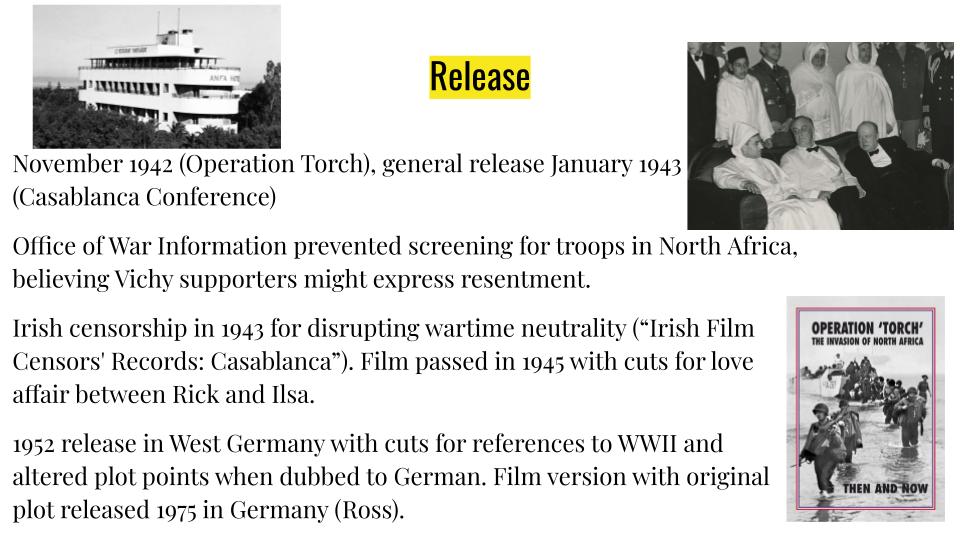
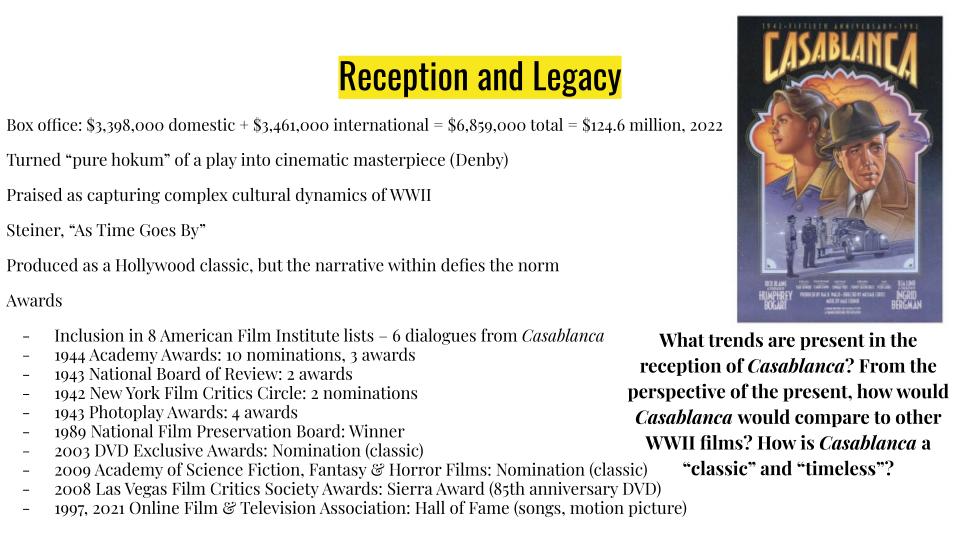
Casablanca (1942) was released in the wake of the attack on Pearl Harbor. The plot of the film is set in Casablanca, Morocco, in December 1941 before the U.S. entered World War II (WWII). Based on the play Everybody Comes to Rick’s by Murray Burnett and Joan Alison, Casablanca featured an accomplished production team and cast, who adapted upon the play’s anti-Nazi, pro-French themes. The film’s production, drama, and themes have grounded the lasting reception of the film and continued discussion on pertinent topics in the humanities. This infographic explores the factors, complexities, and dynamics contributing to the success of Casablanca as a classic.


Oversharing on Social Media: The Dangers of An Overly Transparent World

by Ean Tam, May 6, 2022

In contemporary media culture, the more information we get and the faster we get it, the more satisfied we are. But at some point, we have to consider the consequences of sharing too much about ourselves. Oversharing is when someone excessively broadcasts personal information over social media.

What kind of information can be overshared?

A prime example is location—where you are and who you are with. Most social media platforms enable users to share location. For some platforms, location sharing has to be done manually by the individual. On Instagram, you can make a post and tag your location, so everyone who sees your posts can see where you are. On the other hand, sometimes your location is shared simply by using the app. For instance, if you enable the map feature on Snapchat, your followers can see where you are whenever you open the app again.

Another example of overshared information is family information. Family information includes birthdays, names of siblings and parents, or major family events (like a family member moving into a new house). Social media has its advantages in that it connects families and friends. However, posting family information becomes an act of oversharing if you let the public know the details of your family dynamics or personal information.

A third form of oversharing is indulging your followers with your personal thoughts and emotions. A study published in 2017 calls this “self-disclosure” because you are voluntarily disclosing your inner sentiments to the world (Zhang, 527). In these situations, an individual uses social media to convey their mental state to the public. Often, this happens spontaneously and in the heat of the moment. For example, a user may negatively comment on people they know such as coworkers or make an impassioned statement involving politics. 

A fourth form of oversharing is sharing the private conversations you have with others. This can be done by screenshotting direct messages and then posting these conversations elsewhere. For example, you can screenshot text messages with one person and then share this screenshot on Snapchat for your followers to see. This is oversharing because you would be violating the trust of the person you were having the private conversation with. By sharing private messages on social media, you are in effect, allowing others to eavesdrop on your conversation. You consented to this because you were the one who shared the conversation, but the others involved in the conversation may not have. 

Virtually any social media app allows for oversharing. This is because social media is inherently made for sharing information. The complication is that social media has become so advanced that information can be shared more easily. If you overshare information about yourself (such as your location), this may be considered primary overshared information because it’s about you. However, if you overshare information about someone else (like their birthday, or their child’s name, or a private message you received from them), this may be considered secondary overshared information because you are revealing information about someone else via social media.

Why do people overshare?

A prominent reason is stress sharing. A study found that adolescents may feel inclined to overshare information because it gives them a sense of freedom (Radovic et al. 7). There may be a variety of circumstances in a person’s life that make them depressed and bogged down, but being able to post whatever they want on social media grants some sense of freedom. It is a form of expression.

In addition, the urge to overshare may be triggered when a user observes something on social media that incites them into posting a passionate retort (Radovic et al. 10). We can think of politics as a prime example of sensitive subject matter that may trigger people to overshare their emotions.

We should also consider that people may overshare to seek attention. This is more complicated, because attention-seeking behavior may be the result of narcissism, or simply because someone is genuinely seeking help. In the former case, a person may overshare information about themselves to brag, or they might overshare information about others at the expense of other people’s privacy. On the other hand, if a person is genuinely seeking help, they may overshare information about themselves in order to attract the right support groups (Newman et al. 344; Zhang, 527). The more information they share about themselves, the more likely people will come to their aid and give positive reinforcement.

Goal-setting and a competitive spirit are also reasons people will overshare on social media (Munson and Consolvo, 26). People are more likely to achieve their goals if they make their goals public and well-known. A study has found that a person’s motivation increases if they believe their goals are known by people they deem to be superior (Klein et al. 372). For example, in college, there is a lot of competition and students may feel compelled to overshare their goals in order to increase their motivation to accomplish them.

Lastly, people may overshare in order to create a perfected persona of themselves. In one study, a participant displayed a lot of her athletic information on social media, including many pictures and statistics, because it helped her create a new brand for herself (Newman et al. 346).

What are the consequences?

The first consequence of oversharing is putting yourself in danger. This can be in the form of robbery or stalking (Velempini and Nyoni, 4). If you overshare your location, daily routine, and social activities, people can track you and have a good idea of where you will be and when. This happened to social media influencer and entrepreneur Kim Kardashian in 2016, when thieves reportedly used Kardashian’s social media activity to find her location in Paris and confirm when she was alone. With this information, they broke into her residence, restrained her, and robbed her.

Another consequence is damaging your professional prospects. If you decide to go on a rant on social media about your employer, you can be held responsible for whatever you say, because after all, you decided to post it. If your post is discovered by a colleague or your employer, you could potentially lose your job. 

In terms of reputation, some things are better left private, and oversharing can cause your private and public lives to collide. For example, Jeff Bezos, the founder of Amazon, had personal texts with his girlfriend released to the public. Reportedly, it happened because his girlfriend shared screenshots of their conversation with her brother. While Bezos didn’t lose his job, he went through public embarrassment as a result of his girlfriend’s oversharing.

How do we avoid oversharing?

Avoid posting on social media when you’re angry. Your judgment will be clouded, and your overshared information may not represent you at your best. Double check your privacy settings. If you want to post things like family-related content, make sure only close friends and family can see it, not the general public. Lastly, when crafting a social media post, be mindful of who sees your posts. But remember, people can always screenshot your posts and share it elsewhere, so take that into consideration. Unfortunately, private information doesn’t always stay private, but taking the steps outlined above as precautionary measures may lessen the likelihood of risky oversharing in a growing digital world.

Works Cited

Klein, Howard J., et al. “When Goals Are Known: The Effects of Audience Relative Status on Goal Commitment and Performance.” Journal of Applied Psychology, vol. 105, no. 4, 2020, pp. 372–389., doi.org/10.1037/apl0000441. 

Munson, Sean and Sunny Consolvo. “Exploring Goal-Setting, Rewards, Self-Monitoring, and Sharing to Motivate Physical Activity.” Proceedings of the 6th International Conference on Pervasive Computing Technologies for Healthcare, 3 July 2012, pp. 25–32., doi.org/10.4108/icst.pervasivehealth.2012.248691.

Newman, Mark, et al. “It’s Not That I Don’t Have Problems, I’m Just Not Putting Them on Facebook: Challenges and Opportunities in Using Online Social Networks for Health.” Proceedings of the ACM 2011 Conference on Computer Supported Cooperative Work, Association for Computing Machinery, March 2011, pp. 341–50, doi.org/10.1145/1958824.1958876.

Radovic, Ana, et al. “Depressed Adolescents’ Positive and Negative Use of Social Media.” Journal of Adolescence, vol. 55, 2017, pp. 5–15., doi.org/10.1016/j.adolescence.2016.12.002. 

Velempini, Mthulisi and Phillip Nyoni. “Privacy and User Awareness on Facebook.” South African Journal of Science, vol. 114, no. 5-6, 2018, pp. 27–31, https://doi.org/10.17159/sajs.2018/20170103.

Zhang, Renwen. “The Stress-Buffering Effect of Self-Disclosure on Facebook: An Examination of Stressful Life Events, Social Support, and Mental Health Among College Students.” Computers in Human Behavior, vol. 75, 2017, pp. 527–537, doi.org/10.1016/j.chb.2017.05.043.

Islamophobia in the Digital Age: The Rise of a Global Mental Health Crisis

by Farah Hasan, March 22, 2022

My phone lies face down on the table beside me, buzzing sporadically, but insistently. I ignore it, fanning myself against the mid-July heat as I attempt to concentrate on an assignment for my summer class. I drum my fingers against the desktop and whisper the words aloud to myself, trying to make sense of the convoluted sentences of the essay as the buzzing continues. What do they want? I think exasperatedly, assuming my friends are simply spamming me with memes from Instagram and funny Tiktoks. As I finish the reading passage and move on to the multiple choice questions that accompany it, I decide to spare a glance at my phone. Expecting to see Instagram direct messages (DMs) and text messages headed by my friends’ familiar usernames and contact names, I am shocked to instead see hundreds of Instagram comment notifications from unfamiliar usernames, all beginning with the common header “[Instagram user] mentioned you in a comment.” My heart racing in anticipation, I open the Instagram app and quickly scroll through my notifications. I had left a comment criticizing France’s April 2021 ban on hijabs (headscarves worn by women for religious reasons) for Muslim women under the age of 18 on a post advertising travel to the Eiffel tower, and now I see that all these comments are in response to mine. Some of them back me up, but others range from applauding France’s actions, to blatantly calling Islam backwards and incompatible with Western civilization, to attacking me as a young Muslim woman myself. I exit the app without bothering to respond to anyone and close my eyes for a second, my heart still pounding as the hate words flash through my mind repeatedly. Like me, young Muslims everywhere are exposed to Islamophobic rhetoric on the social media sites they use most, and chronic exposure to such hate inevitably takes a toll on their mental health. Online hate is not given the same coverage or attention that street-level hate crimes get, but the effects of the former may be exponentially more profound due to the wide reach of users that are present on online platforms. Actions should be taken to limit such hate speech on public platforms like social media to preserve the mental-wellbeing of users that are targeted by these remarks, even if it means limitations on the First Amendment right to free speech. 

In a case close to home, a Muslim student recently graduated from my high school in the summer of 2021 and was chosen to deliver a speech at the commencement. In her speech, she advocated for the need for understanding and peaceful coexistence during difficult times, and briefly mentioned the ongoing conflict between Israel and Palestine. This part of the speech incited infuriated outcries from the audience, rude remarks shouting at her to “go back to Pakistan” as she walked off the stage, and the creation of a Facebook group as a space for angry parents to vent and express mildly Islamophobic sentiments. Due to the convenience and ease of access, social media is frequently defaulted to as a platform for these polarizing conversations. Certain social media sites, such as Twitter, are “better-designed,” in a sense, to perpetuate hate speech and to facilitate radicalized expression. Dr. Nigel Harriman, professor at the Harvard T.H Chan School of Public Health, and a group of researchers found that 57% of students that actively used the social media sites Youtube, Instagram, and Snapchat had come across hate speech, and 12% had encountered a stranger that tried to convince them of racist beliefs (this was especially common on Youtube). Additionally, exposure to hate messages was significantly correlated to Twitter use and Houseparty use (Harriman et al., 8531). Twitter is a particularly convenient hotbed for such rhetoric, as victims that come forward to tell their stories to Twitter are simply told to block the hating account or delete their own account. In 2014, Twitter issued a statement claiming that it “cannot stop people from saying offensive, hurtful things on the Internet or on Twitter. But we can take action when content is reported to us that breaks our rules or is illegal” (“Updating Our Rules Against Hateful Conduct”). Twitter more recently updated its rules against hateful content in December 2020:

In July 2019, we expanded our rules against hateful conduct to include language that dehumanizes others on the basis of religion or caste. In March 2020, we expanded the rule to include language that dehumanizes on the basis of age, disability, or disease. Today, we are further expanding our hateful conduct policy to prohibit language that dehumanizes people on the basis of race, ethnicity, or national origin.

(“Updating Our Rules Against Hateful Conduct”)

Although Twitter has taken some necessary steps to limit hate speech, this form of harassment nonetheless still exists on this and countless other platforms, and more action must be taken to counter this.

As someone that frequents social media sites like Instagram and Facebook, I understand how detrimental the algorithms themselves can be to one’s self-esteem, but coupled with exposure to hate speech, mental health for those targeted is more likely to plummet. Although I ultimately ignored the hate comments on Instagram under the post about France, the occurrence bothered me for several days afterward, leaving me anxious, unsettled, and dealing with mild sleep difficulties to the point where I deleted Instagram for a few months. Research by Dr. Helena Hansen at NYU Langone found that victims of online hate speech are found to have elevated levels of the stress hormone cortisol, leading them to exhibit a blunted stress response as well as higher rates of anxiety, sleep difficulties, and substance use (Hansen et al. 929). Dr. Brianna Hunt at Wilfrid Laurier University found that exposure to Islamophobic rhetoric is also a predictor of social isolation and loneliness, particularly among Muslim women in Waterloo, Canada. Furthermore, the dehumanizing aspect of hate speech also incites conflicts of identity in Muslim women of color, who feel that neither their religious nor their racial ingroups accept them fully, calling for the need to address mental health for more complex cases of intersectionality as well (Hunt et al.). 

In an effort to mitigate the destructive effects of hate speech on mental health, individuals have advocated for limiting such speech, but opponents of these limitations have expressed their concerns and dissatisfaction with this movement. In the 2017 case Matal v. Tam, the Supreme Court of the United States ruled that hate speech, like regular speech, is protected under the First Amendment under the justification that “giving offense is a viewpoint” (as long as it does not directly incite violence) (Beausoleil 829). Thus, individuals opposing limitation of hate speech on social media argue that doing so would be an infringement on their First Amendment right. There is also the danger that limitations of this sort would be a step in the direction of mass surveillance and abuse of power, ultimately resulting in a power dynamic of large digital companies﹣and potentially the government﹣in stifling any and all dissent (Beausoleil 2124). Other supporting evidence includes the notion that some exposure to counter speech is needed for the development of stable mental health and that various studies have shown that limitation of hate speech does not correlate to improved social equality (Beausoleil 2125). In fact, Dr. Stephen Newman of York University points out that expression of this sort of dialogue may be integral to human personality development, and that exposure to robust forms of speech may actually improve societal dynamics by influencing democratic policy (Newman). Lastly, there is limited existing literature proving that hate speech limitation is beneficial, as regulations of this magnitude have not been implemented anywhere yet. Thus, this argument is largely based on studies that have shown the harmful effects of hate speech. 

In a growing digital age, where social media use is a part of daily life for adolescents, young adults, and even middle aged individuals, chronic exposure to hate speech such as Islamophobic rhetoric cannot be tolerated. The longer online sites and social media platforms delay addressing such sentiments, the more widespread and normalized they will become and the more detrimental the effects will be on affected individuals’ mental health. In regards to opponents’ concerns over First Amendment compromise, the First Amendment cannot be applied perfectly to the digital age, which allows for unprecedented and unanticipated reach of communication across borders, continents, and time, as posts can always be viewed and interpreted so long as they are not deleted (Beausoleil 2127). Restrictions on the right to free speech are warranted in this case, where the mental health of countless targeted individuals on a global scale are at stake. To limit the likelihood that these companies abuse their extended powers of speech limitation, restrictions should be placed on the companies’ extent of power as well (ie. restrictions should be placed on the restrictions). Rather than immediately deleting all posts and comments including hateful rhetoric (which may be impractical), social media platforms should specifically aim to disband or deactivate groups, chat rooms, and accounts specifically devoted to or frequently posting Islamophobic﹣and other hateful﹣rhetoric. On particular posts where the comment section becomes overwhelmingly belligerent and hate-fueled, social media platforms should either delete the post, delete the inflammatory comments, or disable the comment section entirely. Lastly, these social media platforms should issue public statements against hate speech like Twitter did, include them explicitly in their terms and conditions of use, and send automated warnings to users who violate conduct rules multiple times with the intent of suspending their accounts if hateful activity continues. 

Ideally, the extent to which media companies can regulate inflammatory speech should be overseen by the federal government. However, complications may arise due to matters of jurisdiction: for example, the US government may have limited say on regulation of content posted on the social media platform TikTok, as this company was founded in China. Thus, for the time being, regulations should remain on a company-to-company basis. In the short-run, it can be expected that consumer use and feedback will let companies know how effective and acceptable their policies are. 

Though many praise the advent of cyberspaces and the beginning of the digital era as a way of bringing the world closer together with connections never known before, it is difficult to fathom how connected we really are amidst the divisive and discriminatory rhetoric that is often perpetuated on the very same platforms. Hate speech is present in several different forms, including anti-Semitism, racism, homophobia, gender discrimination, and prejudice against disabled individuals. As a Muslim woman, the recent increase in Islamophobic sentiments on social media have made me realize how pervasive their effects on young Muslims’ mental health are. Therefore, I strongly encourage social media platforms to limit hateful speech and promote civil and constructive dialogue instead using the methods outlined above, even if it means a slight compromise on First Amendment rights. By merely limiting and not completely eradicating hate speech, the extent of social media companies’ power is kept in check and the potential societal benefits of exposure to antagonistic speech mentioned previously may still be experienced. Taking actions such as deleting the Instagram post about France with the barrage of inflammatory comments would be steps in the direction of greater coexistence as the Muslim high school graduate’s speech earnestly called for and promoting the benefits of global connection that the digital era originally promised.


Works Cited

Beausoleil, Lauren. “Free, Hateful, and Posted: Rethinking First Amendment Protection of Hate Speech in a Social Media World.” Boston College Law Review, vol. 60, no. 7, 2019, pp. 2101–2144.

Hansen, Helena, et al. “Alleviating the Mental Health Burden of Structural Discrimination and Hate Crimes: The Role of Psychiatrists.” The American Journal of Psychiatry, vol. 175, no. 10, 2018, pp. 929–933, doi:10.1176/appi.ajp.2018.17080891.

Harriman, Nigel, et al. “Youth Exposure to Hate in the Online Space: An Exploratory Analysis.” International Journal of Environmental Research and Public Health, vol. 17, no. 22, 2020, 8531, doi:10.3390/ijerph17228531.

Hunt, Brianna, et al. “The Muslimah Project: A Collaborative Inquiry into Discrimination and Muslim Women’s Mental Health in a Canadian Context.” American Journal of Community Psychology, vol. 66, no. 3-4, 2020, pp. 358–369, doi:10.1002/ajcp.12450.

 Newman, Stephen L. “Finding the Harm in Hate Speech: An Argument Against Censorship.” Canadian Journal of Political Science, vol. 50, no. 3, 2017, pp. 679–697, https://doi.org/10.1017/S0008423916001219.

“Updating Our Rules Against Hateful Conduct.” Twitter.com. N.p., n.d. Web. 26 Sept. 2021.

Music Therapy: The Art of Psychological Treatment

by Sanjana Sankaran, December 20, 2021

Nearly 800,000 people die from suicide every year (Suicide Data). Approximately seventy percent of the American youth that struggle with depression requires treatment (The State). People with depression have a daily battle with themselves to prevent those feelings of despair and loneliness from taking over. Those living with mental health disorders may develop effective coping mechanisms to deal with their issues. Music therapy, a method of therapy and a de-stress technique for which the positive effects are not yet highly known, involves “the professional use of music and its elements as an intervention in medical, educational, and everyday environments with individuals” (Wang and Agius 595). Music therapy not only involves listening to music but also consists of thinking, analyzing, and playing it. Many people view music as a means of amusement and frivolity for those involved. Both mental health issues and the fine arts are often stigmatized in our society. In regards to mental health, several people feel the need to downplay their problems since many illnesses do not manifest with obvious physical symptoms. Hence, society issues out old cliches, suggesting that people need to learn how to ‘deal with their problems.’ In actuality, mental health can affect not only one’s mind but also one’s body and, if left untreated, can severely affect one’s quality of life. Over recent years, many have come to view the fine arts as an impractical endeavor since several jobs in this field may not lead to a stable job or income. Historically, humans have always turned to the arts to express their feelings, through music, visual arts, or the written word. Music can have a profound effect on the biochemical as well as the physiological aspects of the brain. More and more researchers today find that psychotherapeutic drugs are not as effective in treating mental health patients as they used to be, partly due to  drug tolerance. As a society, we must alter  our mindset away from  treating psychological problems exclusively through psychotherapy and drugs and must instead leverage the nontraditional method of music therapy for those  who experience daily stressors and mental health disorders.

The standard practices of mental health treatment today involve two significant methods –  psychotherapeutic drugs and psychotherapy –  both of which, given the statistics of how the rate of mental health diagnosis is accelerating, are not enough. People with mental health disorders nowadays have a lot more options as to how to treat themselves: psychotherapy, medication, case management, hospitalization, therapy groups, alternative medicine, electroconvulsive therapy, and peer support (Mental Health Treatments). In the early- to mid-1900s, methods of curing mental health ailments involved lobotomies and shock therapy. Even with all of the progress made today, a recent study shows that approximately 10 million adults in America have suicidal thoughts,  have not been able to seek treatment or have experienced both. In the past six years alone, the population of youth (ages 12-17) with depression has gone up by 4.35%, and two million kids now have major depressive episodes and need to seek treatment (The State). A team of neuroscientists from Naples, Italy found that antidepressant drug treatments are mostly ineffective for major depressive disorders. (Fornaro e. al. 494). Inefficacy can be attributed to tolerance, an anomaly that occurs when depressive symptoms reappear after previous treatment with antidepressants” with the return of depressive symptoms of MDD occurring in 9–33% of patients across published trials” (Fornaro et al. 494). Drug tolerance can build over time as the body requires higher doses of the drug  in order to have the same effect as the initial dose once did, ultimately resulting in other biological side effects. Many antidepressant drug trials tend to last shorter than 52 weeks, contributing to the  lack of understanding as to how effective these drugs will be long-term. The National Institute of Mental Health stated that 25% of 103 patients had depressive episodes. Further these patients were found to have 43 out of 171 following depressive episodes and experienced drug tolerance after a 20 year follow up (Fornaro et al. 496).   

In the book, Music Therapy in Mental Health for Illness Management and Recovery, written by Michael J. Silverman, the director of the music therapy program at the University of Minnesota, he states that “ even when medications are effective in alleviating the symptoms of mental illness, they do not necessarily facilitate psychiatric recovery as pharmacological treatments do not contribute to the development of knowledge and skills necessary for a successful transition back to the community” (Silverman 55). The state of mental health is worsening – therapies previously used for decades are now proving to be not enough in curbing  the rampant increase in prevalence of depression and other  mental health disorders. Psychiatric treatment needs to implement  a new type of therapy, like music therapy, that includes psychological interventions to analyze how people’s behavioral and thought processes have improved over  time. By seeking new methods of treatments, specifically music therapy, society will move closer towards respecting rather than ostracizing mental health patients. 

Music therapy was developed post World War I and II as a way to ease the minds of many soldiers with PTSD (Craig). Since then, this field has led to a wide range of studies, all seeking to answer the questions of how music therapy works and its purpose. If we have many different types of psychotherapy, why are neuroscientists and psychologists seeking more holistic treatments for their patients that are not guaranteed to work? Let us start with what precisely music therapy is and the basis behind it. Music therapy includes two main facets: psychoacoustics and the appreciation and hearing of music. Psychoacoustics refers to how someone perceives and comprehends music. In contrast, the brain’s mechanisms of appreciation and hearing of music is something that is developed across an entire lifespan and is influenced by many environmental factors (Craig, para. 19-20). 

There are two main methods of music therapy: listening and active playing. When  listening to music, therapists will put on music for the patient, recommended by medical experts who know about the patient’s specific case (Craig, para. 41-42). Some therapists will go down the more analytical route of listening to music. Therapists may ask questions that evoke personal thought analysis and insight. Some may also follow the Bonny method of guided imagery and music. Bonny methods consist of a patient listening to a song and seeing an image. This leads to the therapist asking specific guided questions that lead to the patient talking about their thoughts and emotions (Craig, para. 43-44). Music therapy can change a person’s attention, emotion, memory processing, behavior, and communication. A combination of all of these changes can result in  changes in neural processing that can  effectively change the biochemical state of depressed minds and improve their lives 

  Many studies prove that music therapy has been effective in treating people with mental disorders. In a  study done by Sergio Castillo-Pérez MD and his team, he states that “depression remains a major health problem and, despite using pharmaceutical agents, patients continue to report high levels of unrelieved depression” (Castillo-Perez et al. 390). This group of researchers decided to study a group of low to medium depressed people receiving  psychotherapy treatment compared to music therapy. A group of 79 patients between the ages of 25 to 60 years old were split into the two groups of therapy. The subjects chosen have never taken any psychotherapeutic drugs or have any other neurophysiological problems.  All subjects were asked to self-report their level of depression with a well-known survey known as  the Zung depression scale (Castillo-Perez et al. 387). The subjects self-reported how they were feeling age week for eight weeks. The music therapy itself involved a 50-minute self-administered music session, and once a week the participants would have a group session with doctors and other patients to provide a comfortable environment. The study controlled for stressful environmental variables that may occur such as sudden noises, changes in temperature, any environmental change or trigger (Castillo-Perez et al. 389). 

The psychotherapy administered in this study was standard conductive-behavioral therapy (CBT). At the end of the tests, the researchers quantitatively analyzed the patients’ progress with the Hamilton scale (another type of depression scale) based on their behaviors  and their self-reported scores of the Zung scale. The people with significant improvement meant they had to have a Hamilton scale of 0 to 7. The Hamilton scale was used after the 3rd, 5th, 7th, and 8th weeks. After only three weeks, within the music therapy group,  one person improved; however, none improved within the psychotherapy group.. By the end of the study, 29 subjects improved with music therapy, and only four did not. For psychotherapy, only 12 subjects improved with 16 people showing little to no improvement. These data from the Zung and Hamilton tests were also cross-referenced with the Friedman test, and showed to be statistically significant with a p-value as little as 0.0356 (Castillo-Perez et al. 389).  

As we can see, psychologists and neuroscientists today are doing more and more research regarding music therapy. Castillo-Perez’s study is just one of many examples in which music therapy has proven to improve the quality of life for people with depression more than psychotherapy. The three main methods of treatment for depression today are psychotherapy, antidepressants, and electroconvulsive therapy for severe cases. However, Perez and the rest of his team say, “Pharmaceutical treatments […] make no difference in the odds ratio of suicide attempts” (Castillo-Perez et al. 387). That is what needs to fundamentally change in how we treat and understand therapy for depressed patients. Pharmaceutical drugs will not influence the likelihood of someone committing suicide because there can be many sudden environmental circumstances and triggers. Musical therapy, on the other hand, aims to help depressed patients by trying to invoke the mesolimbic system, which correlates to positive and rewarding thoughts. As people living in  the 21st century, we can understand that there is something special about listening to new music by our favorite artists, or dancing and singing to a high energy song that can affect our minds positively. Songs can reflect how we feel and can heighten our current emotions, and this is something that medicine and therapy at a certain point cannot do as effectively as initially administered. 

As with many people who learn music from an early age, I found that playing a music instrument helped me relax and de-stress, especially after a long day of school and tests. After my piano lessons on Sundays and six-hour days at high school, I would hop on that leather bench and play Emile Pandolfi and feel my heartbeat slow down and my cheek muscles tense from all the grinning. Playing the theme from Harry Potter on the piano was my mode of artistic expression and relaxation. It is easily accessible, then, to imagine how music can help those who have severe emotional or mental disorders. To the parents of kids with mental health disorders, understand that music can be an outlet for kids to release their emotions and can have a tremendous effect on their functioning and behavior; to the kids who never seemed interested in playing music, that is okay. Part of music therapy merely involves passively listening to music in a relaxing setting. Society needs to alter its perspective on music from being misconstrued as a way of wasting time to a way of elevating one’s moods and taking a mental break.  

To truly get an insight on a student’s perspective of music and its effects on mental health, I interviewed a bandmate of mine from high school who has been playing trumpet since the fifth grade. Her lifelong appreciation of music started when she began taking piano lessons in the second grade. She then began taking trumpet lessons and joined the band in the 5th grade and has continued primarily with trumpet since then. When I asked her about her mental health, she said, “As someone who has depression and anxiety, a part of me is always anxious, and the daily fight is not letting it become a 100% of me, and using coping mechanisms to get out of it.” She had to move 350 miles for college and said that it was a difficult transition due to the workload and having to meet new people, making it difficult  to find time to relax. Being a part of the wind ensemble at her college allowed her to ease into the transition of a college student.  When asked how music has helped her with her mental state and journey, she stated, “playing music was definitely a double-edged sword. Although I had stress and anxiety from the responsibilities that came with being on the band e-board, the intrinsic joy I got from getting together with people I cared about and playing amazing music was amazing” (Anonymous). She found that listening to music gave her a sense of solace and tranquility. It allowed her mind to focus on just the music,  and in the process,  she forgot all of her anxieties and elevated her mood. The lyrics, instrumentation, and many other aspects of music therapy can reflect the emotions we feel and can elevate how we feel. Music can alter the state of chemical neurotransmitters in our minds and change our emotions – this is something drugs and psychotherapy cannot do as effectively.  

Due to social media today, music has become much more prevalent in students’ lives and has influenced the way college students handle stressful situations.A significant reason explaining  music therapy’s lack of usage is because there are many misconceptions about the way music therapy works. Music therapy Director of University Minnesota Dr. Silverman, discusses the ill-conceived notions of music therapy, stating that “a common misperception of music therapy is that it is used exclusively to treat musicians” ( 55). Silverman emphasizes that music therapy was always used to help treat people with a broad range of neurological and psychological issues among a variety of adults, children, and seniors. Another common misconception is  that music therapy is not as effective because it is merely the act of passive listening to pre-recorded music. However, music therapy is not just listening to music. Director Silverman says that in a study done comparing two groups of depressed patients who underwent passive music therapy and active music therapy, the active music therapy patients stayed throughout the sessions. Active music therapy involved lyric analysis, recreation music playing, and percussional music therapy (Silverman 55). All of this active participation served as psychological interventions that helped alter the person’s mood, behavior, and mindset.   

In a survey I administered to fellow Stony Brook Students and my fellow high school alumni who have taken part in music since a young age, I discovered their opinions on the use of music in a therapeutic way.  Of the 57 people who responded, 79% played an instrument, 22% of people said they listen to jazz or a variety of orchestral or classical music while studying, 80% of people listen to music when stressed out, and 73% of people found music to be therapeutic overall (“Music As Therapy”). 28% percent of the people I surveyed have mental health disorders such as anxiety, depression, and eating disorders. Even though the  majority of people surveyed did not have disorders, 80% of the people who deal with everyday environmental stressors choose to listen to music to cope. When asked on a scale of one to five (five being complete improvement in mood and one being mood unchanged), 31 people said they felt better after listening to music when they felt anxious, sad, depressed, or other negative emotions. 12 people say their mood completely changed for the better (“Music As Therapy”). Although these results are biased because many of these people have played an instrument, they show that a majority of students understand that music has therapeutic qualities and utilize it as a coping mechanism or a tool when experiencing stress, anxiety, or depressive thoughts. Music is a type of escapism that allows people to avoid focusing  on their current troubles and gives them the ability to focus all of their energy on one thing only – music.  

Having said all of the above, why do people still believe that conventional treatment methods are effective and do not want to change? Discussions of new treatment methods lack because people only know what is largely acknowledged in society. Mental health was and still is stigmatized because it affects one’s  mind and does not often manifest with physical symptoms like cancer. Only in the past few years has the topic of mental health been brought to the forefront. If many Americans do not wish to discuss their mental health problems, then how can new and more productive methods of treatment be used? Therein lies the existing problem that needs to change. Currently, in the time of self-quarantine, anxiety can run high even with people who have not been diagnosed with a  mental health disorder because we live in a time of uncertainty. In a time when the fear of virus spread is high and ‘stay at home’ orders are strict, quarantine serves as an obstacle for people who need weekly in-person therapy sessions. People need to utilize resources at home that are easily accessible to cope with their anxiety, like  music resources. If people are privileged enough to have access to the internet, there are a plethora of resources that can be used for music therapy, such as YouTube, Spotify, or an instrument if one has it. 

Society needs to acknowledge that music therapy is a method that has proven to be successful amongst a wide range of people with varying disorders and varying levels of depression. Well known music therapist Dr. Dany Bouchard eloquently describes how to handle anxiety during the time of COVID: “Music has a connection with memory, brings us emotions, all kinds of stuff. It is how you use it now in order to make it a music prescription” (Rowat, para. 15). Music can help with COVID-related anxiety by serving as a focusing tool that allows our mind to target what is going on now rather than worrying about an uncertain future (Rowat, para. 18). Being open to trying new modes of therapy can  be much more effective for anyone. As time goes on, some people with mental health disorders may have to increase their drug dosage due to drug tolerance that inevitably develops. At times, people who go to therapy may feel that it is not working, and can  revert to unhealthy habits and coping mechanisms. Mental health overall is something that affects people every day through their actions and their emotions. Treatment of mental health disorders is an important aspect of healthcare that needs to be improved;  it is a series of actions and behaviors one takes in order to see an actual result. Music can alter the state of someone’s mood and change someone’s behavior after prolonged daily music sessions. Additionally, the collaborative nature of music therapy allows people with mental disorders to have a massive support system on their path to recovery. Music therapy moves away from the idea persisting in mental health recovery that it is up to the person to improve themselves, and it is a solitary journey. Take 10 or maybe even 20 minutes per day to actively take part in something that involves music, whether it’s through such as playing, writing, singing, or listening.  People with mental health problems are in a daily battle  with their minds to prevent feelings of depression and anxiety from overcoming their thoughts. While psychotherapeutic drugs and therapy are helpful to an extent, music therapy can provide long term positive effects.


Works Cited

Anonymous. Personal interview. 15 April, 2020.

Castillo-Perez, Sergio, et al. “Effects of Music Therapy on Depression Compared with Psychotherapy.” The Arts in Psychotherapy, vol. 37, no. 5, Nov. 2010, pp. 387-90. ScienceDirect, doi:10.1016/j.aip.2010.07.001. Accessed 15 Apr. 2020.

Craig, Heather. “What Is Music Therapy and How Does It Work?” Positive Psychology, 18 Mar. 2020: par 1-101, positivepsychology.com/music-therapy/. Accessed 15 Apr. 2020.

Fornaro, Michele, et al. “The Emergence of Loss of Efficacy during Antidepressant Drug Treatment for Major Depressive Disorder: An Integrative Review of Evidence, Mechanisms, and Clinical Implications.” Pharmacological Research, vol. 139, Jan. 2019, pp. 494-502. ScienceDirect, doi:10.1016/j.phrs.2018.10.025. Accessed 15 Apr. 2020.

“Mental Health Treatments.” Mental Health America National, Mental Health America: par 1-10, http://www.mhanational.org/mental-health-treatments. Accessed 15 Apr. 2020.

Rowat, Robert. “We Asked a Music Therapist How to Relieve Anxiety Caused by Social Distancing.” CBC Music, 20 Mar. 2020, p. 1. CBC: par 1-23, http://www.cbc.ca/music/we-asked-a-music-therapist-how-to-relieve-anxiety-caused-by-social-distancing-1.5504973. Accessed 15 Apr. 2020.

Sankaran, Sanjana. “Music As Therapy.” Survey. 15 April. 2020.

Silverman, Michael J. “An Overview of Music Therapy as a Psychosocial Intervention for Psychiatric Consumers.” Music Therapy in Mental Health for Illness Management and Recovery, Oxford UP, 2015, pp. 60-67. doi:10.1093/acprof:oso/9780198735366.001.0001.

“The State of Mental Health in America.” Mental Health America National, Mental Health America, 2017, http://www.mhanational.org/issues/state-mental-health-america. Accessed 15 Apr. 2020.

“Suicide Data.” World Health Organization, 27 Sept. 2019, http://www.who.int/mental_health/prevention/suicide/suicideprevent/en/. Accessed 15 Apr. 2020.

Wang, Shentong, and Mark Agius. “The Use of Music Therapy in the Treatment of Mental Illness and the Enhancement of Societal Wellbeing.” Psychiatria Danubina, vol. 30, 30 Nov. 2018, pp. 595-600, http://www.psychiatria-danubina.com/UserDocsImages/pdf/dnb_vol30_noSuppl%207/dnb_vol30_noSuppl%207_595.pdf. Accessed 15 Apr. 2020.