Ignorance is NOT Always Bliss: An Experience with Healthcare During Pregnancy

by Ayesha Azeem, December 19, 2022

Mary’s Interview

One of the most significant events in a woman’s life is when she goes through her first pregnancy, an experience that changes her life forever. This experience can be further complicated by one’s culture and its respective social norms that may affect women negatively. I interviewed Mary [pseudonym given to protect her identity] in both English and Urdu about her experiences with pregnancy and the healthcare she received during all three of her pregnancies, one of which was experienced in her home country, Pakistan. Mary was only 22 years old when she got married and found out she was pregnant soon after. When asked about how she felt when she found out about her pregnancy, Mary described how little she knew about morning sickness, and because at-home pregnancy tests are not easily accessible in Pakistan, Mary had to make a doctor’s appointment to confirm her pregnancy. Mary describes the first emotions she felt after hearing the news as being excited and nervous: she was excited to have her first child and finally start the family she always dreamed of, and nervous because she truly did not know what to expect. However, Mary’s experiences with pregnancy arose in less-than-ideal circumstances that proved to make the duration of pregnancy very difficult for her: while Mary was living in Pakistan with her in-laws, her husband was in the United States, working two jobs to support his new family, his brothers, and his mother. Thus, Mary was understandably terrified when she heard that she was pregnant: she did not expect to have to live through this without her husband by her side. While Mary recounts her mother-in-law taking very good care of her – accompanying her to doctor’s visits, supervising her diet to ensure that Mary received the nutrients necessary for a pregnant woman, and preventing her from completing any household chores – she did not feel adequately prepared or supported without her husband. 

Lack of Knowledge About Pregnancy

Mary describes her experiences with prenatal care in Pakistan as disastrous. There was very little communication from the doctor; Mary would have monthly ultrasounds, would be told that her baby is breathing, and receive an injection at the end of every visit to “help with weakness.” Mary explains that the injection was very painful and was something she didn’t truly understand, as all of her questions would go unanswered during the visit. Unfortunately, Mary had very little knowledge of reproductive health and pregnancy; when she first experienced morning sickness, she thought she had food poisoning, and did not realize she was pregnant until she went to the doctor. Mary also did not know how to take care of herself during her pregnancy, as no one had told her that intense exercise was ill-advised. Mary recounts playing cricket with her cousins one day when she started bleeding from her vagina. Rather than panicking and rushing to the hospital, Mary simply assumed that her period had begun; it was not until she had asked her mother-in-law for a pad that Mary realized the severity of the situation. Thankfully, her mother-in-law’s quick judgement saved Mary’s fetus from further harm. 

Unfortunately, the education system and healthcare system had failed Mary so horribly that she had never learned about the birthing process until the actual day of her delivery – she spent this day in a panic, trying to figure out how she would survive. After Mary had given birth, the obstetrician had unknowingly left a dangerous blood clot unaccounted for in Mary’s cervix, leaving Mary with excessive bleeding. The obstetrician removed the clot after a week via an emergency operation, but while the physical symptoms were removed, this event effectively scarred Mary psychologically. 

Following the birth of her first child, Mary fell into a deep depression. This was not postpartum depression, but instead due to the almost instantaneous change in her mother-in-law’s behavior once her grandson was born. Previously very caring, Mary’s mother-in-law’s attitude toward her was now unwaveringly cold. She became very cruel, constantly hurling verbal abuse and treating her like a common housemaid rather than the wife to her oldest son. 

Arrival to the United States

When Mary arrived in the United States, she expected that things would change drastically in her life and reproductive experiences. Mary hoped that she would now receive the supportive care she dreamed of from her husband. However, her expectations were never met. Mary’s husband was far from living the American dream, working long evening shifts as a taxi driver in an attempt to make ends meet for his family in America as well as abroad in Pakistan. Mary found herself more alone than ever before. Whereas she had her mother-in-law to take care of the house throughout the duration of Mary’s pregnancy, Mary now had to do everything herself during her second and third pregnancies. Not only did she have to cook food and maintain the house, but Mary also had to attend doctor’s appointments by herself as her husband was often catching up on his sleep. Whereas Mary always had her brothers and father to accompany her when she left the house, Mary now had to learn how to be independent after a life of depending on others. Without the right support from her mother-in-law, mother, or husband to help her throughout her experiences, Mary often felt lonely, and it was not long before she relapsed back into depression. 

Differences in Healthcare Between the United States and Pakistan

While her personal life was exceedingly difficult, Mary found a light at the end of the tunnel: the vast difference in healthcare quality in the United States compared to Pakistan. Here, Mary found that her obstetrician was willing to listen to her complaints and work on finding solutions together, actually allowing Mary to be heard. Mary described the healthcare she received in America to be very progressive and professional; her doctors informed her of their concerns every step of the way and educated her on several things she knew nothing about, reflective of the poor health education she received in Pakistan – Mary took classes on breastfeeding, the child birthing process, and taking care of her child after birth, learning more in a few months than she had ever learned in Pakistan. 

A Desire to Learn

Unfortunately, Mary’s experiences in both Pakistan and the United States are common for many women in both countries. As Mary explained in the interview, she did not have an adequate amount of knowledge regarding reproductive health and pregnancy, and thus often made mistakes in taking care of herself. 

In the article titled “‘I Thought I was Dying:’ (Un)Supportive Communication Surrounding Early Menstruation Experiences,” the researchers conclude that women who menstruate hold a desire for knowledge about the health and practical information regarding menstruation, and that there is inadequate communication within close relationships regarding menstruation and reproductive health for young women (Rubinsky, Gunning, & Cooke-Jackson, 2018). The same can unfortunately be said for pregnancy; many women express a desire to know more about the pregnancy process and how they can take care of themselves. 

Unfortunately, in Pakistan, there is restricted access to programs that focus on advancing knowledge on female sexuality and reproductive education. In many schools across the country, health classes cover every topic other than reproduction, because it is seen as “vulgar” to speak about such topics in a co-ed classroom. This leads young women to develop negative attitudes towards their bodies and reproductive health as they learn through social cues that their sexuality is meant to be secretive and cannot even be shared with their parents (Rubinsky, Gunning, & Cooke-Jackson, 2018). Further, women like Mary are often unprepared when they become pregnant, not knowing what to expect or how to take care of themselves. Their mothers do not provide the right knowledge to them because their own mothers never did, leading to a chain of dangerous ignorance that partially explains the high maternal mortality rate seen today in both countries. 

The Treatment of Women in Pakistan

This negligence of women’s reproductive health stems from a systemic disregard for women, who are often deemed to be “inferior” in Pakistan’s society, even today. Women in Pakistan are held to different standards than men, as they are expected to compromise more in relationships, leaving their personal lives for a permanent devotion to their husband and his family. In the event of a divorce, regardless of the cause, the ex-wife is often put under intense scrutiny and is blamed for not being a “good enough wife.” 

Women’s experiences with mental health, menstruation, and other aspects of reproductive health are often disregarded, and women who speak up about their trauma are carelessly labeled as overdramatic attention-seekers. These women are cast aside and deemed to be ungrateful of the many blessings they have, such as having a husband and children with no long-term medical conditions – effectively staining their reputations in response to speaking up about the trauma they have faced. 

In Pakistan, women are expected to act similar to how Professor Lobel characterizes an “ideal woman” in her lecture on autoimmune disorders – suffering in silence, not asking questions, and always being compliant. Women who are vocal about the issues they face – whether it is personally or in a healthcare setting – are treated poorly for standing up for themselves. 

Gender Roles and Mental Health

Further, women’s emotional experiences with pregnancy and other health concerns are often affected by the lack of support they receive from their families, especially their husbands or significant others. Like Mary, many women are expected to carry out familial duties and are part of a family system in which others depend on them. These women often prioritize the health of other family members above their own, proving to be very harmful for women who are pregnant and need to take care of themselves. 

As stated in the article titled “Emotions and Mental Health During Pregnancy and Postpartum,” the strains associated with balancing work and family life with reproduction and child care are major stressors that affect women’s emotional states during pregnancy and after childbirth (Lobel & Ibrahim, 2018). In Pakistan, most women are expected to work as housewives, regardless of the amount of education they’ve had, with a lifelong commitment to caring for their children and their husbands who come home from work each day. Because of these sociocultural norms that also exist in the United States, male partners are often excused from the responsibilities that revolve around child care and household chores, even when their female partners are pregnant or otherwise unable to complete these duties. These expectations substantially prevent pregnant women from getting the rest and prenatal care they need to ensure their good health as well as their fetus’s. 

The Patient-Provider Relationship

Women often receive inadequate care when they visit healthcare providers, specifically obstetricians. As Professor Marci Lobel and Lisa Rosenthal state in the article titled “Explaining Racial Disparities in Adverse Birth Outcomes: Unique Sources of Stress for Black American Women,” power plays an important role in the patient-provider relationship, and women often report feeling dissatisfied and powerless when interacting with gynecologists and obstetricians, as the medical field of reproduction is often characterized by control over women’s bodies (Rosenthal & Lobel, 2011). This is especially true for the healthcare system in Pakistan, in which physicians often dominate the patient-provider relationship and make health decisions without informing the patient and obtaining consent. As Mary stated in her interview, she would be given an injection to combat “weakness” every month with little say in the matter. The patient-provider relationship in Pakistan makes it difficult for patients, especially female patients, to vocalize their concerns about their health and receive answers to the questions they want to ask. 

In addition, it is quite difficult to access quality healthcare in Pakistan, as there is no national health insurance. While there are government-funded hospitals, the care given at these facilities are often not the best and patients still have to pay fees. Private hospitals are often considered to provide the best care one can receive in Pakistan, but even at these facilities, the quality of care could be much improved. Mary described her experiences with visiting a doctor in a private practice, and recounted that even though her obstetrician had won multiple awards and was considered the best in her hometown, the care Mary received was subpar at best. This was because the doctor neglected to treat Mary as an actual human being and decided to instead take control over the decisions Mary was meant to make. 

Furthermore, there are very few pharmacies in Pakistan like CVS or Walgreens in the United States that have standardized rates for medications, allowing physicians to charge patients as much as they like without much retaliation. Thus, patients often delay seeking medical care, especially obstetric care, for fear of not being able to afford all the fees associated with the visits. This delay in seeking patient care due to cost, coupled with the lack of advanced technology in Pakistan, contribute to Pakistan having one of the highest maternal mortality rates in the world. 

Looking to the Future

As Mary’s experiences indicate, much work is needed to improve the healthcare experiences of women who go through pregnancy and other reproductive events in their lives, both in the United States and in Pakistan. Rather than completely medicalizing patient care, we as a society need to work to mitigate the causes that lead to the many complications women face during pregnancy and childbirth, including lack of knowledge, lack of support, and unbalanced power relationships in healthcare. Many of the sociocultural norms in both Pakistan and the United States affect the way in which women see themselves and prioritize their health, which can later affect the lives of their children. Equal treatment of women, both personally and professionally, is essential to improvements in mental and reproductive health outcomes, and can only be done when sociological efforts are made to change the way women are perceived by their loved ones as well as in public. 


References

Rubinsky, V., Gunning, J. N., & Cooke-Jackson, A. (2020). “I thought I was dying:” (Un)supportive communication surrounding early menstruation experiences. Health communication, 35(2), 242–252. https://doi.org/10.1080/10410236.2018.1548337

Lobel, M. & Ibrahim, S.M. (2018) Emotions and mental health during pregnancy and postpartum. Women’s Reproductive Health, 5(1), 13-19. 10.1080/23293691.2018.1429378

Rosenthal, L., & Lobel, M. (2011). Explaining racial disparities in adverse birth outcomes: Unique sources of stress for Black American women. Social science & medicine (1982), 72(6), 977–983. https://doi.org/10.1016/j.socscimed.2011.01.013

Cooperation Against All Odds

by Marie Collison, December 18, 2022

Would you ever throw your best friend under the bus? Probably not. What if the reward was to have your entire education paid for? What if you were being threatened with indefinite jail time if you did not do so? These questions address a fascinating concept often reviewed in the fields of game theory and sociology: the Prisoner’s Dilemma.

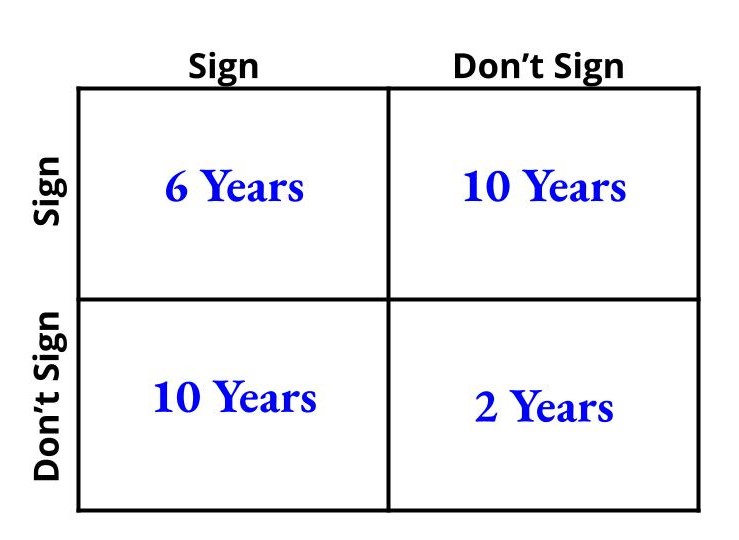
Here is an example of the Prisoner’s Dilemma: pretend you and a friend of yours just robbed a bank. Not a close friend, but someone you may have shared a class with at some point. You got caught and are now waiting in separate interrogation rooms. You are unable to communicate with one another, nor have you spoken about any sort of plan if you two were to get caught. After some time, an officer walks into the room holding a sheet of paper. The officer tells you that if you sign the paper, which blames the entire incident on your friend, you will be set free and won’t have to serve any jail time. In turn, your friend will be condemned to 10 years in prison. Alternatively, if you don’t sign the paper and your friend does, you will serve 10 years in prison and they won’t serve any time. If neither of you sign the paper, you will each serve 2 years. If you BOTH sign the paper, you each are sentenced to 6 years (see below for a diagram). What would you do?

The logical collective answer would be for neither of you to sign the paper, right? You would still serve 2 years in jail, but the total time spent in jail between the two of you is only 4 years as opposed to 10 years (if only one of you signs) or 12 years (if you both sign). However, on an individual level, the choice to sign the paper is an obvious one. If you sign the paper and your friend doesn’t, you won’t have to serve any time. The problem resides in the fact that your friend’s best move is to also sign the paper. The payoff of signing the paper (at best, 2 years and at worst 6 years) is much more appealing compared to the consequences of not signing the paper (at best 0 but at worst 10 years) on both ends. This means the most likely outcome will be the both of you signing the papers and each serving 6 years. Ideally, the two of you would each refuse to sign the papers and would each serve 2 years. This would in turn be the collectively most optimal choice. In the one-time play, each person’s interests are in complete conflict, which makes cooperation extremely difficult to achieve. 

At the heart of this problem lies the human nature towards both altruism and selfishness. If you were to play the game once, the outcome of 6 years would be unfortunate but better than 10 years. However, if you begin to play the game over and over again against the same person, the matter of history affects your future choices. Therein lies the problem: how do you optimize your strategy to “win” against any other person that you face? This is when a person’s decisions towards either altruism or selfishness matter and affects future interactions. 

In the 1980’s, Robert Axelrod, a professor of political science at the University of Michigan sent out an invitation to a special tournament. This invitation was sent out to a group of very prominent game theorists, people’s whose entire lives were dedicated to studying puzzles like the Prisoner’s Dilemma. Axelrod’s only instruction: submit a computer program that would win at the iterative Prisoner’s Dilemma game. To clarify, winning meant coming out of the game with the fewest years of prison. Each strategy would play every single other strategy and the winning strategy would be the one to result in the fewest years. 

There were numerous strategies of varying complexities. Simple strategies included always defecting (betraying your friend) or never signing (cooperating together and not giving the other up). Another strategy submitted was random (cooperating 50% of the time and defecting 50% of the time). All of the strategies were complete at the time of submission, so no changes could be made to adapt to different opponents. In the end, only one strategy reigned supreme: tit-for-tat. This strategy even won again when Axelrod repeated the tournament with newly submitted strategies.

The tit-for-tat strategy is fairly simple. It consists of two components:

  1. Begin by cooperating.
  2. Match the decision your opponent made in the previous round until the match is finished.

For example, if the match starts with your opponent cooperating, you would in turn cooperate in the next round. If your opponent then defects in round two when you cooperate, you would then defect in round three. 

Against simple strategies, it is fairly easy to analyze how the tit-for-tat strategy holds up. When against an “always cooperate” strategy, the entire match is rainbows and smiles as the two easily cooperate the whole time. Against the random strategy, both the tit-for-tat and the opponent will be 50/50 on cooperating/defecting. Against the “always defect” strategy, the tit-for-tat strategy only loses in the first round before both strategies begin to turn on one another for the rest of the match. So why does this strategy work and what does this mean in the grand scheme of the world?

The strategy works because the strategy can never be taken advantage of for multiple rounds as in the “always cooperate” version, but it will also not miss out on the benefits of cooperation. What this tournament outlines may not be the “best” strategy, as it will stoop to the level of a strategy such as “always defect;” however, it outlines possibly the most optimal strategy to come out on top. It also outlines some tips on how to promote cooperation:

  1. Teach reciprocity: when there are more tit-for-tat strategies in play, the success of other strategies diminishes.
  2. Insist on no more than equity: the tit-for-tat strategy doesn’t expect more than equal action and does not perform more than equal action.
  3. Respond quickly to provocation, but be forgiving: when the opponent defects, the tit-for-tat strategy immediately defects in the next turn. Don’t do more than match your opponent’s last action even if your opponent defects multiple times. 
  4. Don’t be envious: do not try to “beat” your opponent, simply match their previous decision. 
  5. Begin as open as possible: like in the tit-for-tat strategy, begin by opening yourself up to cooperation, making it possible to have the most ideal outcome rather than beginning on a sour note.

The Prisoner’s Dilemma goes beyond a simple mind game: it teaches us that cooperation can be difficult to achieve, even in situations where cooperation is clearly the optimal solution. It is a guide, not a perfect one, but a well tested one, on how individual rationality can lead to collective irrationality. Although this may seem like one giant philosophical problem that may not seem directly relevant, the Prisoner’s Dilemma extends well beyond theory and into the reality of human interaction. 


Works Cited

Axelrod’s Tournament. cs.stanford.edu/people/eroberts/courses/soco/projects/1998-99/game-theory/axelrod.html. Accessed 26 Oct. 2022.

Shah, Rina. “Robert Axelrod: The Prisoner’s Dilemma Simulation.” Shortform

Books, 6 Jan. 2021, http://www.shortform.com/blog/robert-axelrod/. Accessed 26 Oct. 2022.

‌Tit For Tat. 17 Sept. 2019, http://www.radiolab.org/episodes/104010-one-good-deed-deserves-another.

Casablanca (1942)

by Vishruth Nagam, December 16, 2022

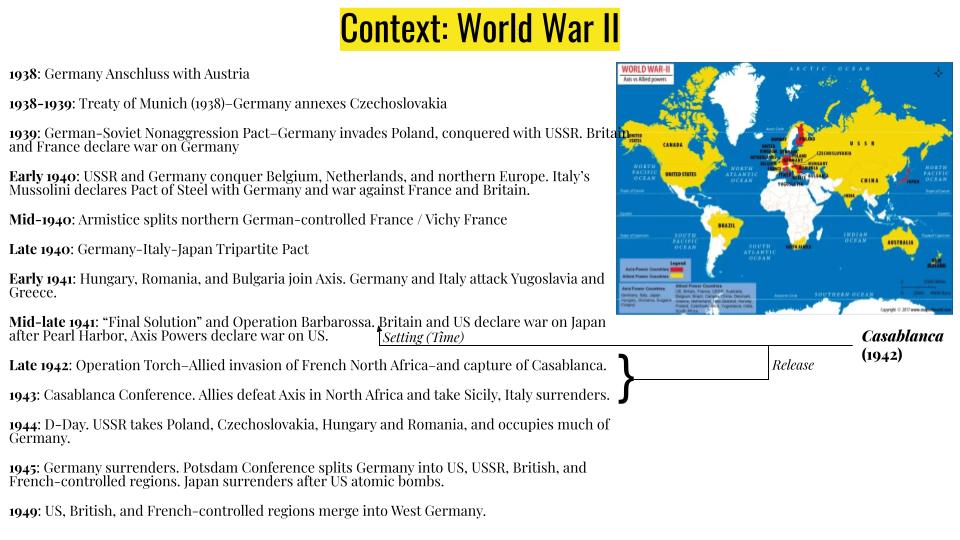
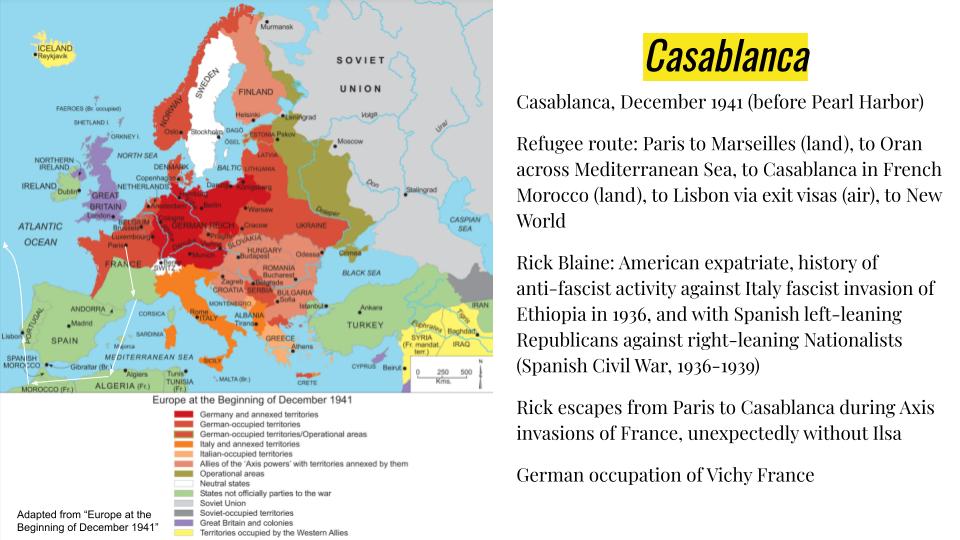
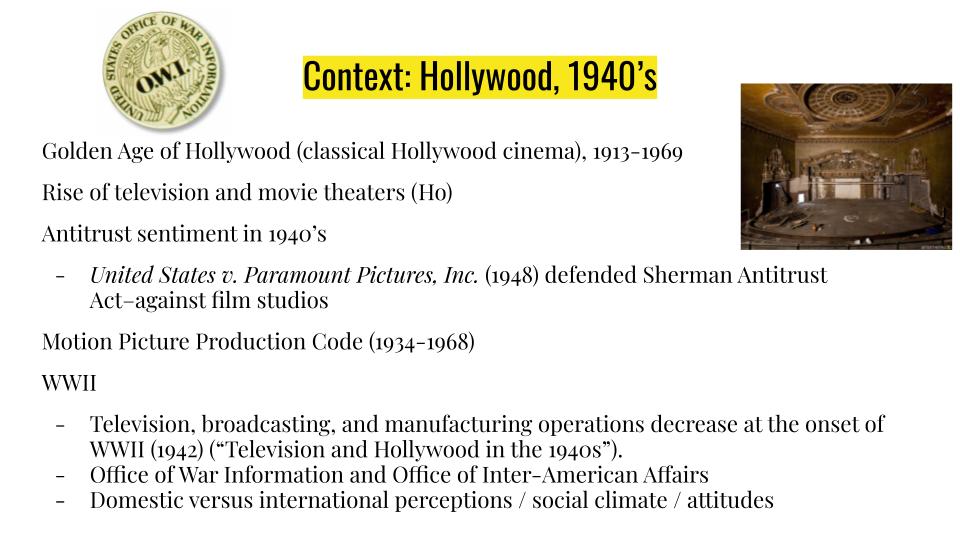
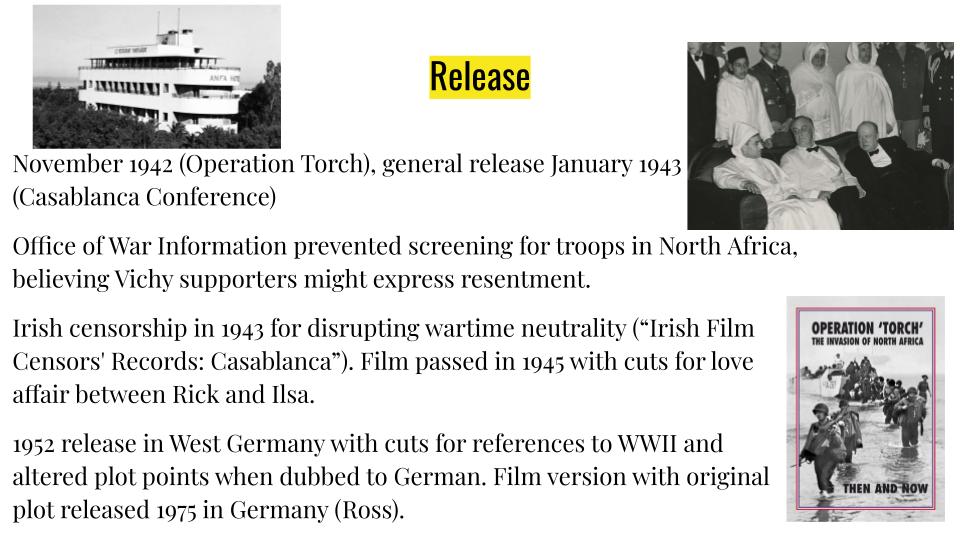
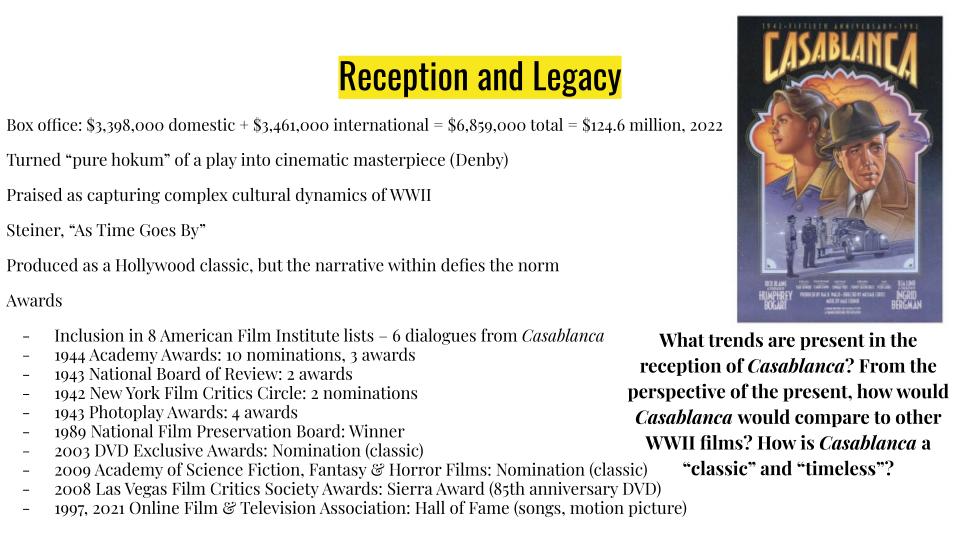
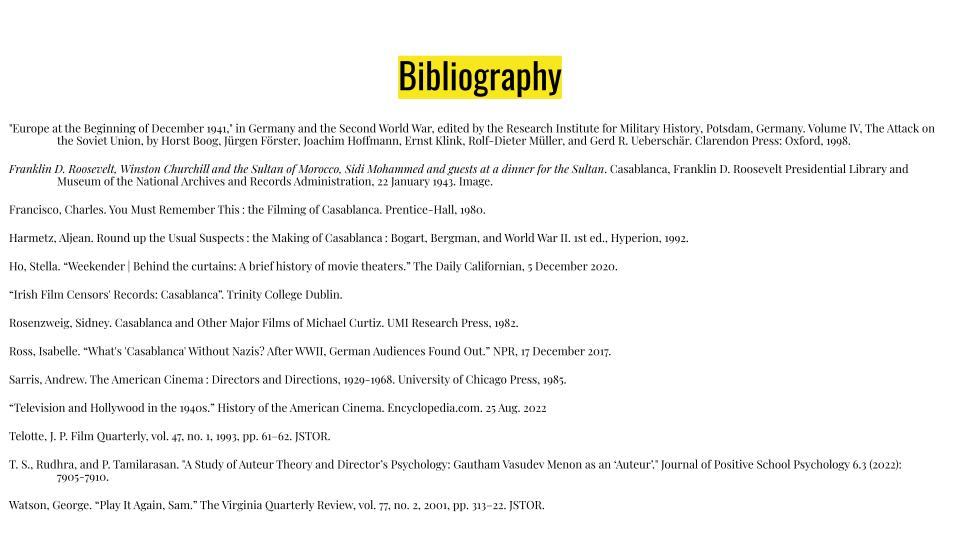
Casablanca (1942) was released in the wake of the attack on Pearl Harbor. The plot of the film is set in Casablanca, Morocco, in December 1941 before the U.S. entered World War II (WWII). Based on the play Everybody Comes to Rick’s by Murray Burnett and Joan Alison, Casablanca featured an accomplished production team and cast, who adapted upon the play’s anti-Nazi, pro-French themes. The film’s production, drama, and themes have grounded the lasting reception of the film and continued discussion on pertinent topics in the humanities. This infographic explores the factors, complexities, and dynamics contributing to the success of Casablanca as a classic.


Nine Minute Medicine? Your Brain on Music

by Aviram Nessim, October 22, 2022

The intense rise and fall of chords, flow of rhythm, intricate melody, and extensive variation of tonality as instruments play a unique tune — these are the typical sounds an individual hears while actively listening to music. Music, or sounds amalgamated to produce beauty of form and harmony, is a ubiquitous companion to people’s everyday lives. It is a universal human relic, confirmed to have originated approximately 35,000 years ago (Smithsonian, 2021). At present, the average American listens to over 32 hours of music on a weekly basis, and there are good reasons for why (Lupis, 2017). Music has an extraordinary capacity to stimulate emotions and alter mood. Its sheer power can have profound biological effects both internally and externally: it can affect blood pressure and heart rate internally, and cause spine-tingling, chills, and even sadness externally (Manning-Schaffel, 2017). 

In 2020, a study conducted by the British Academy of Sound Therapy (BAST) exposed 7,581 subjects to various intervals of music (encompassing driving rhythm and fast tempo) to investigate whether music can be prescribed for specific mood states. The study concluded that just nine minutes of music was sufficient enough to emotionally stimulate virtually every subject (Westmore, 2020). For every 10 subjects, 9 reported improved energy levels and 8 reported an enlivened outlook on life. In thirteen minutes of exposure, 8 of every 10 subjects reported elimination of negative thoughts as well as decreased muscle tension. In the same timeframe, a whopping 9 out of 10 subjects reported having increased levels of focus as well as enhanced performance throughout the work day.  

With such powerful analgesic effects, how precisely is music able to stimulate the body? Music primarily activates specific neural pathways located within the auditory, limbic, and prefrontal brain regions (McCollum, 2019). These parts of the brain are synchronized; levels of physiological activity are influenced through the release of neurotransmitters such as dopamine, endorphins, oxytocin, and cortisol. Thus, regions of the brain that register rewarding stimuli, altruistic acts, and subjective enjoyment are activated (Sachs et al., 2019). By influencing levels of activity within the brain, the body effectively responds, undergoing transient changes in physiology, which, in turn, can have the same mood-enhancing qualities on the psyche as over-the-counter remedies that target anxiety, insomnia, and stress (Landau, 2018).

Regardless of one’s ailment, music therapy, or usage of “singing, music play, improvisation, songwriting, and music-assisted imagery that address the emotional and developmental needs of individuals of all ages” is an effective therapy that should continue to be widely implemented within the medical community (Yale New Haven…). By utilizing neuroscience, music is a powerful, restorative analgesic that has withstood the advances of modern medicine. A seemingly unlikely therapeutic, music is admired for alleviating the dreadful effects of neurodegenerative diseases such as Alzheimer’s, Lewy Body, and Parkinson’s by serving alongside the current array of prescribed therapies. In patients with Parkinson’s Disease (PD), between 45% and 68% of people with PD will sustain a fall each year (Pelicioni et al., 2019). However, upon exposure to targeted music therapy, a study found that over a 16-week period, 47 subjects with PD reported an improvement in velocity, cadence, and stride length, as well as a significant decrease in the occurrence of falls (Malhas, 2018). According to Wang et al. (2022), rhythmic auditory stimulation (that is, an application of targeted music therapy) allows for a variation between the “on” and “off” dopaminergic states, suggesting that upon an auditory stimulation of familiar music, the release of dopamine serves as an integral player in improving spatio-temporal parameters as well as overall parkinsonian gait (Erra et al., 2019).   

Besides the aforementioned emotional capabilities music has on daily life and health, music is also being utilized as a vehicle for social change to bring communities together. Choral repertories such as bands, chorus, and common musical groups have been around for thousands of years and, through an infectious beat, audacious gimmick, or catchy chorus, propagate messages of motivation, inspiration, and self-empowerment to inspire and alter the status quo of its listeners (Perrot, 2020). The unprecedented nature of the COVID-19 pandemic raised important questions about the role of music in society, namely as a medium for coping with the crisis. As the world went into lockdown, communal initiatives were undertaken to provide solace and comfort. Andrea Bocelli performed a solo Easter concert from an empty Milan cathedral, John Legend streamed live concerts from his residence, and cellist Yo-Yo-Ma spearheaded the #Songsofcomfort campaign to offer tranquility amid the time of crisis. Upon an 2021 analysis of Indian civilians who were in lockdown, those who regularly listened to music reported decreased feelings of depression, fear, and worry (Hennessy, 2021). In the streets of Dnipro, Ukraine, local musicians are commonly found performing in the streets for passers-by to penetrate the horrors of the war with soulfulness and defiance. By serving as a literal and figural “instrument,” the universality of music’s affective potency is able to be showcased in its ability to help people manage an unprecedented life stressor.

The utilization of music is imperative and advantageous in one’s mental wellbeing. Music is more than entertainment; it binds humanity together in a way that language sometimes fails to proffer. It is a social communication system that, irrespective of listening idiosyncrasies, has united humanity for tens of thousands of years. By continuing to implement it into daily aspects of life, music can help drive us towards a more cooperative society and a far more connected world.


References

Malhas, A. (2018, July 30). Beat it! Learning to walk to music reduces falls for Parkinson’s patients. Parkinson’s News Today. https://parkinsonsnewstoday.com/news/beat-learning-walk-music-reduces-falls-parkinsons-patients/  

Erra, C., Mileti, I., Germanotta, M., Petracca, M., Imbimbo, I., De Biase, A., Rossi, S., Ricciardi, D., Pacilli, A., Di Sipio, E., Palermo, E., Bentivoglio, A. R., & Padua, L. (2019). Immediate effects of rhythmic auditory stimulation on gait kinematics in parkinson’s disease on/off medication. Clinical Neurophysiology, 130(10), 1789–1797. https://doi.org/10.1016/j.clinph.2019.07.013  

Hennessy, S., Sachs, M., Kaplan, J., & Habibi, A. (2021). Music and mood regulation during the early stages of the COVID-19 pandemic. PLOS ONE, 16(10). https://doi.org/10.1371/journal.pone.0258027 

Landau, E. (2018, January 23). This is your brain on music. CNN. https://www.cnn.com/2013/04/15/health/brain-music-research/  

Manning-Schaffel, V. (2017, July 21). Why some songs make us cry. NBC News. https://www.nbcnews.com/better/health/why-do-certain-songs-make-us-cry-ncna784801  

Lupis, J. C. (2017, November 13). We listen to music for more than 4 1/2 hours a day, Nielsen says. Marketing Charts. https://www.marketingcharts.com/industries/media-and-entertainment-81082 

Pelicioni, P. H., Menant, J. C., Latt, M. D., & Lord, S. R. (2019). Falls in parkinson’s disease subtypes: Risk factors, locations and circumstances. International Journal of Environmental Research and Public Health, 16(12), 2216. https://doi.org/10.3390/ijerph16122216 

Sachs, M. E., Habibi, A., Damasio, A., & Kaplan, J. T. (2020). Dynamic intersubject neural synchronization reflects affective responses to sad music. NeuroImage, 218, 116512. https://doi.org/10.1016/j.neuroimage.2019.116512 

McCollum, S. (2019, September 5). Your brain on music: The sound system between your ears. The Kennedy Center. https://www.kennedy-center.org/education/resources-for-educators/classroom-resources/media-and-interactives/media/music/your-brain-on-music/your-brain-on-music/your-brain-on-music-the-sound-system-between-your-ears/ 

Smithsonian National Museum of Natural History. (2021, April 27). Musical instruments. The Smithsonian Institution’s Human Origins Program. https://humanorigins.si.edu/evidence/behavior/art-music/musical-instruments  

Perrot, S. (2020, November 18). Reperforming, reenacting or rearranging ancient Greek scores? The example of the first delphic hymn to Apollo. https://hal.archives-ouvertes.fr/hal-03013279/document   

Wang, L., Peng, J. L., Ou-Yang, J. B., Gan, L., Zeng, S., Wang, H. Y., Zuo, G. C., & Qiu, L. (2022). Effects of rhythmic auditory stimulation on gait and motor function in Parkinson’s disease: A systematic review and meta-analysis of clinical randomized controlled studies. Frontiers in Neurology, 13, 818559. https://doi.org/10.3389/fneur.2022.818559 

Westmore, L. (2020, February 21). Music as medicine – The musical recommended daily allowance. The British Academy of Sound Therapy. https://www.britishacademyofsoundtherapy.com/musical-daily-allowance/?utm_source=THE%2BBAST%2BNEWS&utm_campaign=012e2b3618-EMAIL_CAMPAIGN_2020_01_29_09_30&utm_medium=email&utm_term=0_41f7445393-012e2b3618-596333309 

Yale New Haven Children’s Hospital (Ed.). (n.d.). Arts for healing. Yale New Haven Children’s Hospital. https://www.ynhh.org/childrens-hospital/services/support-services/child-life/arts-for-healing  

How the Rajapaksa Administration’s Poor Trade, Fiscal, and Monetary Policies Led Sri Lanka Into a Severe Economic Crisis

by Vinod Kripalani, October 4, 2022

The recent Sri Lankan crisis is one of the biggest corruption scandals in the world with the Rajapaksa family inappropriately using tax-payers’ money, resulting in a severe economic crisis that caused Sri Lanka to go bankrupt and the general population unable to afford basic necessities (Koop). The Rajapaksas are a family who have been involved in Sri Lankan politics since the 1950s. In Sri Lanka, they were known as saviors for their efforts in ending the three decade civil war in 2009 (Sirilal and Aneez).

Corruption is not the only contributing factor to Sri Lanka’s current condition. Citizens have been victims of economic hardship due to financial corruption and inflation. Sri Lanka’s hardships are also due to poor trade and fiscal policies that can be traced back more than 10 years ago (Koop). In 2009, Sri Lanka was fresh out of a civil war. Then current president Mahinda Rajapaksa wanted the country to be more economically developed and encouraged Sri Lankan companies to increase domestic production and lower exports (Koop). This caused Sri Lanka’s trade deficit to increase to 123 million USD in July 2022 (“Sri Lanka…”).

To combat the ongoing crisis, one potential solution is to have Sri Lanka adopt a system of progressive tax, which is now required for Sri Lanka to do according to their new agreement with the International Monetary Fund (IMF) (Jayasinghe). This has also been recommended by the US Senate Foreign Relations Committee (Jayasinghe). Put simply, progressive tax involves taxing the rich more heavily than the poor (“Progressive…”). One of the biggest revamps in this deal with the IMF is a major reconstruction of the central bank, which is responsible for Sri Lanka’s monetary policy (Jayasinghe). 

The crisis in Sri Lanka gives other states a warning to revisit and potentially revise trade, fiscal, and monetary policy, as well as measures to curb corruption. A state that should heed this advice is Pakistan. Currently, Pakistan is in a severe debt deficit due to similar trade policies that Sri Lanka utilized (Peshimam). 


Works Cited

Sirilal, Ranga, and Shihar Aneez. “Sri Lanka’s President Wins Victory in Native South.” Reuters, 11 Oct. 2009, www.reuters.com/article/idINIndia-43071820091011

“Sri Lanka Balance of Trade – September 2022 Data – 2002-2021 Historical.” Tradingeconomics.com, tradingeconomics.com/sri-lanka/balance-of-trade#:~:text=Narrows%20in%20July-. Accessed 2 Oct. 2022.

Jayasinghe, Uditha. “Sri Lanka Gains IMF’s Provisional Agreement for $2.9 Bln Loan.” Reuters, 1 Sept. 2022, www.reuters.com/world/asia-pacific/sri-lanka-imf-reach-preliminary-agreement-29-billion-loan-2022-09-01/.

“Progressive Tax | What Is a Progressive Tax?” Tax Foundation, taxfoundation.org/tax-basics/progressive-tax/#:~:text=A%20progressive%20tax%20is%20one.

Peshimam, Gibran Naiyyar. “Explainer: How Worried Should We Be about Pakistan’s Economy?” Reuters, 30 Sept. 2022, http://www.reuters.com/markets/asia/how-worried-should-we-be-about-pakistans-economy-2022-09-30/. Accessed 2 Oct. 2022.

What should we do about suffering? Jean-Paul Sartre on human responsibility

by Zelalem Amera, September 29, 2022

There is so much suffering in the world. Fyodor Dostoevsky explores this suffering in his novel, The Brothers Karamazov, where he tells the story of three brothers, Ivan, Alyosha, and Dimitri. They each symbolize philosophically distinct ideas, and Ivan Karamazov, who embodies the voice of creeping nihilism, has a memorable conversation with his monk brother Alyosha (whom he considers naive). He goes on an animated rant, telling Alyosha the story of a five-year-old girl who is locked up in a shed by her parents covered in excrement; Turk soldiers who ripped out a baby from the mother’s womb and impaled it with their spears for sport; parents who physically abused their seven-year-old girl and were acquitted by a jury to continue their horrific antics; and a man who let loose a pack of dogs on a young boy and forced his mother to watch because the boy had hurt one of his hounds (Dostoevsky). 

This is only a small excerpt of the accounts of human suffering that Ivan describes. His speech on the problem of evil is one of the most moving sections in Dostoyevsky’s novel. By the end of Ivan’s tirade, we have a bleak depressing picture of what human suffering is about. Even Alyosha, the ever optimistic and faithful character, seems to doubt his own beliefs by the end. 

The world is full of injustices that offend us in ways that other things don’t. This kind of injustice is personal. It puts a void in our peace and makes us see the brutality of life. Perhaps for the sufferers it’s normal, but we cannot ignore this reality in good conscience. Turning a blind eye won’t make this fact go away. What are we to do with human suffering?

The French existentialist philosopher Jean-Paul Sartre tries to address this question in his book Being and Nothingness, where he lays out an entire ontological framework for human reality. In the end, all Sartre says to conclude is, “All of these questions refer us to a pure, and not complicit, reflection. They can be answered only within the domain of morality, to which we will devote a future work” (Being and Nothingness 811). What an anticlimactic way to end such a profound work! Despite the immense scope of his book, which covers everything from consciousness and bad faith, to love, relationships, and society in general, we will try to simplify and explore one common theme which runs throughout, the relationship between freedom and facticity. Sartre argues in his book that human reality is structured in such a way that we are all free even in the midst of terrible circumstances. We must be free even when we don’t get to choose our reality. 

To get our readers on the same page with some of the jargon used here, freedom is simply the fact of being responsible for a choice. Sartre defines humans as fundamentally free beings. Consciousness is always consciousness of a choice. We all live in the context of a possible future, and it is through our projecting of our own possibilities that we bring a new reality, or being, into the world. You plan an action in your mind before it becomes a reality. You think about eating a sandwich before you actually get to the task of eating it. This is an example of your freedom in action. Naturally, freedom is what allows you to be happy. Happiness is being able to do what you want. To be free is to be happy. 

Facticity is what someone or thing is. It is essentially the meaning we associate with the physical manifestation of reality. “Black hair” is the facticity of the thing on your head.  

For Sartre, the idea of freedom coincides with the concept of nothingness. It is only because humans are nothing that they can bring about being. It’s a rather cryptic concept to understand, but it is not important for our discussion.

What we are interested in answering is the above mentioned question, how do we deal with suffering? We live in a time when we are hypersensitive to injustice. We are trying to create a world where everybody has an equal chance at happiness and success, but this often leads to an overwhelming amount of conflict between political parties, countries, and even among family members. In a way, we are all vulnerable to the implications of this question.

Actually, we must first take a few moments to examine why this question matters to us so much. Why does suffering matter so much? How does it affect you personally? 

Have you ever looked at someone else and wondered to yourself how it was unfair that they are prettier, taller, wealthier, or smarter than you are? It’s not like they deserved to have these things more than you did. How are you to blame for your genetics or your family? Not only that but it seems like these things ultimately affect where they end up in life. For example, if you are born to a rich family, your odds of living a more successful life are higher. If you are attractive, people will probably pay more attention to you, and it’s going to be easier for you to find friendship and love. If you are a citizen of a powerful country, it is easier for you to find employment, education, and build a life. We can even take this a step further and say that these people with natural advantages can solidify and secure their position in society, ultimately making it so that other members of society can’t be happy even when the natural conditions are leveled out. However, that is another discussion.  

This unfairness is at the essence of being in a minority group. You want to have the same fighting chance as someone else, but you are limited by your situation. If you’re from an immigrant family, you want to get into Harvard just as much as everybody else. But if due to factors outside of your control this is not possible, then obviously this would make you frustrated! Why should you be punished for something that is not your fault? How are you to blame for your financial or social circumstances? Whether or not we are on the privileged side, we can relate to the frustration of not being able to get what we want despite all our efforts. We all want to be free to pursue our happiness, but are we all free? 

We cannot choose what we are. We don’t choose our race, sex, parents, economic and social background, and country of origin. From the moment we are born, we are labeled with meaning that doesn’t come from us. How can any of us be responsible for all of it? We can’t even hold the people in power responsible for the fact that they were born to it. This is why the question matters. Are we still responsible for our happiness even though we don’t get to choose our circumstances? Can we hold people who are born in terrible conditions and live short lives accountable? Are they still free to choose? Jean-Paul Sartre would definitely argue yes. In fact, he would say that we have no choice! We will use a simple example to explore his answer.      

Imagine a tall man and a short man. They both want to be good at playing basketball. Obviously, the rules of the game discriminate against shorter people. We can all agree that from the start that the tall guy has a natural advantage over the short guy, because he has a better vantage in relation to the hoop. Neither of these two men are responsible for the facticity of their height. The tall man is not responsible for the fact that he is tall, and the short man is not responsible for his shortness. However, if we put both of them in an arena with zero experience and all other factors accounted for, we should expect to see the tall person outperform the short one.

Now, you may object to that and say, “what if the short person has better eyesight?” or “better hand eye coordination?” Well, let us assume for the moment that all these other traits have been accounted for and the short and tall person are both equal on all levels except their natural height. Besides, if height was not an important selecting factor for prowess in basketball, the NBA would not be so full of tall people. Over a period of a few months, one would expect the tall person to vastly outperform the short one, given the same amount of practice and training. The game would be significantly easier for him simply because he is taller.

But let us digress here and say that somehow that doesn’t happen. Actually, from the moment those two are put in the arena, the short man seems to perform way better than the tall person. And a few days later, the short person is even better than the taller person, to the extent where he is making most of the shots he attempts and is humiliating his opposition. So how do we explain this counterintuitive situation? 

We must imagine that when the short person went into the arena, he was thinking to himself, “I know I’m at a natural disadvantage, so I must try harder to win this game. I can’t afford to make mistakes.” Whereas the tall person was thinking to himself, “well, I’m taller than him so how hard can it be to beat him? Really, I don’t have to be that worried.” Of course, he could have thought to himself, “I should probably use my natural advantage to win against him,” but he didn’t have a reason to.  

The short man, knowing that he must try harder, plays less carelessly; he doesn’t attempt shots that don’t work; he second guesses himself more; he thinks about the best path to winning; he is more devoted to the task of winning; he finds more options; more possibilities open up to him and he exploits these possibilities. An observer might conclude that he is a “natural,” but that is not the case. He is just much more devoted to the task of winning than his competition. He is more desperate. So, the short man practices for longer hours. He works harder at getting better than the tall man and that is why he is unexpectedly better at the game than his naturally gifted competitor. It’s the classic “The Tortoise and the Hare” story we heard as children. 

So what? Have we answered the question then? Can we conclude from this that despite your natural advantages, if you don’t work hard you will lose, and despite your natural disadvantages, you can still win if you bridge the gap through your commitment and hard work? No, there is still something off.

What if we weren’t dealing with a tall person and a short person. What if that is too fair? “The Tortoise and Hare” story suggests that our freedom can bridge the gap between our natural differences. Presumably, we are all free to pursue happiness and able to get it at least in theory. If you are born in a poor country, then all you have to do is work extremely hard and you will be just as successful as someone from a wealthy country. If you are short, just make up for it by being smart or strong or something else. But this seems a bit naive, doesn’t it? 

What if the tall man was competing with a cripple? 

Ah! You might balk. Life would never be so unreasonable! Actually, life is exactly this unreasonable. A person who is born from a poor dysfunctional family in an obscure country is not just a short man, he is a crippled man. We must emphasize this point for some members of our audience who have not been outside the country. There are places in the world where people live in abysmal conditions. There are kids who are born in the middle of civil wars, who live very short, miserable lives. Surely, they can’t be expected to compete and win, right? What about people who are born with serious medical conditions that prevent them from moving or talking? And what about the people Dostoyevsky described in Ivan’s speech? No, we must hold the position that some people are indeed born cripples. 

But doesn’t this mean that we are not all free? “The Tortoise and the Hare” story does not hold up to scrutiny. Sometimes, hardwork and commitment are not enough to bridge the gap between our circumstances. Sometimes, we can’t get what we want no matter how hard we try.  

So what now? Is freedom a lie? Is it an arbitrary thing that only the privileged have? The question is now even harder to answer; how does a cripple compete in a basketball competition and expect to win? How is he responsible for his inevitable failure? How are you responsible for your happiness even though you aren’t responsible for your circumstances? 

This is where Jean Paul Sartre breaks the bad news: “We should not confuse my freedom to choose with my freedom to obtain” (Being and Nothingness 658). What does this mean? Is he trying to dodge the question with some sort of sophism? What is the use of a freedom that is stripped of its content? What’s the use of being free if you can’t be happy?

What Sartre tries to emphasize in his book is the absolute necessity of freedom for being. Nowhere in the description of his idea of freedom does he permit that a freedom necessarily has to get what it wants. In fact, the absurdity of freedom is that it’s not even free to choose itself. 

To bring it down to a practical level. What he is saying is that when it comes to happiness, nobody can get away from responsibility. Being born with advantages is not enough. You must act. It might be easier for you to get what you want, but you still need to do something. You are not free from challenges. If you are born a cripple, you will probably never beat someone at basketball (and yes, we can talk about how the modern world allows the possibility for prosthetics, but that is another arena with the same sort of problems to play out). You are still forced to play, and even if you refuse to play, that is still a choice you must be completely responsible for. 

Even if you never reach your goals because of your situation, even if you are in a position where you can’t because you are oppressed, you are still responsible for your happiness. Perhaps the absurdity in Sartre’s argument is that he suggests that a person is free to punch a brick wall continuously until his knuckles bleed. He is free to act towards a goal which he knows is impossible. If he quits, he is still free. There is nobody to blame but himself. There is no god to complain to. This is just the way it is. In fact, his oppression only makes his freedom more apparent to him. What an absurd thing to suggest! This is probably what Sartre means when he says, “nowhere were we freer than under the German occupation” (“The Republic of Silence” 1).

We cannot hide in our facticity and say, “this is my destiny.” Even the best of us need to act in order to make our goals happen. Facticity will not save you from choices. You can’t say, “I lost the game because I was short.” No, you lost the game because on a certain level, you chose to lose the game. 

Even if you lost the game because you couldn’t compete with someone taller than you, you were still responsible for winning it. Even if you have no chance at getting what you want, that still does not absolve you from the responsibility of acting. Who are you going to complain to? Who is going to fix this unfair and absurd situation? If you want to be happy, you have to try anyway. You could try to change the circumstances of course, but not every inequality can be leveled out. You don’t always have the power to level the playing field. But you always have a choice. Even if you give up on your happiness and commit suicide, it is a choice you are fully responsible for. There is no escape from freedom. As Jean Paul Sartre would put it, “I am condemned to be free” (Being and Nothingness 577).

This doesn’t sound very appealing of course! We started out with hopes of a reassuring solution to the problem of inequality but what have we concluded? That it doesn’t matter either way! Whether or not we are equal does not save us from this burden. We are all responsible for our happiness even if we don’t get to choose the playing field or what tools we have at our disposal. We are not responsible for our circumstances, but we have to be completely responsible for the outcome. This is the absurdity of life. We all must be free. Sometimes, we must be free even when our freedom is useless.

Now that we have established this conclusion, we must go off on a tangent and ask one more question: do the weak deserve to suffer then? If it’s true that human beings are completely responsible for their happiness and nobody is going to save them from choosing, doesn’t that mean people are responsible for their suffering? If you lose the game, make a mistake, or mess up your life, doesn’t that mean you deserve the outcome you chose? If you can’t blame your circumstances or your nature for your failure, and if you can’t blame God, then who else is there to blame but yourself?

The implications of this conclusion are obvious. We are not morally obligated to do anything about suffering. Everybody, even the most needy people, are responsible for their circumstances. Complaining is pointless. One must suck it up and make it work anyway. 

But isn’t this depressing?

This is the image that you get when you look at human reality from the perspective of the individual: an abandoned, lonely person, who is completely responsible for his life and must face forces way beyond his capacity to survive and be happy. Perhaps the implication of this conclusion is that to focus so heavily on the individual is unnatural. 

Human beings are social animals.We are always surrounded by people, and we will never escape from them. It seems absurd to construct a philosophy dealing exclusively with the individual. The individual is never alone in the world. He is not abandoned, he is abandoned together with the rest of human reality. It is not an I that defines human reality, it is a we. 

No, the weak do not deserve to suffer because if the individual is not powerful enough to fix his circumstances, and if there is no god who will make everything right, then that is more reason for us to take up the mantle. We did not choose to be here, so we must roll up our sleeves and get to the task of building the kind of world we want. 

But who is this “we” in all of this? Is it America? China? Russia? Is it the West or the East? Are women included in this “we?” We must refer to every conscious individual. We must somehow find a way to make a connection with everybody. You can see how this makes our task so much more difficult. Every human being working together under the same flag? That seems absurd doesn’t it? When “mankind” conquered the moon, whose flag was it that was planted on the surface? Was it really one small step for mankind? Does anything we do have this humanism in mind or are we all selfish on some level?

This is what we have concluded from our discussion on human suffering. On a fundamental level, we are all facing the same problem. We are all trying to be happy in a world we do not choose. Literally and metaphorically, we are in the same boat. There is camaraderie in that, and the injunction is to be kind to one another; not just some people, but everyone. We may never get to this utopia, but we must try, and to accept our radical freedom and responsibility is the first step. 


Works Cited

Sartre, Jean-Paul. Being and Nothingness. Routledge books, 1943.

Dostoyevsky, Fyodor. The Brothers Karamazov. 1880. 

Sartre, Jean-Paul. “The Republic of Silence.” Lettres françaises, 1944.

The Effect of the COVID-19 Pandemic on Unemployment Rate: Implications for the Gender Gap

by Farah Hasan, September 27, 2022

Abstract

The recent COVID-19 pandemic has brought on unprecedented disruptions to global economies resulting in income loss and high unemployment rates that have disproportionately affected women. Existing research on COVID-19 and the economic effects of a pandemic on gender-based employment are limited, though rapidly growing, and a literature review providing a holistic overview is needed to advise and inform policymakers on important factors to consider when working towards reparations and economic recovery. Prior empirical work, particularly case studies, will be used for a primarily qualitative analysis, along with the presentation of some important statistics in regards to unemployment. Unemployment rates are exceedingly high for women compared to those for men in both developed and developing countries, with several female-dominated occupations (such as beauticians and cabin crew) being most severely affected by the pandemic due to closures and discontinuation of service. Policymakers should take several factors into account when working towards economic restoration such as a country’s status as developed or developing, type of occupation, and type of unemployment. Additionally, more focus should be given to implementing certain standard practices in promoting gender equality in work outcomes. Such policies will aim to revive employment while improving occupational gender equality in the long run.  

Keywords: COVID-19; pandemic; unemployment; gender gap; developed/developing countries

1. Introduction

This paper seeks to discuss general trends in global unemployment rates after the COVID-19 pandemic took hold, to highlight patterns in the types of occupations most severely affected, and to evaluate potential changes in labor outcomes in regards to gender. As a novel occurrence, the COVID-19 pandemic has impacted individuals and nations from a variety of different angles (such as healthcare, political standpoints, research and development, growing reliance on virtual settings, etc.) and has thus given rise to an immense amount of unknown territory for research. While extensive research is available on economic recessions, not as much is known about the unique impacts of a pandemic, especially as it relates to gender gaps. Most existing literature consists of case studies looking at unemployment rates and demographics within specific countries. It has been observed that the unprecedented disruptions to the global economies brought about by the pandemic in which diversified economies were providing job opportunities for women in different sectors has led to income loss and high unemployment rates. A literature review providing a holistic view of general trends in unemployment and relations to gender on a global scale (synthesizing the information from case studies on various countries) is needed to have a more comprehensive understanding of the true extent of the impact of the COVID-19 pandemic on unemployment and gender gaps. Understanding how the pandemic affected labor markets in both the developed and the developing worlds is crucial as governments continue to develop responses. 

Most evidence used will consist of prior empirical work, such as case studies. The analysis will be mostly qualitative, but will provide valuable statistics and graphical data to highlight comparisons of unemployment rates in different countries and percentage breakdown of labor outcomes by gender. Current literature suggests that the pandemic has widened gender inequality in the labor market. Changes in the gap must be investigated in order to address the potentially growing inequality by enacting and strengthening policies to support women and prevent a possible increase in female unemployment and worsening of gender inequality. The purpose of the present literature review is to highlight various determinants of occupational segregation in regards to COVID-19, such that policymakers will have a clear understanding of factors to consider when formulating policy responses to alleviate the impact of the pandemic and take preventative measures against similar future crises. This will be achieved by discussing general trends in global unemployment rates after the COVID-19 pandemic took hold, highlighting which types of occupations and industries were most often and most severely affected by the pandemic, and evaluating the gender demographics of workers affected in both developed and developing countries across the globe. Failure to investigate this would leave governments and economists in the dark regarding any potentially exacerbated gender gaps due to the pandemic, obscuring the urgency of mitigating any harmful changes. 

In the next section, I will present background on gender inequality and its connection to the pandemic. Section 3 is a literature review on COVID-19 and unemployment rates, types of jobs affected, and demographics of the worker population most severely affected. Section 4 synthesizes findings from the literature review and highlights salient determinants of occupational gender equality in regards to the pandemic, such as the status of a country (developed or developing) and type of occupation, that policymakers must pay heed to. Section 5 summarizes findings and discusses implications for COVID-19-related employment policies, limitations regarding scope of analysis, and recommendations for future research. 

2. Background

Gender inequality is an issue in both developed and developing countries, with 18% of women having experienced physical and/or sexual violence in the previous 12 months (United Nations (UN), 2019). This percentage is even higher in developing countries. A greatly embraced solution to this issue is empowering women financially in finding productive employment opportunities (Dang & Nguyen, 2020). Despite these efforts, the gender gap in employment still exists to significant extents in countries around the world, both developed and developing. This occupational segregation also sheds light on the differences in types of occupations that women and men choose, differences in employment status, and differences in hourly wage. The gender gap is especially important to address, as this impacts lifetime earnings, retirement pension payments, and potentially the educational level and earnings of their children (Bächmann et al., 2022). 

While there is extensive research on the impact of recessions on gender-based employment, knowledge on the impact of pandemics in particular on the gender gap is limited. Studies conducted after the Great Recession in the United States suggest that historically, women have suffered higher unemployment rates than men and that their employment tends to be less cyclical than that of men (Hoynes et al., 2012; Doepke & Tertilt, 2016). It is especially important to focus on gender inequality as a pandemic may differ from a typical recession; it more strongly affects sectors with high female employment shares and necessitates increased need of childcare for mothers due to school closures (Alon et al., 2020). Indeed, the pattern observed after the Great Recession is thus compounded by the effects of the pandemic, as some studies suggest that the negative effects of COVID-19 may have wiped out the global progress in gender equality and poverty reduction from the past 30 years (Sumner et al., 2020). The research that is available on gender-related impacts of a pandemic focuses mostly on developed countries, but even less is known about such impacts in developing countries, where gender discrimination is more prevalent and women are typically already worse-off than men in labor participation, job security, income, etc. (Hossain & Hossain, 2021).

3. Literature Review

In the following section, various notable statistics on unemployment rates due to COVID-19 in both developed and developing countries will be presented. Then, a closer look at the types of jobs most severely affected will be provided, followed by a breakdown of the demographics of individuals who work these types of jobs and were most affected by the pandemic and related governmental response policies. This section can be segmented into three major questions, which will be answered in the following literature review.  

3.1 How has COVID-19 impacted unemployment rates?

Compared to the unemployment effects of recessions, the effects of the pandemic are staggeringly large in comparison. It is important to note the similarities between developed and developing countries in these skyrocketing unemployment rates, indicating that both types of countries were significantly affected and that a deeper look into the demographics of the workers affected is warranted. 

According to Figure 4, in the United States alone, the unemployment rate rose from 19.3% in February 2020 (the start of the COVID-19 recession) to 41.5% in February 2021 about 12 months later. Looking at unemployment rates during the US Great Recession, the unemployment rate began at 17.4% in December 2007 and climbed to about 23% within the same time span of 12 months (ultimately ending at 40.4% after 24 months) (Figure 4). 

[Figure 4 here]

Thus, the spike in unemployment due to COVID-19 rather than the recession was significantly sharper and more profound within the same time span of 12 months, suggesting that the unemployment effects of a pandemic warrant urgent investigation (Bennett, 2021).

Different countries experienced these increasing unemployment rates in different patterns. Burns & John (2020) highlight unemployment rates from a more global perspective. While some countries experienced relatively constant unemployment rates throughout the pandemic (namely Japan, Germany, and the United Kingdom), other countries experienced large and sudden spikes in unemployment similar to that in the United States (namely Canada, while Spain, Italy, and France experienced smaller spikes in unemployment) (Figure 5) (Burns & John, 2020). 

[Figure 5 here]

Sweden, a country that will be discussed in depth later in this paper, experienced an overall increase in unemployment by 2.5 percentage points from February 2020 (one month prior to the onset of the pandemic) to July 2020 (5 months after) (Campa et al., 2021). 

It is important to note that all of the countries discussed so far are developed countries, but the COVID-19 pandemic also had profound, if not even more significant, impacts on unemployment rates in developing countries as well. Prior to the COVID-19 breakout in Nigeria, Hossain & Hossain (2021) found that overall employment rates for women were lower than overall employment rates for men. It was noted that 80% of the sample Hossain & Hossain (2021) studied from Nigeria were employed before the pandemic. From March 2020 to May 2020, the early period of the pandemic, the employment rate dropped to 43%. Even after the pandemic broke out, the employment rate for women continued to be lower than that for men. Additionally, the overall likelihood of being employed dropped by 13% in Nigeria (Hossain & Hossain, 2021). Furthermore, as a result of the pandemic, a significant restructuring of the distribution of employees by gender in farming and business spheres occurred. The employment rate for women in business declined compared to male employment in business during the COVID-19 period (Figure 3c) (Hossain & Hossain, 2021). However, it is interesting to note that the employment rate for women in farming surpassed male employment in farming during the COVID-19 period (Figure 3b) (Hossain & Hossain, 2021). These findings will be expounded upon in the following sections. 

[Figure 3 here]

3.2 What types of jobs were most significantly affected? 

Several job spheres were impacted by the COVID-19 pandemic in both developed and developing countries, from aircraft operation to agriculture. By studying the types of jobs affected by the pandemic, valuable information about the nature of the jobs, worker skill sets/interests, and demographics can be determined. 

In Sweden, some of the occupations that were most heavily impacted by unemployment were aircraft pilots, masseurs and massage therapists, cabin crew, and beauticians (Campa et al., 2021). Of these, the unemployment impacts range from 30.8% for aircraft pilots and related associate professionals (which was the highest) to 15.2% for beauticians and related workers (which was the lowest) (Table 1) (Campa et al., 2021). 

[Table 1 here]

It is important to note that most of these occupations are service-based and typically require physical proximity, consistent with the expectation that they would be affected by social distancing measures necessary in reducing the spread of COVID-19.   

In Nigeria, the agriculture sector typically hosts a large fraction of women and works as a buffer during economic shocks. Thus in the context of COVID-19, women engaged in agricultural work were more likely to keep their job, and the agricultural sector became an alternative employment option for women who were not already involved in it (Hossian & Hossain, 2021). This is consistent with the above finding that the employment rate for women in farming surpassed male employment in farming during the COVID-19 period (Figure 3b) (Hossain & Hossain, 2021).

3.3 What were the demographics of the employees affected?

After broadly considering general trends in unemployment rate due to COVID-19 and associated affected jobs, information on gender breakdown in these spheres sheds light on the disproportionately large impact of the pandemic on women compared to men. In doing so, it is important to consider the developed or developing status of a country as well as their response to COVID-19, as these also have implications on gender-based labor outcomes. 

An overwhelming amount of evidence suggests that the COVID-19 pandemic has worsened labor market outcomes for both men and women, but especially for women. Women are 24% more likely to lose jobs permanently than men due to the pandemic in China, South Korea, Japan, Italy, the United Kingdom, and the United States (Adams-Prassl et al., 2020; Dang & Nguyen, 2020). Table 2 shows that 5.8% of women and 4.8% of men reported losing their job permanently, while roughly equal percentages of women and men (25%) reported losing their job temporarily (Dang & Nguyen, 2020). 

[Table 2 here]

Broken down by country, the impact of gender on job loss due to the pandemic are larger in China, Italy, and the United States compared to Japan, South Korea, and the United Kingdom. In regards to losing a job temporarily versus permanently, there appears to be no significant effects of gender on the probability of temporarily losing a job in most countries. However, only in the United States and the United Kingdom are women more likely to lose a job temporarily than men (Dang & Nguyen, 2020). 

In Nigeria, women remained unemployed for a longer period of time (about 3.67 months) compared to men (about 2.61 months) after the initial COVID-19 breakout (Hossain & Hossain, 2021). This specifically hurts women because the longer women stay unemployed, the longer it takes and the harder it is for them to reintegrate into the labor force, lowering future prospects of finding work (Hossain & Hossain, 2021). Overall, the employment of women decreased by 8% more than the employment of men during the pandemic (Hossain & Hossain, 2021). In regards to the interesting phenomenon of farming and business, women were 44% less likely than men to engage in business activities during the pandemic, but 52% more likely than men to engage in farming (Hossain & Hossain, 2021). Thus, not only did women experience a significantly greater reduction in employment during COVID-19, but also a large shift from business to agricultural work. This suggests that women in developing countries have lower job security than men. This also hurts the overall level of productivity of women, as women-managed land is typically less productive than land managed by men, indicating lower labor market returns of farming for women in comparison to men, and more generally of farming in comparison to business (Hossain & Hossain, 2021). 

Revisiting the case of Sweden, this country exhibited interesting – and seemingly contradictory – evidence regarding the extent of gender-based job-related impact. Figure 1 shows that unemployment risk exists for all wage levels, but lower-paying jobs (signified by lower wage deciles) were at higher unemployment risk (Campa et al., 2021). 

[Figure 1 here]

Although Sweden has relatively low gender-based wage inequality, women still tend to be concentrated in lower-paying jobs, suggesting a contributing factor to unemployment of women (Figure 2) (Campa et al., 2021). 

[Figure 2 here]

Additionally, most of the heavily impacted occupations in Sweden were female-dominated. According to Table 1, beauticians are 96.7% female, masseurs and massage therapists are 81.2% female, and cabin crew is 78.5% female (Campa et al., 2021). However, it is important to note that although some highly feminized occupations were significantly impacted by unemployment, these occupational fields are relatively small in size in Sweden (Campa et al., 2021). On the other hand, the unemployment risk actually decreased for some occupations, a few of which are female-dominated as well. Some of the notable occupations are clinical and operations managers in healthcare, department managers in elderly care, pediatric nurses (97% women), and anesthesia nurses (74% women) (Campa et al., 2021). Thus, although some female-dominated fields were adversely affected by unemployment, these fields are relatively small, and some larger sectors that are also dominated by women have experienced an increase in the demand for workers (Campa et al., 2021). Thus, Campa et al. (2021) found that women did not suffer higher unemployment rates than men in Sweden and may actually have had a just barely statistically significant lower unemployment risk than men did. From March 2020 to July 2020, the unemployment risk for men was 2.5 percentage points higher, whereas the unemployment risk for women was 0.5 percentage points, or 20% less than the risk for men (Campa et al., 2021). 

However, it is important to note that the findings from Sweden may not be representative of the unemployment impacts of women elsewhere in the world, as Sweden took a unique approach in responding to COVID-19. Sweden never enforced a lockdown where people had to stay home from work and school. Since daycare and childcare centers remained open, Swedish families did not have to make significant adjustments to the time they dedicate to childcare, a responsibility that often falls on women (Campa et al., 2021). Additionally, Sweden generally has a high labor force participation rate for women to begin with and works to provide feasible opportunities of combining work and family life. Thus, at least in the case of Sweden, gender did not have a significant impact on unemployment (Campa et al., 2021). Like Sweden, there is also no evidence of unequal impacts of the pandemic on women and men in Germany (Adams-Prassl et al., 2020) or in Italy (Casarico & Lattanzio, 2020). 

These findings suggest that the type and/or extent of governmental response to COVID-19 may have influenced the extent to which gender-based employment was affected. Sweden took a relatively minimalist approach in addressing COVID-19 and thus did not have to greatly deviate from its “normal” way of life. Sweden also experienced relatively equal impacts of COVID-19 on the unemployment of both women and men. On the other hand, countries such as the United States, China, and Nigeria more strictly enforced COVID-19 protective measures such as mandatory facemask use, social distancing, travel restrictions, and lockdowns (Dang & Nguyen, 2020; Hossain & Hossain, 2021). These countries also experienced a greater extent of gender inequality in terms of unemployment due to the pandemic. The status of the country as developed or developing may also contribute to these findings, as these countries have different labor participation rates, infection rates, and shares of women in the labor force (Dang & Nguyen, 2020). 

4. Results

The findings suggest a general global trend in increasing unemployment rates as a result of the COVID-19 pandemic, with women being particularly hard-hit. Based on the literature review, the following section suggests several factors that policymakers should take into account when working towards economic recovery, such as a country’s status as developed or developing, type of occupation, and type of unemployment, which will be discussed in the following section. Policymakers should also consider implementing certain standard practices in promoting gender equality on a regular basis, as these types of practices appear to be protective factors against worsening gender inequality during economic downturns. 

A comparison of the unemployment rates and types of jobs affected between men and women in developed versus developing countries suggests that the classification of a country as developing has important implications on gender-based employment. As Hossain & Hossain (2021) emphasized, developing countries such as Nigeria are in an especially precarious spot given the lower labor participation rates, inferior and more temporary job types, lack of access to savings and credit, and significant earning gap between men and women that existed even before the pandemic. Thus, when the pandemic took hold, lack of protection against the virus and slow economic recovery rate enhanced the long-term negative outcomes of COVID-19 compared to in developed countries. When working towards economic recovery in developing countries, policymakers must target the root of the turmoil– the preexisting gender inequality– and work toward giving women protected property rights, promote labor reintegration after job loss for women (particularly into the field they were previously working in, as opposed to having to switch to agriculture), and support women’s entry into typically men-dominated fields (such as business). 

Developed countries were undoubtedly significantly affected by the pandemic, but in different ways from Nigeria, as they did not necessarily experience gender-based restructuring of the distribution of employees and related effects. Campa et al. (2021) shows that Sweden was able to maintain a state of “normalcy” during the pandemic, did not witness drastically disruptive changes in lifestyle patterns that affected jobs, and experienced a relatively even distribution of negative effects on employment outcomes between men and women. While Sweden’s minimalist approach to COVID-19 may have played a major role in preventing drastic lifestyle changes, this approach was certainly not ideal for every country. It is important to consider Sweden’s preexisting high labor force participation rate for women and the availability of feasible opportunities of combining work and family life. Using Sweden as an example, policymakers in other countries should aim to establish family-friendly measures that allow families to balance work and home life (especially working women, as the shared responsibilities typically fall on them more than men). Implementing such policies would promote gender equality as a part of a country’s regular work culture and may prevent the exacerbation of gender inequalities during economic downturns. 

Other important factors to consider for policy making include type of occupation and type of unemployment. As evidenced by the specific job types that were impacted by the pandemic, such as masseurs, cabin crew, beauticians, healthcare workers, and agriculture, policymakers should aim to help women reintegrate into these industries and establish greater job security in the future in the event of another major economic downturn (Campa et al., 2021; Hossain & Hossain, 2021). Since many of these jobs tend to be service-based and require physical proximity, special sanitary precautions may be taken to reduce the risk of laying off such workers if another future public health crisis occurs. In regards to type of unemployment, policies aiming to help women who lost jobs permanently may be more urgent as there are higher rates of women losing jobs permanently compared to men than losing jobs temporarily (Adams-Prassl et al., 2020; Dang & Nguyen, 2020). Policies facilitating access to education and job training, urging communities to hold networking opportunities and job fairs, and promoting job advertisement on social media may help women diversify their skills and facilitate job match.

5. Conclusions

5.1 Summary and Implications

The purpose of this literature review is to highlight some of the major determinants of occupational segregation during COVID-19 for policymakers, giving them a clear understanding of what factors to consider when formulating policy responses to alleviate the impact of pandemic and take preventative measures against similar future crises. This literature review highlights the increasing unemployment rates that arose as a result of the pandemic, both in developed and developing countries. In both cases, women were disproportionately affected and experienced higher rates of unemployment and difficulty reintegrating into their former jobs, especially since several female-dominated, service-based industries were adversely affected. This is largely attributable to the inability to continue several service-based jobs during the pandemic and the closure of daycare and childcare centers, causing much of the responsibility of childcare to often fall on mothers, who as a result, were more likely to leave their jobs.   

To combat this growing gender inequality, economic policymakers must consider a country’s status as developed or developing, type of occupation, and type of unemployment in crafting the appropriate policies to facilitate economic recovery and gender equality. Potential policies worth pursuing include those regarding job security, training, and family-friendly policies that enable a realistic work-home balance. Although this is a holistic overview of global unemployment rates, Sweden and Nigeria provide particular guiding examples that policymakers can look to in regards to developed and developing countries, respectively. Each country responded to COVID-19 differently based on their unique circumstances and faced varying effects as a result. 

5.2 Limitations 

While this literature review is one of the first in providing a broad overview of the pandemic’s impacts on unemployment, there are a few limitations that must be considered. Firstly, unemployment was measured in different ways in different studies. These numbers were not adjusted before including them in this paper as one purpose of this literature review was to simply outline general trends in unemployment rate globally due to COVID-19. Additionally, although several countries were mentioned in this overview, particular attention was given to Sweden and Nigeria to highlight notable differences between developed and developing countries. However, it is unrealistic to assume that Sweden is representative of all developed countries’ methods of handling gender inequality and COVID-19, and likewise, that Nigeria is representative of all developing countries in this regard. Lastly, this literature review does not advise on specific policies that should be pursued, but rather, simply guiding factors that policymakers should consider. 

5.3 Future Directions

For future direction, reports on unemployment rates (particularly meta-analyses conducted with more gathered data) should be standardized such that rates are measured using the same metrics and calculation methods. More developed and developing countries should also be highlighted to compare and contrast gender-based job outcomes, COVID-19 responses, and policy efficacy. Additionally, unemployment in regards to disparities in race, education level, and location (urban, suburban, or rural) may be studied. Lastly, an analysis of changes in the gender wage gap due to COVID-19 may be included, as these have important implications on earnings and retirement pensions. 


References

Adams-Prassl, A., Boneva, T., Golin, M., & Rauh C. (2020). Inequality in the impact of the coronavirus shock: Evidence from real time surveys. Journal of Public Economics, 189, 104245.

Alon, T. M., Doepke, M., Olmstead-Rumsey, J., & Tertilt, M. (2020). The impact of COVID-19 on gender equality. National Bureau of Economic Research Working Paper No. 26947.

Bächmann, A., Gatermann, D., Kleinert, C., & Leuze, K. (2022). Why do some occupations offer more part-time work than others? Reciprocal dynamics in occupational gender segregation and occupational part-time work in West Germany, 1976–2010. Social Science Research, 104, 102685–102685. https://doi.org/10.1016/j.ssresearch.2021.102685 

Bennett, J. (2021, March 22). Long-term unemployment has risen sharply in U.S. amid the pandemic, especially among Asian Americans. Retrieved March 23, 2022, from https://www.pewresearch.org/fact-tank/2021/03/11/long-term-unemployment-has-risen-sharply-in-u-s-amid-the-pandemic-especially-among-asian-americans/ 

Burns, D., & John, M. (2020, December 31). Covid-19 shook, rattled and rolled the global economy in 2020. Reuters. Retrieved March 23, 2022, from https://www.reuters.com/article/us-global-economy-yearend-graphic-idUSKBN2950GH 

Campa, P., Roine, J., & Stromberg S. (2021). Unemployment inequality in the pandemic: Evidence from Sweden. Covid Economics, 83(2), 1-24. 

Casarico, A. & Lattanzio, S. (2020). The heterogeneous effects of COVID-19 on labor market flows: Evidence from administrative data. Covid Economics, 52, 152–174.

Dang, H. & Nguyen, C. (2020) Gender inequality during the COVID-19 pandemic: Income, expenditure, savings, and job loss. World Development, 140, 105296.

Doepke, M., & Tertilt, M. (2016). Families in macroeconomics. Handbook of Macroeconomics, (2). 

Hossain, M. & Hossain, M. A. (2021). COVID-19, employment, and gender: Evidence from Nigeria. Covid Economics, 82(23), 70-98.

Hoynes, H., Miller, D., & Schalle, J. (2012). Who suffers during recessions? Journal of Economic Perspectives, 26(3), 27–48.

Sumner, A., Hoy, C., & Ortiz-Juarez, E. (2020). Estimates of the impact of COVID-19 on global poverty. WIDER Working Paper, 43

United Nations (UN). (2019). Report of the Secretary-General. Special edition: Progress towards the sustainable development goals. https://undocs.org/E/2019/68 

Appendix

Figure 1: Unemployment impact by wage decile in Sweden, (2021). 

Table 1: Occupations with the highest unemployment impacts in Sweden (2021). 

Figure 2: Share of female workers by wage decile (2021).

Figure 3: Job participation rates of males and females in Nigeria in various occupations (2021). 

Table 2: Gender differences in job loss, expected income reduction, weekly expenses, and savings (2020). 

Figure 4: Percent of US unemployed out of work for more than 6 months. US workers are 16 years or older, seasonally adjusted. The Great Recession was from December 2007 to June 2009. The COVID-19 recession began in February 2020 (2021). 

Figure 5: Global view of unemployment rate during the COVID-19 pandemic (2020). 

The Impact of Audre Lorde

by Zarya Shaikh, May 8, 2022

My central guiding question is “how can the impact of Audre Lorde as a catalyst for women’s liberation be itemized?” This question can be answered by examining Poet Audre Lorde’s work in the Women’s Liberation Movement during the late 1960s going into 1980. Audre Lorde (1934-1992) championed equality through her work as a Black lesbian cancer survivor and mother (Brandman, n.d.). She was a daughter of immigrants and was cognizant of issues in systems of oppression including racism, sexism, classism, and homophobia (Poetry Foundation, 2020). Lorde’s early works, including those discussed in the accompanying presentation, were the roots of her cumulative contributions to feminist theory, critical race studies, and commitment to inclusivity. Her words existed as a response to the second wave of the feminist movement during the 1960s and 1970s. This second wave was intended to help women pivot into roles beyond the private sphere and into the public sphere (Kang et al., 2017). This included motions for women to join more predominantly male workspaces and positions. Birth control and reproductive justice were also significant aspects of the second wave. 

Lorde, seeing that the challenges affecting BIPOC women were not at the forefront of (or even close to) the movement’s agenda, decided to empower women of underrepresented and marginalized communities. The women she hoped to help were the same ones who were taught that their needs were not as important as the needs of the white middle-to-upper class women that the second wave embraced (Aviles, 2019). Lorde outright criticized the flagrant discrimination against BIPOC individuals in systems of injustice (Veaux, 2006). Audre Lorde was similar to other Black feminists in that she not only advocated for women’s rights but also fought for equality within the Black liberation movement. She enabled others to change their own futures on a national scale. Lorde is unique in that her vessel of change was her poetry and she focused on her battle with breast cancer as opposed to reproductive health. With respect to her LGBTQ+ advocacy, she was unapologetic for defying heteronormative standards in addition to beauty standards for what was considered feminine. 


References

Aviles, G. (2019, June 3). Pride #50: Audre Lorde – activist and author. NBC News. https://www.nbcnews.com/feature/nbc-out/pride-50-audre-lorde-activist-author-n1007551

Brandman, M. (n.d.). Audre Lorde. National Women’s History Museum. https://www.womenshistory.org/education-resources/biographies/audre-lorde. 

Kang, M., Lessard, D., Heston, L., & Nordmarken, S. (2017). Introduction to 

Women, Gender, Sexuality Studies. Amherst, Massachusetts: University of Massachusetts Amherst Libraries.

Poetry Foundation. (2020). Audre Lorde. https://www.poetryfoundation.org/poets/audre-lordeVeaux, D. A. (2006). Warrior poet: A biography of Audre Lorde. W. W. Norton. 

Interview With a Female Fibroids Patient: How One Woman’s Story Speaks Volumes About the US Healthcare System

by Vineeta Abraham, May 6, 2022

Disclaimer: This paper was written for Dr. Marci Lobel’s Psychology of Women’s Health class in Spring 2022. This paper is intended to analyze the real experiences of a woman suffering from health issues. It should be noted that the use of the word “female” in this paper refers to the sex assigned at birth rather than the gender of “women” in general. Name of the interviewee has been changed for confidentiality.

In discussions of menstrual health, we often neglect to pay enough attention to the less apparent changes occurring in our reproductive organs. While one may focus their knowledge of reproductive processes in the female body on the phenomena of menstruation, reproduction, and menopause, there are other symptoms and diagnoses that can impact a female’s menstrual health. 

I was fortunate to have been able to interview Sarah [pseudonym], a 53-year-old registered nurse living on Long Island, about her recent experiences with uterine fibroids, which she identified as noncancerous growths in the uterus. Sarah has been married for 25 years and has three children ages 21, 18, and 16. She is originally from India and moved to the United States in 2003 after receiving her bachelor’s degree in nursing. She follows a Protestant-Christian religious practice and works overnight shifts at Queens Hospital Center. 

Sarah reported finding out about her uterine fibroids at the age of 51, about two years before this interview was conducted. She was lucky enough to have received the diagnosis before experiencing any serious side effects or symptoms. She claimed, “I went in for a regular check-up at my doctor’s office. We had been discussing my anemia for a few visits, so she recommended that I consult with my gynecologist to rule out fibroids.” Unfortunately, the opportunity for a “rule-out” never came. I asked Sarah whether she looked into treatment options upon hearing of her diagnosis of fibroids. She responded grimly, “Yes. The only treatment option is surgery to remove [the fibroids]. That or ablation, which is to block blood supply to the fibroids to shrink them.” Unsurprisingly, Sarah was not eager to undertake such invasive treatment, so after a few weeks of contemplation, she carefully declined. “Temporarily,” she clarified in our discussion. “I won’t be getting any further treatment unless serious complications arise.” She described how having uterine fibroids was not impacting her day-to-day activities any more than other related health concerns that previously existed before this diagnosis. For example, Sarah described how, although 53, she has not yet reached menopause, which is a great cause of concern for her. She also suffers from menorrhagia, which she described as having “severe anemia.” In an afterthought, she added that the fibroids may be adding to this.    

I then asked Sarah about any support or lack thereof she had received from friends and family regarding her diagnosis. She explained that the least support seems to come from her husband: “I asked him to ask around or look into other solutions, if he knows any other doctors, to ask if there are options other than surgery.” He did not follow through with the task, but Sarah did not comment any further on this. On the other hand, she claims better support came from other women, friends or co-workers who had either experienced similar problems or knew of others who had. Sarah described often talking with these women about gynecologist recommendations or side effects in her hunt for more information. When asked if she had felt any financial boundaries inhibiting her from receiving treatment, she said she did not think so, and does not think it would be an issue if she decides to get treatment in the future. 

I also made sure to ask Sarah about how living with this physiological health concern has impacted her mental or psychological health. Fortunately, Sarah replied that she did not experience any psychological differences as a result of her diagnosis. She explained that she is not particularly stressed about having fibroids, as it “doesn’t run in the family, doesn’t give [her] any side effects, and there are no hormonal changes.” She claimed that her lack of distress is one of the reasons she is okay with waiting before jumping into treatment. 

Much of what Sarah discussed with me in our conversation relates to topics discussed in Dr. Marci Lobel’s Psychology of Women’s Health course. For example, Sarah was clear in her explanation of limited options presented to her in terms of treatment for her uterine fibroids. The option of invasive surgery and not much alternative seems drastic and frightening for patients like Sarah. This reminded me of a concept discussed in the “Introduction and Overview” reading excerpted from the Physical Health, Illness, and Healing textbook, in which the authors explained how doctors show “more interest in restricting [women’s] reproductive potential than in treating their illnesses.” Although Sarah has decided she will not be having any more children, she described that she is not comfortable with getting rid of all her reproductive organs, an option presented to her through the discussion of surgery. She mentioned that although she may not want to have kids, she needs those organs to produce hormones for the rest of her life (she also demonstrated a distaste for taking external hormone supplements). The thought of invasive surgery comes with many risks and potential side effects, and is therefore understandably less appealing to women who are caretakers or full-time employees or, like Sarah, both. 

Perhaps this is one of the many reasons Sarah has decided to wait on the decision to treat her fibroids. As she mentioned multiple times in our conversation, Sarah’s fibroids are not an obvious hindrance to her day-to-day routine. In the midst of her hectic work schedule and household responsibilities such as childcare, home maintenance, or cooking, her fibroids are therefore being metaphorically “pushed to the backburner.” This information came as no surprise to me after hearing Dr. Lobel’s lecture on women’s cardiovascular health on February 1, 2022 during which she described how there is often a delay in women seeking healthcare services. Dr. Lobel attributed this delay to factors such as having various other responsibilities or a general lack of knowledge. Sarah’s own testimony relates closely with this concept, as she claimed that her hesitancy to receive treatment came from her desire to learn more information instead of jumping hastily into a decision. This idea of not receiving adequate information was also discussed in the “Introduction and Overview” article, in which the authors described how female patients sometimes receive less information than male patients or report feeling dissatisfied with the communication they had with their healthcare providers. This could come from providers being biased and assuming that male patients are better able to understand their diagnoses or treatment options compared to their female counterparts. However, this lack of strong communication can cause women to feel disrespected or underserved, further discouraging them from seeking healthcare services in the future. True to this idea, when I asked Sarah when the last time was that she went to her provider to check on the status of her fibroids, she responded, “about a year [ago].” Sarah admitted to understanding that the fibroids could grow exponentially in that time frame, and claimed that she will go in for a checkup soon, although she did not clarify when that would be. 

In Sarah’s defense, she has made attempts to remedy her lack of knowledge regarding her diagnosis and treatment options. Sarah described going to her husband primarily to help with the situation. “I asked him to ask doctors that he associates with about other options or if they knew of good places to go for the surgery or ablation.” Sarah’s husband also works in a hospital, and she wished to take advantage of his access to multiple healthcare providers and professional opinions. However, she was disappointed to find that he soon forgot about her situation and never followed through with an inquiry. The lack of support Sarah received from her husband was a theme discussed in Dr. Lobel’s lecture on autoimmune disorders, where she discussed how social support from family and friends can play a large role in the recovery process for female patients. In Sarah’s situation, lack of support from the husband has been a contributor for the delay in her treatment, which may lead to more serious consequences if her fibroids grow.

On the bright side, Sarah claims that she has received better support from her friends and co-workers. Dr. Lobel’s lecture mentioned the benefits of having a support group for patients to connect with individuals who have similar diagnoses or experiences. While Sarah did not attend a formal support group for her diagnosis, she was able to discuss her diagnosis with female friends and co-workers who have experienced reproductive complications. These discussions resulted in sympathy and advice in the form of treatment alternatives or gynecologist recommendations that helped Sarah to feel less alone in her journey. While Sarah, unlike many of the women we learned about in lecture, did not report having serious psychological effects as a result of her diagnosis, she was grateful for the support she received from her friends. This type of support, as we’ve learned, can help women feel less alone in their journey of recovery. 

As seen in our lectures and readings, many of the factors impacting Sarah’s experiences are not unique to her. Female patients are often put in difficult circumstances in which their reproductive organs and menstrual health are endangered, often being placed in situations that male patients and physicians cannot personally relate to. Because of this, it is easy for women to feel isolated or unsure about their treatment options. Women are also disproportionately placed in social frameworks that label them as caretakers or being tasked with other social responsibilities, which adds to the delay in proper treatment. This delay can put them in riskier situations as their conditions may either worsen or become more complicated without proper resources. As in Sarah’s case, there may also be circumstances in which treatment options are available but not ideal, which can also lead to delays and uncertainty in patients. Healthcare services should therefore strive to improve their communication and flexibility in treatment options for females with menstrual and other health related complications. Female patients should feel well supported by both their providers and their social structures throughout their healthcare journeys. 


Oversharing on Social Media: The Dangers of An Overly Transparent World

by Ean Tam, May 6, 2022

In contemporary media culture, the more information we get and the faster we get it, the more satisfied we are. But at some point, we have to consider the consequences of sharing too much about ourselves. Oversharing is when someone excessively broadcasts personal information over social media.

What kind of information can be overshared?

A prime example is location—where you are and who you are with. Most social media platforms enable users to share location. For some platforms, location sharing has to be done manually by the individual. On Instagram, you can make a post and tag your location, so everyone who sees your posts can see where you are. On the other hand, sometimes your location is shared simply by using the app. For instance, if you enable the map feature on Snapchat, your followers can see where you are whenever you open the app again.

Another example of overshared information is family information. Family information includes birthdays, names of siblings and parents, or major family events (like a family member moving into a new house). Social media has its advantages in that it connects families and friends. However, posting family information becomes an act of oversharing if you let the public know the details of your family dynamics or personal information.

A third form of oversharing is indulging your followers with your personal thoughts and emotions. A study published in 2017 calls this “self-disclosure” because you are voluntarily disclosing your inner sentiments to the world (Zhang, 527). In these situations, an individual uses social media to convey their mental state to the public. Often, this happens spontaneously and in the heat of the moment. For example, a user may negatively comment on people they know such as coworkers or make an impassioned statement involving politics. 

A fourth form of oversharing is sharing the private conversations you have with others. This can be done by screenshotting direct messages and then posting these conversations elsewhere. For example, you can screenshot text messages with one person and then share this screenshot on Snapchat for your followers to see. This is oversharing because you would be violating the trust of the person you were having the private conversation with. By sharing private messages on social media, you are in effect, allowing others to eavesdrop on your conversation. You consented to this because you were the one who shared the conversation, but the others involved in the conversation may not have. 

Virtually any social media app allows for oversharing. This is because social media is inherently made for sharing information. The complication is that social media has become so advanced that information can be shared more easily. If you overshare information about yourself (such as your location), this may be considered primary overshared information because it’s about you. However, if you overshare information about someone else (like their birthday, or their child’s name, or a private message you received from them), this may be considered secondary overshared information because you are revealing information about someone else via social media.

Why do people overshare?

A prominent reason is stress sharing. A study found that adolescents may feel inclined to overshare information because it gives them a sense of freedom (Radovic et al. 7). There may be a variety of circumstances in a person’s life that make them depressed and bogged down, but being able to post whatever they want on social media grants some sense of freedom. It is a form of expression.

In addition, the urge to overshare may be triggered when a user observes something on social media that incites them into posting a passionate retort (Radovic et al. 10). We can think of politics as a prime example of sensitive subject matter that may trigger people to overshare their emotions.

We should also consider that people may overshare to seek attention. This is more complicated, because attention-seeking behavior may be the result of narcissism, or simply because someone is genuinely seeking help. In the former case, a person may overshare information about themselves to brag, or they might overshare information about others at the expense of other people’s privacy. On the other hand, if a person is genuinely seeking help, they may overshare information about themselves in order to attract the right support groups (Newman et al. 344; Zhang, 527). The more information they share about themselves, the more likely people will come to their aid and give positive reinforcement.

Goal-setting and a competitive spirit are also reasons people will overshare on social media (Munson and Consolvo, 26). People are more likely to achieve their goals if they make their goals public and well-known. A study has found that a person’s motivation increases if they believe their goals are known by people they deem to be superior (Klein et al. 372). For example, in college, there is a lot of competition and students may feel compelled to overshare their goals in order to increase their motivation to accomplish them.

Lastly, people may overshare in order to create a perfected persona of themselves. In one study, a participant displayed a lot of her athletic information on social media, including many pictures and statistics, because it helped her create a new brand for herself (Newman et al. 346).

What are the consequences?

The first consequence of oversharing is putting yourself in danger. This can be in the form of robbery or stalking (Velempini and Nyoni, 4). If you overshare your location, daily routine, and social activities, people can track you and have a good idea of where you will be and when. This happened to social media influencer and entrepreneur Kim Kardashian in 2016, when thieves reportedly used Kardashian’s social media activity to find her location in Paris and confirm when she was alone. With this information, they broke into her residence, restrained her, and robbed her.

Another consequence is damaging your professional prospects. If you decide to go on a rant on social media about your employer, you can be held responsible for whatever you say, because after all, you decided to post it. If your post is discovered by a colleague or your employer, you could potentially lose your job. 

In terms of reputation, some things are better left private, and oversharing can cause your private and public lives to collide. For example, Jeff Bezos, the founder of Amazon, had personal texts with his girlfriend released to the public. Reportedly, it happened because his girlfriend shared screenshots of their conversation with her brother. While Bezos didn’t lose his job, he went through public embarrassment as a result of his girlfriend’s oversharing.

How do we avoid oversharing?

Avoid posting on social media when you’re angry. Your judgment will be clouded, and your overshared information may not represent you at your best. Double check your privacy settings. If you want to post things like family-related content, make sure only close friends and family can see it, not the general public. Lastly, when crafting a social media post, be mindful of who sees your posts. But remember, people can always screenshot your posts and share it elsewhere, so take that into consideration. Unfortunately, private information doesn’t always stay private, but taking the steps outlined above as precautionary measures may lessen the likelihood of risky oversharing in a growing digital world.

Works Cited

Klein, Howard J., et al. “When Goals Are Known: The Effects of Audience Relative Status on Goal Commitment and Performance.” Journal of Applied Psychology, vol. 105, no. 4, 2020, pp. 372–389., doi.org/10.1037/apl0000441. 

Munson, Sean and Sunny Consolvo. “Exploring Goal-Setting, Rewards, Self-Monitoring, and Sharing to Motivate Physical Activity.” Proceedings of the 6th International Conference on Pervasive Computing Technologies for Healthcare, 3 July 2012, pp. 25–32., doi.org/10.4108/icst.pervasivehealth.2012.248691.

Newman, Mark, et al. “It’s Not That I Don’t Have Problems, I’m Just Not Putting Them on Facebook: Challenges and Opportunities in Using Online Social Networks for Health.” Proceedings of the ACM 2011 Conference on Computer Supported Cooperative Work, Association for Computing Machinery, March 2011, pp. 341–50, doi.org/10.1145/1958824.1958876.

Radovic, Ana, et al. “Depressed Adolescents’ Positive and Negative Use of Social Media.” Journal of Adolescence, vol. 55, 2017, pp. 5–15., doi.org/10.1016/j.adolescence.2016.12.002. 

Velempini, Mthulisi and Phillip Nyoni. “Privacy and User Awareness on Facebook.” South African Journal of Science, vol. 114, no. 5-6, 2018, pp. 27–31, https://doi.org/10.17159/sajs.2018/20170103.

Zhang, Renwen. “The Stress-Buffering Effect of Self-Disclosure on Facebook: An Examination of Stressful Life Events, Social Support, and Mental Health Among College Students.” Computers in Human Behavior, vol. 75, 2017, pp. 527–537, doi.org/10.1016/j.chb.2017.05.043.